
Walk into any serious AI discussion in early 2025 and you’d hear the same refrain: the West, led by OpenAI, Google, and Anthropic, held an insurmountable lead in frontier models. Training costs ran into the hundreds of millions or billions, compute demands were staggering, and the best hardware came with U.S. export controls. Then DeepSeek dropped its models, and the script began to flip. What started as surprise at a low-cost reasoning model quickly turned into something deeper—a recognition that China wasn’t just catching up on benchmarks. It was rewriting the economics of AI itself.
By mid-2026, the picture looks markedly different. Chinese labs are releasing performant models at fractions of Western prices, ramping up domestic chip production that increasingly sidesteps sanctions, and embedding AI across industries at a pace that feels less like experimentation and more like national mobilization. The latest five-year plan calls for “extraordinary measures” to secure leadership in AI, quantum, and related fields, with President Xi Jinping highlighting 2025 breakthroughs in models and chips.
This isn’t hype from a single startup. It’s a converging ecosystem of aggressive open-source iteration, hardware self-reliance, policy muscle, and relentless real-world deployment.
The Model Revolution: Performance Without the Premium Price Tag
The shockwave really began with DeepSeek. Its V3 and especially the R1 reasoning model, released around January 2025, matched or surpassed top Western models on key benchmarks—including math, coding, and complex reasoning—while being trained for astonishingly little money. Reports put the R1 training cost at roughly $294,000 using a modest cluster of 512 Nvidia H800 chips. Compare that to the eye-watering sums spent by U.S. labs, and you start to see why investors briefly panicked and tech stocks wobbled.
DeepSeek didn’t stop there. By April 2026, it unveiled V4 with a one-million-token context window—world-leading at the time—and slashed prices dramatically. The V4-Pro variant dropped to about $0.0036 per million input tokens (with temporary discounts), while input cache hits fell to one-tenth of previous levels, landing at roughly $0.14 per million tokens. That’s 97% cheaper than OpenAI’s GPT-5.5 on cached inputs, and by some calculations, around 32 times cheaper per typical conversation.
The company framed these moves as a way to court enterprise users, developers, and especially agent-based applications in a hyper-competitive Chinese market. Other labs like Zhipu AI had recently raised prices; DeepSeek went the opposite direction, intensifying talk of a full-blown price war.
Alibaba’s Qwen family has been just as disruptive in its own way. Successive releases—Qwen2.5, Qwen3, and Qwen3.5—brought strong multimodal capabilities (text, image, long video analysis up to two hours), agentic workflows, and competitive coding/math performance. Alibaba has pushed updates at a blistering pace, reportedly averaging a new model every 20 days in 2025. The models are largely open-source, spawning over 180,000 derivative models globally. Qwen3.5 was positioned as cheaper and on par with certain Claude or Gemini capabilities while integrating smoothly with popular agents like OpenClaw.
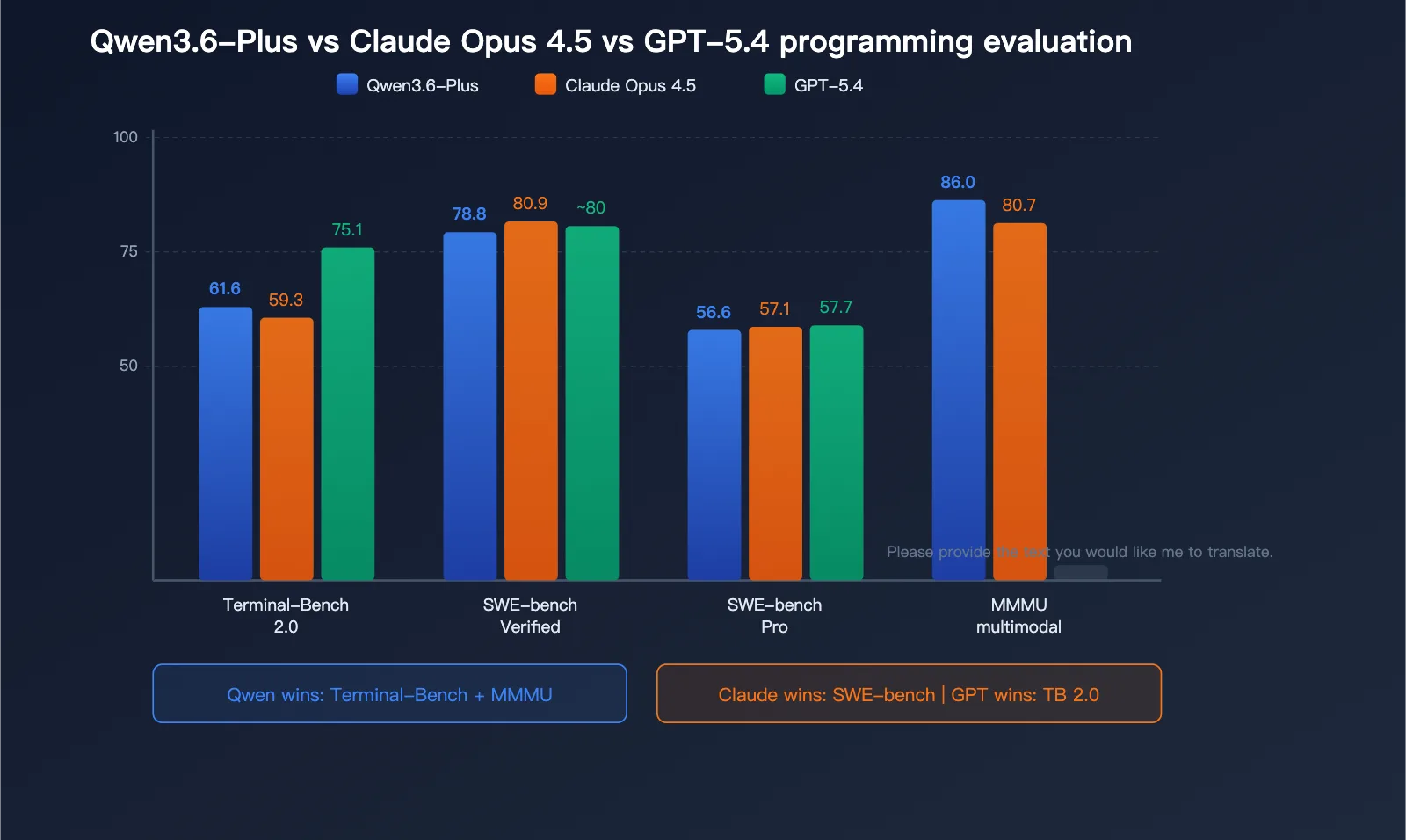
(Example visualization of Qwen’s multimodal processing; similar charts appear in Alibaba’s technical releases and benchmark comparisons on platforms like Hugging Face or Arena.)
You might also like



Other players—Moonshot’s Kimi, MiniMax, Baidu’s Ernie, Tencent’s Yuanbao, and Zhipu’s GLM series—have kept the pressure on. During the 2026 Lunar New Year period, these companies poured hundreds of millions of dollars into user acquisition: digital red envelopes worth up to $1,450, freebies, and massive marketing campaigns. Alibaba alone committed around $431–434 million for Qwen promotions. The result? Rapid domestic adoption, integration into WeChat super-app workflows, e-commerce, manufacturing, and more. Chinese open-source models reportedly grew from negligible global usage share in late 2024 to nearly 30% by the end of 2025 in some measurements, with particularly strong uptake in price-sensitive markets and among developers worldwide.
What truly unsettles many Western observers isn’t raw benchmark parity on a few tests. It’s the combination of solid performance, radically lower inference costs, open weights that invite customization, and a flywheel of real-world data from hundreds of millions of users. When your model costs pennies to run compared to dollars, the applications multiply—especially for agents that make repeated calls or process massive contexts.
Hardware Breakthroughs: Building a Domestic Stack
None of this would be sustainable without progress on the silicon front. U.S. export controls on advanced GPUs were meant to kneecap China’s AI ambitions. Instead, they accelerated a painful but determined pivot to homegrown alternatives. Huawei has been at the center of this story. Its Ascend 910C chip, part of the Atlas 900 A3 SuperPoD clusters (packing up to 384 chips), has seen production ramp dramatically. Plans called for roughly doubling output to about 600,000 units of the 910C in 2026, with total Ascend dies potentially reaching 1.6 million across variants. A clear roadmap extends to the 950PR/DT in 2026, 960 in 2027, and 970 in 2028, with steady gains in compute, memory bandwidth, and interconnects.
DeepSeek’s later models have run on Huawei silicon, and demand for Ascend chips reportedly surged after the V4 launch, with giants like ByteDance, Tencent, and Alibaba scrambling for orders. Huawei’s CloudMatrix 384 system aims to rival Nvidia’s GB200 NVL72 clusters using entirely domestic components at scale. Independent tests and company claims suggest the 910C delivers around 76% of an Nvidia H200’s processing power in targeted workloads, with improvements in efficiency and cluster-level scaling.
Baidu has its own M100 chips and supernode ambitions aiming for millions of units by 2030. National infrastructure projects like “Eastern Data, Western Computing” are building out massive compute grids. While early Ascend chips still incorporated some foreign components (TSMC, Samsung, SK Hynix memories in certain teardowns), the trajectory is toward greater self-reliance. IPOs and stock surges for Chinese AI chip startups like Moore Threads and others underscored investor belief in this shift.
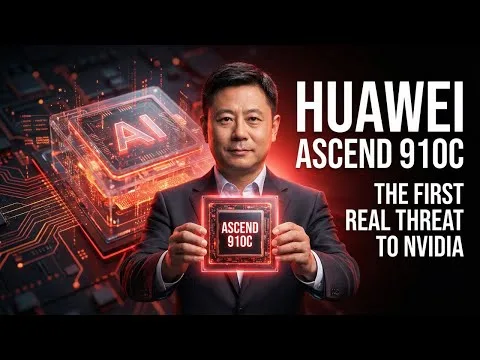
(Representative image of Huawei’s AI hardware deployments)
The implication is profound. Sanctions that once looked decisive are losing bite. China can now train and run frontier-class models at lower cost on its own stack, creating a parallel AI infrastructure ecosystem.
Policy, Adoption, and the “AI Plus” Bet
This technological push sits inside a broader strategic framework. China’s 15th five-year plan places AI at the absolute center of its economic agenda, promising original research, self-reliance, and integration across every sector. The “AI Plus” initiative explicitly aims to weave artificial intelligence into manufacturing, logistics, robotics, healthcare, autonomous vehicles, energy systems, and beyond. Humanoid robots became a national priority; China accounted for roughly 90% of global sales in 2025 (about 16,000 units worldwide), with over 150 companies in the space. Demonstrations—from XPeng’s eerily human-like IRON robot to widespread factory deployments—show rapid progress in physical AI.
Video generation models have reached hyper-realistic levels, worrying Hollywood. AI assistants are standard in Chinese cars. Wearables, smart infrastructure, and agentic software (like the enthusiastically adopted OpenClaw) are moving from prototype to production faster than in many Western markets. The core AI industry reportedly surpassed 1 trillion yuan (around $142 billion) in 2025.
Talent pools, government incentives, and a domestic market that rewards speed and cost-effectiveness give Chinese developers advantages in iteration. A late-2025 DeepSeek technical paper on “manifold-constrained hyper-connections” signaled continued focus on training ever-larger models more efficiently—precisely the kind of algorithmic innovation that complements hardware progress.
What It Means for the West: Commoditization, Competition, and Adaptation
The threat isn’t that every Chinese model will suddenly eclipse GPT-5 or Claude 4 across the board. Many analysts still see the U.S. leading in certain creative, safety-aligned, or proprietary breakthroughs. The deeper challenge is economic and structural. When high-quality AI becomes dramatically cheaper and more accessible—through open-source weights, low API prices, or local deployment—it commoditizes parts of the stack that Western companies hoped would remain highly profitable moats.
Startups and enterprises in the Global South, Southeast Asia, and even parts of Europe are already turning to cost-effective Chinese models and derivatives. Global usage share has shifted noticeably. In China itself, the speed of adoption creates richer datasets for further improvement, especially in applied domains like industrial automation and robotics. Hollywood feels pressure from hyper-realistic video tools. Chip giants like Nvidia face a shrinking addressable market in China as domestic alternatives gain traction.
There are caveats, of course. Questions remain about data quality, long-term frontier innovation, model safety alignment, and potential hidden costs or censorship baked into some domestic systems. Geopolitical tensions could still disrupt supply chains. Yet the momentum is unmistakable: China is betting on scale, efficiency, rapid iteration, and ubiquitous deployment rather than solely chasing the shiniest benchmark trophy. That bet appears to be paying dividends faster than many expected.







0 Comments
Log in to comment
Not a member yet? Join the community
Pick a meme
KlipyHave a great take?
Drop your email — we'll send a magic link so you can post it. No password.
Not a member of the community? Join today.
Join the community →