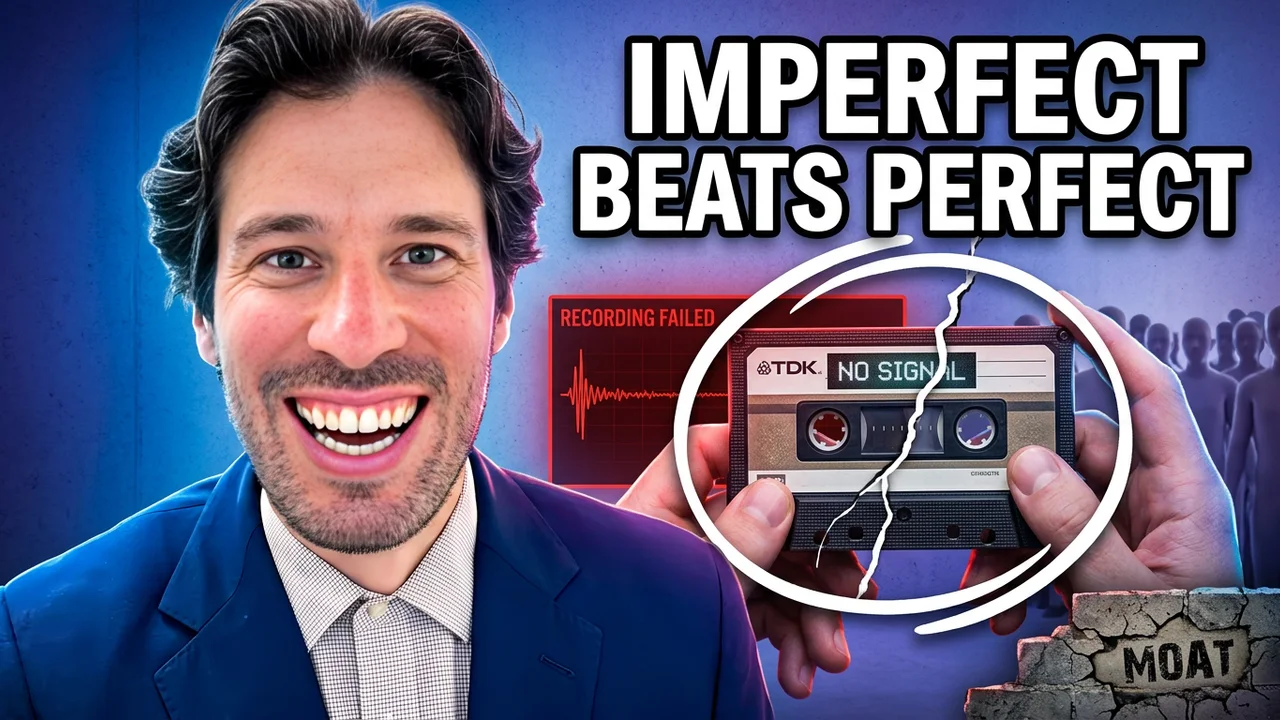
What actually happened to my 80-minute live stream?
The recording was completely silent. I ran a pre-stream audio test, it passed, and I went live for an hour and 20 minutes. Two full whiteboards. Fifteen years of personal development distilled into one session. When I pulled the file afterward, there was no audio — just silence. The stream had broadcast on mute the entire time, and people had tuned in anyway.
At [0:52] I said: "I go to the hour twenty minute live stream. That was it. Silence." — that single word landed harder than any technical post-mortem could.
The failure was total. I deleted the file. It is gone from the internet, never to be seen again. Next Friday I re-record it from scratch, which means I lost a full week of forward progress on the pivot.
Why did the audio fail in the first place?
I ran a test before going live and the audio confirmed fine. What I did not do was verify that the recording path — separate from the broadcast path — was also capturing audio. Those are two different signals on most streaming setups, and conflating them is an easy mistake when you are still learning the toolchain.
The MediaRecorder API documentation on MDN makes this distinction explicit: a live output stream and a local recording stream must each be initialized with an active audio track. I now treat those as two separate pre-flight checks, not one.
The broader lesson is that transitioning from a 17-year career as a broker-owner into live vibe coding{target="_blank" rel="noopener noreferrer"} means I am running systems I have not fully stress-tested. Bugs are the cost of building in public.
What is radical acceptance, and why does it apply to a failed recording?
Radical acceptance is a psychological concept rooted in dialectical behavior therapy — the practice of fully acknowledging reality as it is, without fighting it, in order to reduce suffering and move forward.
I did not invent the term, but I have been building toward it across 15 years of personal development, hundreds of books, coaches, events, and well into six figures spent on that education. The live stream was supposed to be the synthesis of all of it.
You might also like
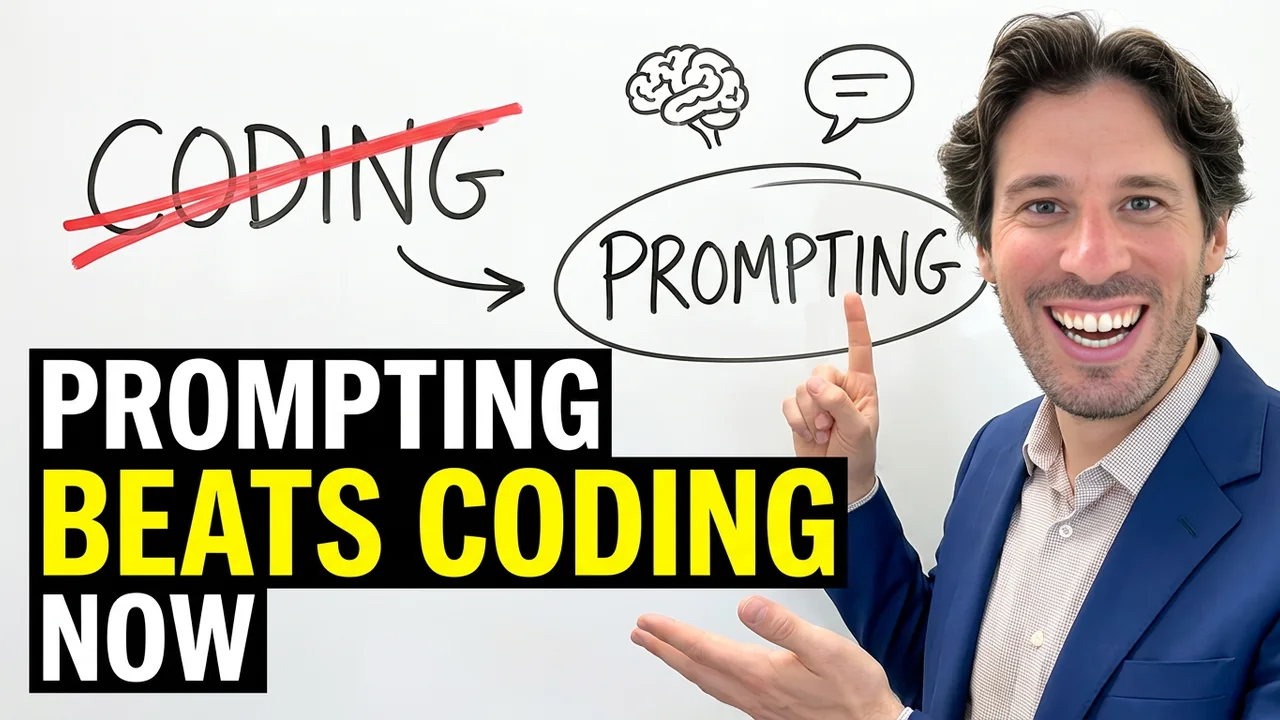
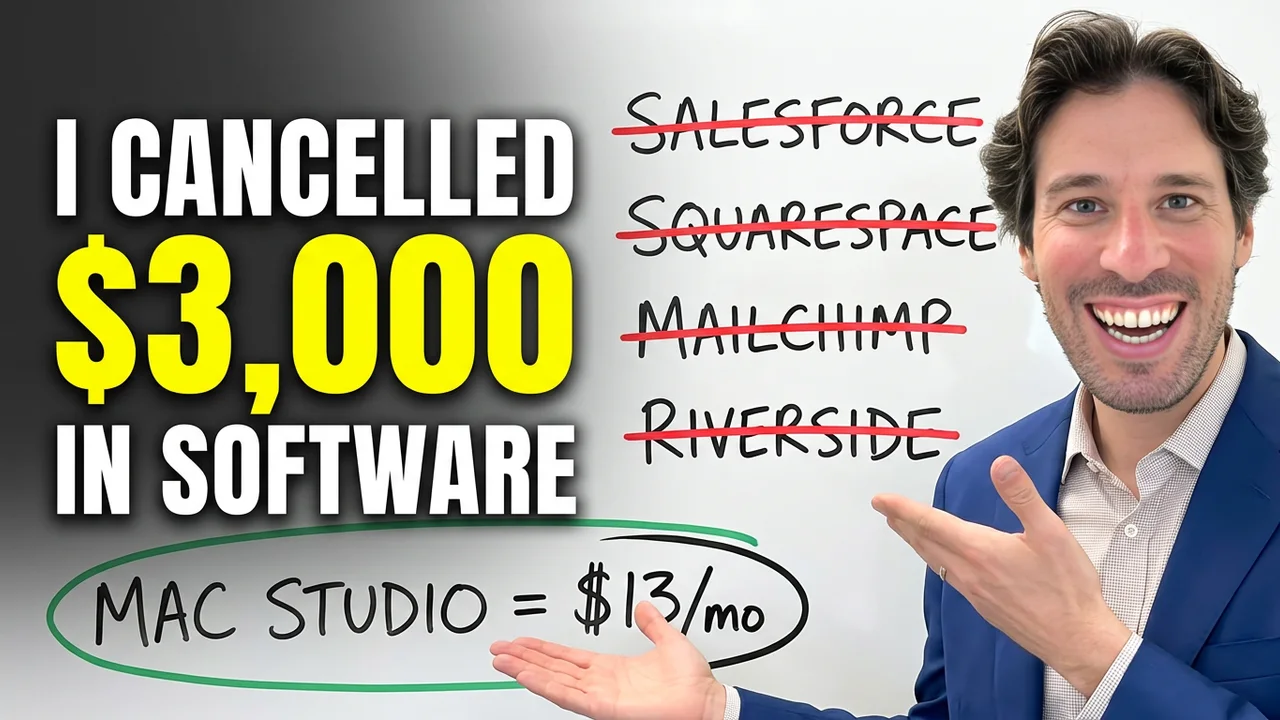
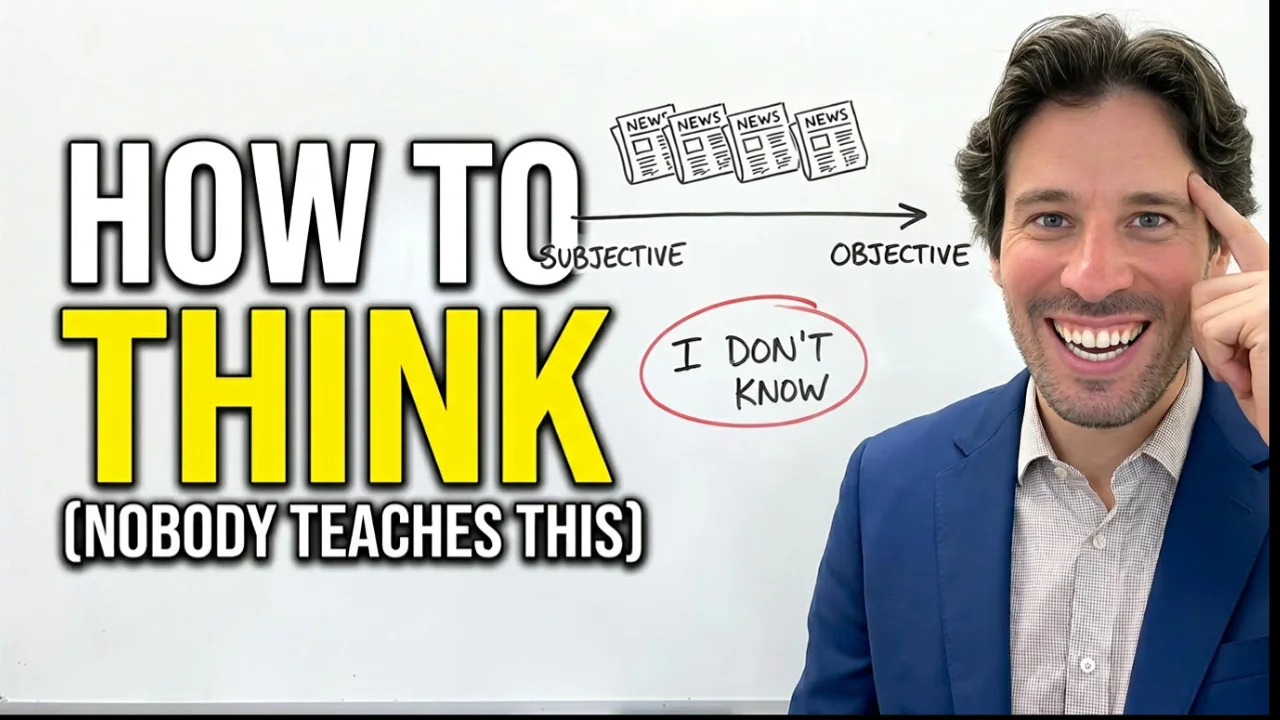
When the audio was gone, the only honest move was to apply the thing I had just spent 80 minutes explaining. This is now the circumstance. This is the reality in which I now live. Fighting it wastes energy I need for the re-record.
The failure also stress-tested integrity — the alignment of thoughts, words, and actions. I had just preached radical acceptance on a silent stream. Practicing it afterward was not optional.
How does the 90-10 rule explain who wins in an AI-saturated attention economy?
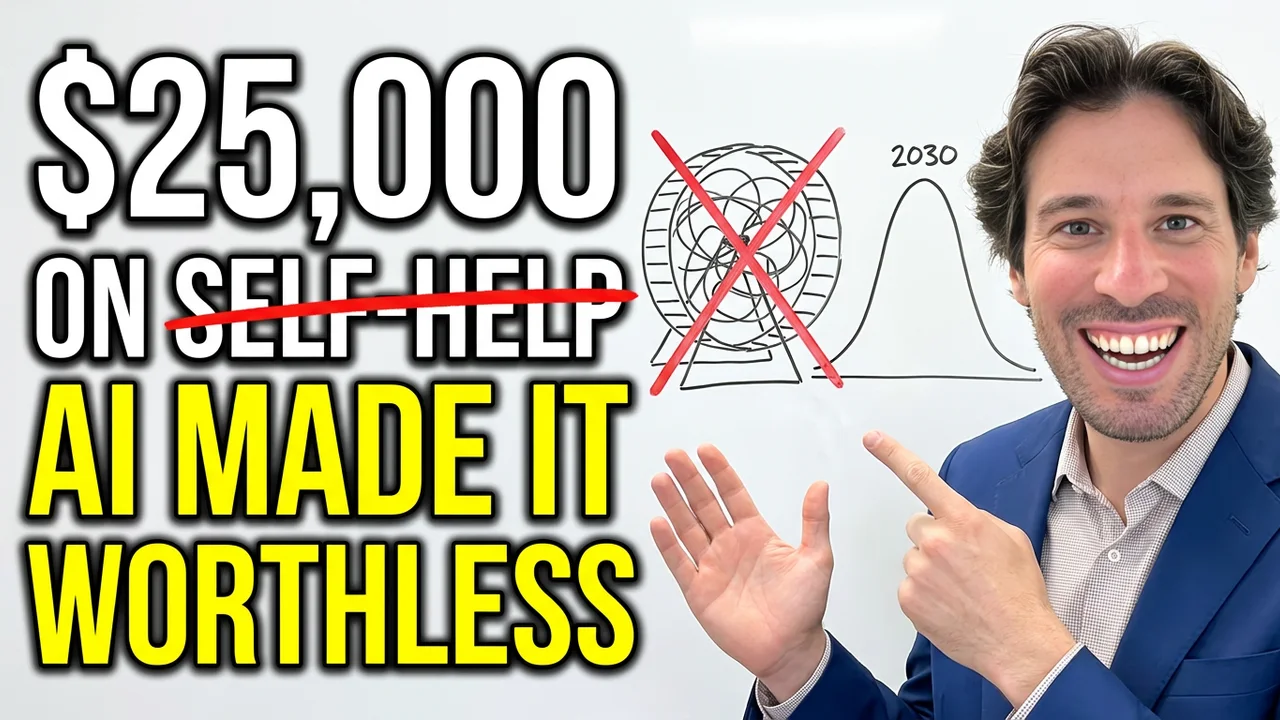
The standard framing is the Pareto principle and the 80-20 rule: 20% of inputs produce 80% of outputs. I think that ratio is already obsolete.
At [9:45] I said: "It's 90-10. The world is too vast for 20% to be leading everything." The examples stack up fast: 10% of baseball players hit 90% of home runs, 10% of coaches win 90% of Super Bowls, 10% of investments yield 90% of returns.
In the creator economy, the 10% who are producing are capturing almost everything. The 90% are consuming — more content, more drama, more podcasts, more AI-generated slop. The personal development loop I drew on that whiteboard is a consumption loop: more, more, more, and the need is impossible to meet.
Here is how I frame the split:
| Position | Behavior | Outcome |
|---|---|---|
| 10% — Creators | Produce content, build products, generate ideas | Capture 90% of attention and economic results |
| 90% — Consumers | Consume content, seek entertainment, follow trends | Remain on the demand side of every market |
The only move is to become a creator — lowercase c. It does not have to be a YouTube channel. It can be a community feature suggestion, a lawn design, a CRM built through vibe coding. The juices of the mind must flow in creation.
Why does authenticity matter more now that AI deepfakes are this good?
I got fooled by an AI-generated dog video months ago. I watched it, thought it was real, and only found out it was synthetic after the fact. If I cannot distinguish a convincing AI animal video from reality, the bar for authentic human presence has shifted permanently.
Three things survive that environment: authenticity (being radically who you are, not performing for clicks), integrity (thoughts, words, and actions aligned), and vulnerability (showing the failed recording, not hiding it).
The contrarian — the Steve Jobs figure who does not follow the trend but sets one — is the profile that wins when everyone else is copying the algorithm. Fitting in is the losing strategy when AI can fit in faster and cheaper than any human.
What does day 28 of the pivot actually look like in numbers?
Honest accounting: I have made nothing in 28 days. I saw a creator claim $28,000 in 22 days of vibe coding. I do not know his backstory, whether he had an existing product, or whether the number is accurate. What I do know is that I cannot verify it, and I am not going to use an unverifiable claim as my benchmark.
My benchmark is 1% better every single day. 1% more views. 1% more watch time. 1% better community experience. One member already suggested a swipe-down-to-refresh feature for the mobile community feed — that is creation, and it makes the product 1% better.
I have also had 3 major builds over the past months — thousands of dollars invested, months of work — that I had to scrap entirely. That is the real cost structure of building in public that the $28,000-in-22-days headline does not show.
What do members of the iCharles community ask about this pivot?
Does a failed live stream mean the content is lost permanently? In my case, yes. The 80-minute session with two full whiteboards was deleted because the audio file was silent. There was no recovery path. The re-record happens next Friday, and the new version will go to YouTube Members and the iCharles.com community — not to the public feed, to keep the signal-to-noise ratio manageable.
What is the difference between happiness and contentment in the context of this pivot? Happiness is a state — a feeling that spikes and fades. When I ended that live stream I was on a high, convinced it was the best session I had ever done. That high collapsed the moment I saw the silent file. Contentment is different: it is a stable baseline that does not depend on the outcome of any single recording. Being content is better than chasing happy.
How do you verify authenticity when AI can clone voices and generate convincing video? The signal I watch for is consistency between on-camera behavior and off-camera behavior. When someone's energy drops the moment the recording stops, that gap is the tell. Integrity means the person you meet in a DM or in person matches the person on the stream. I have heard from many people that meeting their online follows in person produces exactly that mismatch.
Why target the iCharles community instead of flooding public channels with every live stream? Flooding public channels with every iteration creates noise, not signal. The members-only format lets me iterate openly — bugs, failed audio, re-records included — without polluting the public feed with unfinished work. The community gets the raw process; the public feed gets the refined output. That separation is intentional.
What is the 1% daily improvement{target="_blank" rel="noopener noreferrer"} target based on? It is not a formula from a book. It is a practical counter to the viral-income benchmarks that dominate vibe-coding content right now. A $28,000-in-22-days claim is not a repeatable system I can copy without knowing the full context. One percent better on watch time, community engagement, and product quality is measurable, honest, and compounds over time without requiring a claim I cannot verify.

0 Comments
Log in to comment
Not a member yet? Join the community
Pick a meme
KlipyHave a great take?
Drop your email — we'll send a magic link so you can post it. No password.
Not a member of the community? Join today.
Join the community →