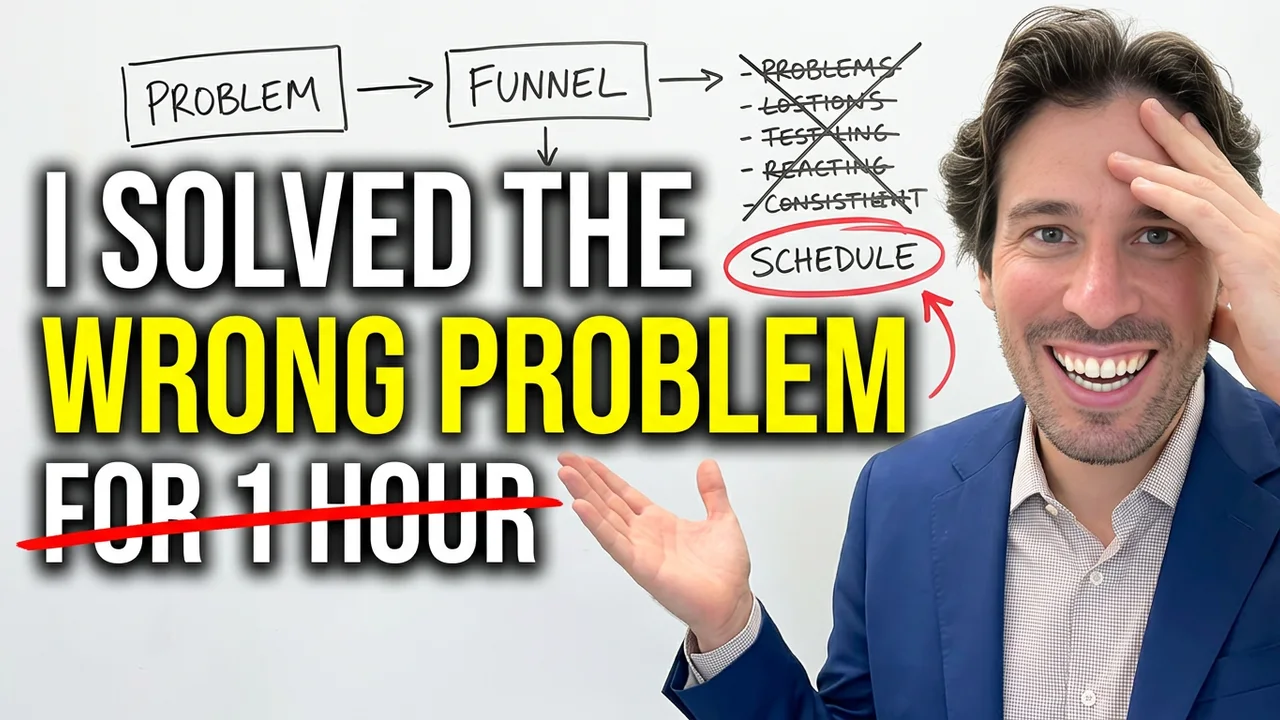
What did 35 days of daily vibe coding actually produce?
Thirty-five days of daily vibe coding built a habit — and exposed 2 root problems. I show up Monday through Friday, go live, vibe code for roughly 3 hours, then code solo to fix bugs, then shoot a video. That schedule sounds productive. But when I looked at iCharles.com, there was almost no content on the site, and I had no structured path to move a YouTube viewer toward a paid membership. The habit was real. The output, measured in value delivered to potential members, was close to zero.
At [9:52] I said: "We don't have a funnel. We don't have a funnel. We don't have a funnel. And if they became a paying member, there's no content." — That double admission — no funnel and no content — is the clearest diagnosis I've made in this entire building-in-public run.
Why does identifying the problem objectively matter so much?
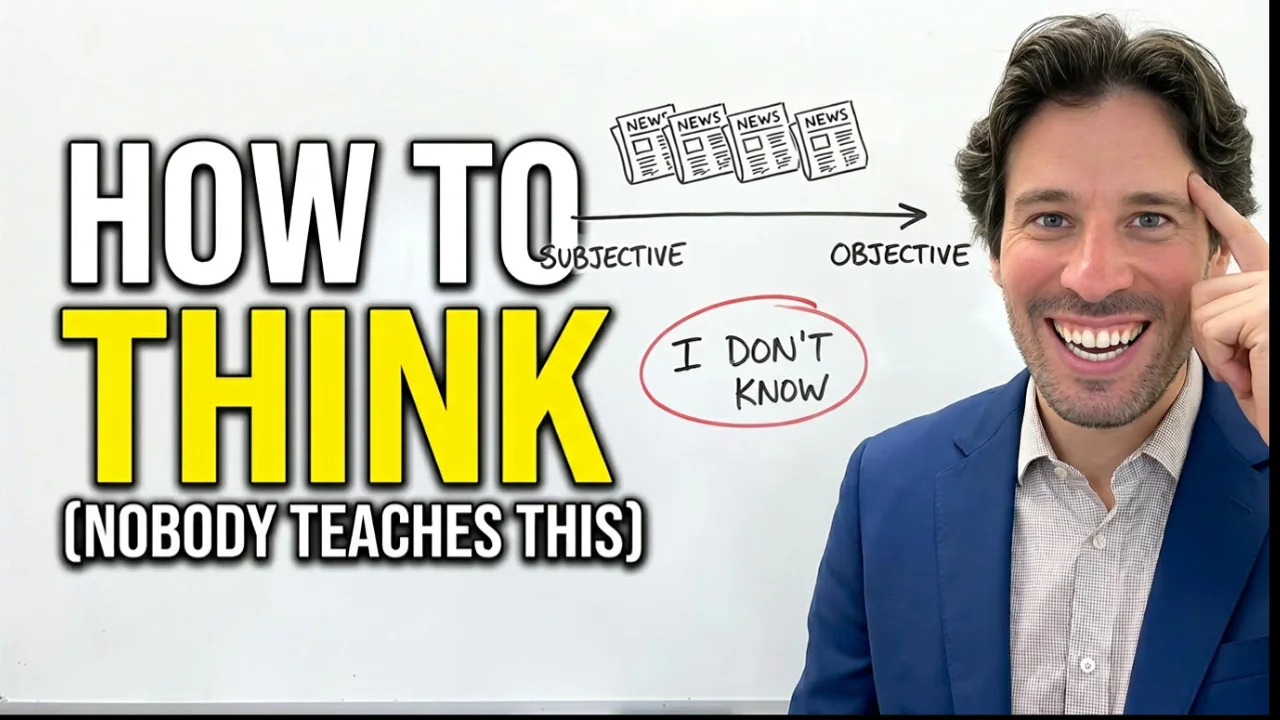
Most people, myself included, start with what they want the outcome to be. That is the subjective trap. The discipline I keep coming back to is separating how things actually are from how I want them to be. Those are two different things, and conflating them is where most builders stall.
In this session I kept pushing past the surface. My schedule looked like the problem. Three tasks per day, five days a week — that sounds like a plan. But the schedule was a symptom. The real problem underneath it was that none of those 3 daily tasks were generating the kind of content that fills a membership site or builds a YouTube audience that converts.
Brainstorming, done right, is not about reaching a predetermined answer. It is about staying oriented toward the objective truth regardless of where it leads. That framing — orienting toward truth rather than toward a desired outcome — is what I described in yesterday's session on thinking, and it is what made today's diagnosis possible.
How does the viewer-to-member funnel actually work?
The funnel has 4 stages, and each one requires a reason for someone to move forward.
- A person watches a video on YouTube — this is the top of the funnel, roughly 100 people.
- They subscribe because they want more of what they just watched.
- They become a regular viewer because the content keeps delivering.
- They decide they want more than free content and become a paying member of iCharles.com.
The closing rate from viewer to paying member sits at 3–4%. A 4–5% close rate, as I put it, is the kind of number that gets a salesperson flown to Antigua on a company trip. So I am not expecting miracles at the conversion stage. What I need is a large, well-fed top of funnel — and right now that top is thin because the YouTube channel is not being used properly.
The YouTube Data API official reference makes it straightforward to audit upload frequency and engagement. The data would confirm what I already know from watching my own channel: I have been adding almost nothing except live vibe coding sessions.
You might also like

Why did I move from a Mac Studio to Cloudflare for video?
The earlier brainstorming session — the one I filmed last week — landed on a clear conclusion: my value to the iCharles community is video. If video is the value, then the delivery infrastructure has to match that promise.
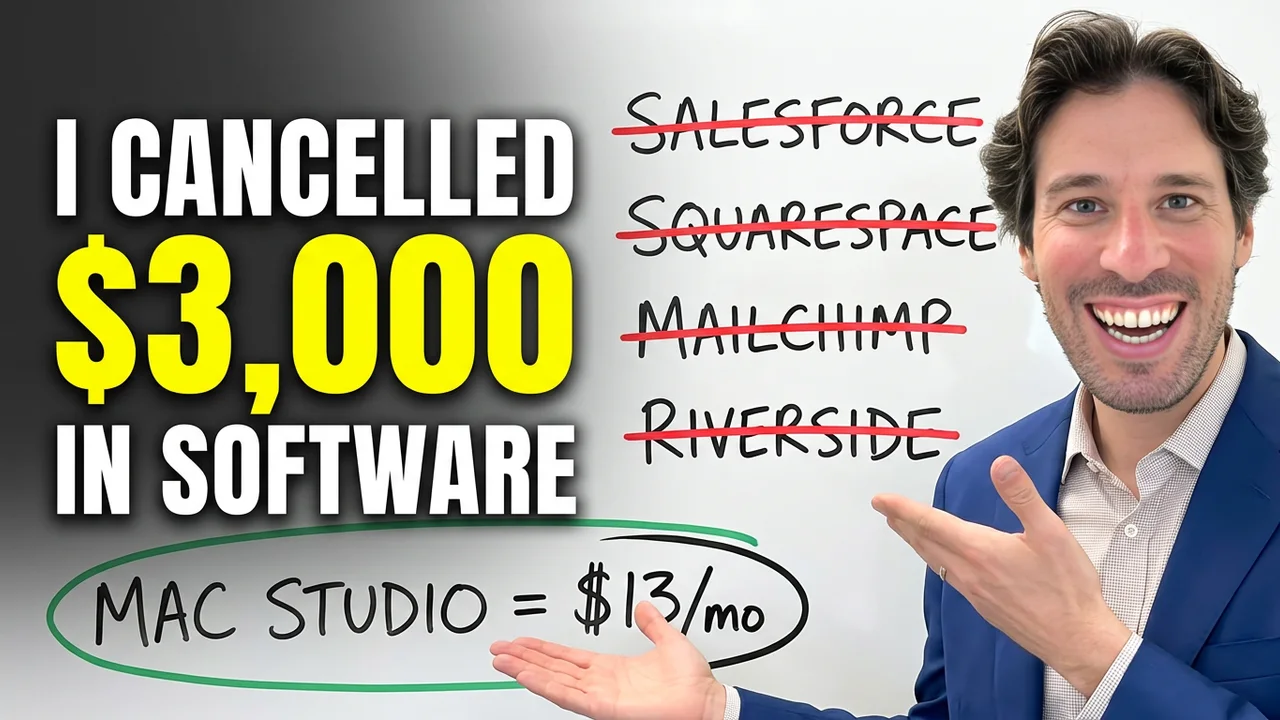
A Mac Studio running on my home ISP in New York City has 3 compounding problems: RAM limits, storage limits, and the bandwidth ceiling of a residential internet connection. None of those are solved by working harder. They are infrastructure problems, and infrastructure problems need infrastructure solutions.
Cloudflare Stream video delivery solves all 3. The videos live on Cloudflare's servers, not mine. Delivery is fast, quality is consistent, and the player can be embedded inside iCharles.com in a way that looks professional. I had to become humble about the "own everything, run local models" instinct I had been carrying. Owning the infrastructure sounds principled until the infrastructure becomes the reason members churn.
How does Matt Miller's trajectory compare to mine?
Matt Miller — the Bridge Mind Bridge Voice creator — is the reference point I keep returning to. He is at 190-plus days of vibe coding. His latest milestone is $191 in annual recurring revenue. He is roughly 150 days ahead of me.
Here is how the comparison maps out:
| Dimension | Matt Miller | Charles Botensten |
|---|---|---|
| Days vibe coding | 190+ | ~35 |
| Primary content channel | X (Twitter), daily posts | YouTube, daily live sessions |
| Monetization | Bridge product | iCharles.com membership (free now) |
| Separate content space | Yes | No — based in NYC, no dedicated space |
| Suite of products | Bridge as anchor | Community as anchor |
My read is that Matt's path to $1 million, if he wants it, runs through a suite of products inside Bridge. A single product at his current trajectory probably caps out around $250,000–$300,000 per year. That is a real business. But a suite changes the ceiling.
More importantly: I am not Matt, and I do not want to be. His value is educational content around AI on X. My value is personal development delivered through video. Those are different audiences and different content strategies. Copying his playbook without that distinction would be the wrong move.
What are the 2 root problems I need to fix right now?
After the full live diagnosis, I landed on exactly 2 problems. Not 5, not a vague "I need more content." Two specific, named problems.
Problem 1: No content on iCharles.com. If someone joins today, they find almost nothing. No testimonials, no populated feed, no video library. A new member has no reason to stay, which means churn is structural, not behavioral.
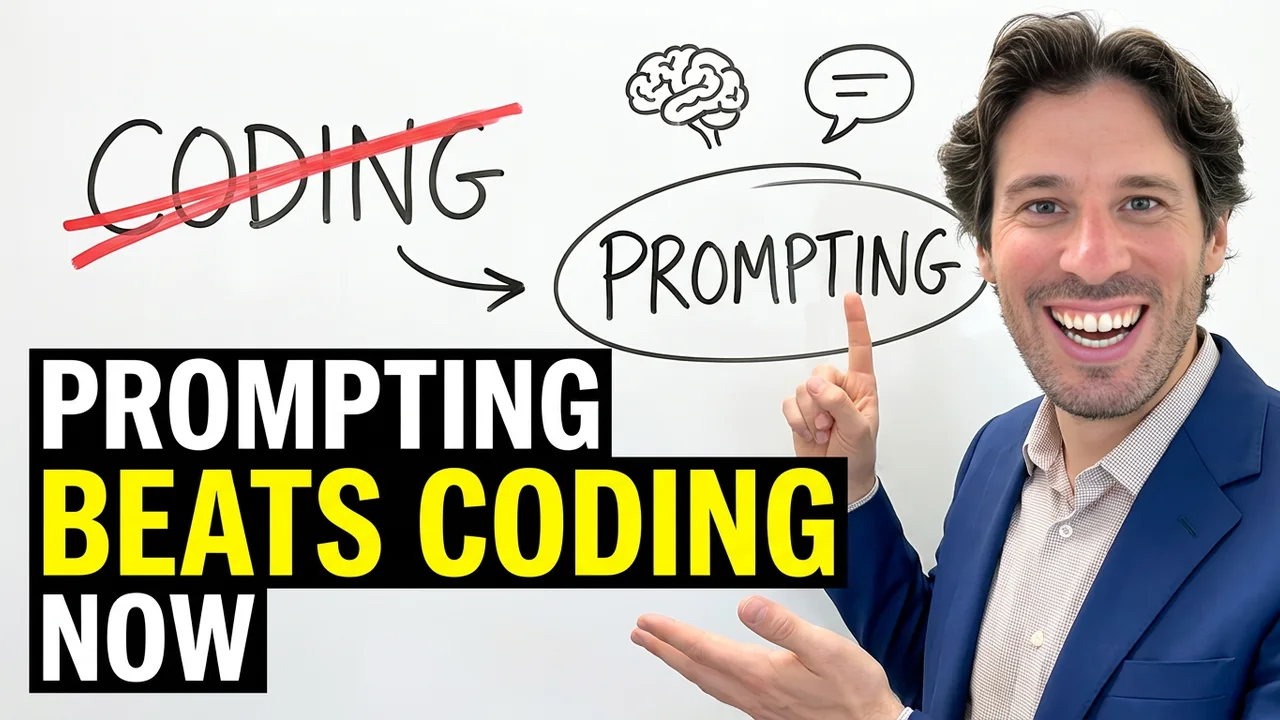
Problem 2: No YouTube funnel. I have been uploading almost exclusively live vibe coding sessions. That is one content format, and it does not serve someone who finds me for the first time and wants to understand what iCharles is about. According to James Clear's research on habit formation timelines, the 35-day mark is roughly when a behavior becomes automatic — and vibe coding is now a habit. The question is what I attach to that habit to make it produce funnel-building content.
Both problems are solvable. But they require a deliberate schedule change, not just more effort inside the current schedule.
What questions do builders ask when diagnosing a stalled membership site?
Does daily content creation automatically build a content library? Not if the format is wrong. I produced 35 days of live vibe coding sessions. Those sessions built my coding habit and gave regular viewers something to watch. But they did not create the kind of indexed, discoverable, evergreen content that fills a membership site or ranks on YouTube search. Format matters as much as frequency.
How long does it take to turn vibe coding into a paying habit? The habit formation part took about 35 days for me. The monetization part is a separate problem entirely. A habit produces consistency. Monetization requires a funnel, a content library, and a product worth paying for. I have the habit. The other 3 pieces are still being built.
Why is a 3–4% viewer-to-member conversion rate considered good? Because the math still works at scale. If 100 people watch and 3 pay, the question becomes: how many people can I get to watch? A 3% close rate on 1,000 viewers is 30 paying members. The rate is not the lever — the top of the funnel is the lever. Most builders obsess over conversion and ignore audience size.
Should a solo builder host video on their own hardware or use a platform? I spent real time on this question. My answer: use a platform unless you have a specific technical reason not to. A Mac Studio on a home ISP introduced RAM limits, storage limits, and bandwidth problems that had nothing to do with the quality of my content. Cloudflare Stream removed all 3 constraints. The "own everything" instinct is philosophically appealing but practically expensive at the early stage.
What is the difference between a surface problem and a root problem? A surface problem is what you see first. My surface problem looked like a bad daily schedule — too many tasks, not enough output. The root problem was that none of those tasks were producing content for the membership site or building a YouTube funnel. Fixing the schedule without diagnosing the root would have just made me busier with the wrong work. The brainstorming discipline is to keep asking "why" until you hit something structural.

0 Comments
Log in to comment
Not a member yet? Join the community
Pick a meme
KlipyHave a great take?
Drop your email — we'll send a magic link so you can post it. No password.
Not a member of the community? Join today.
Join the community →