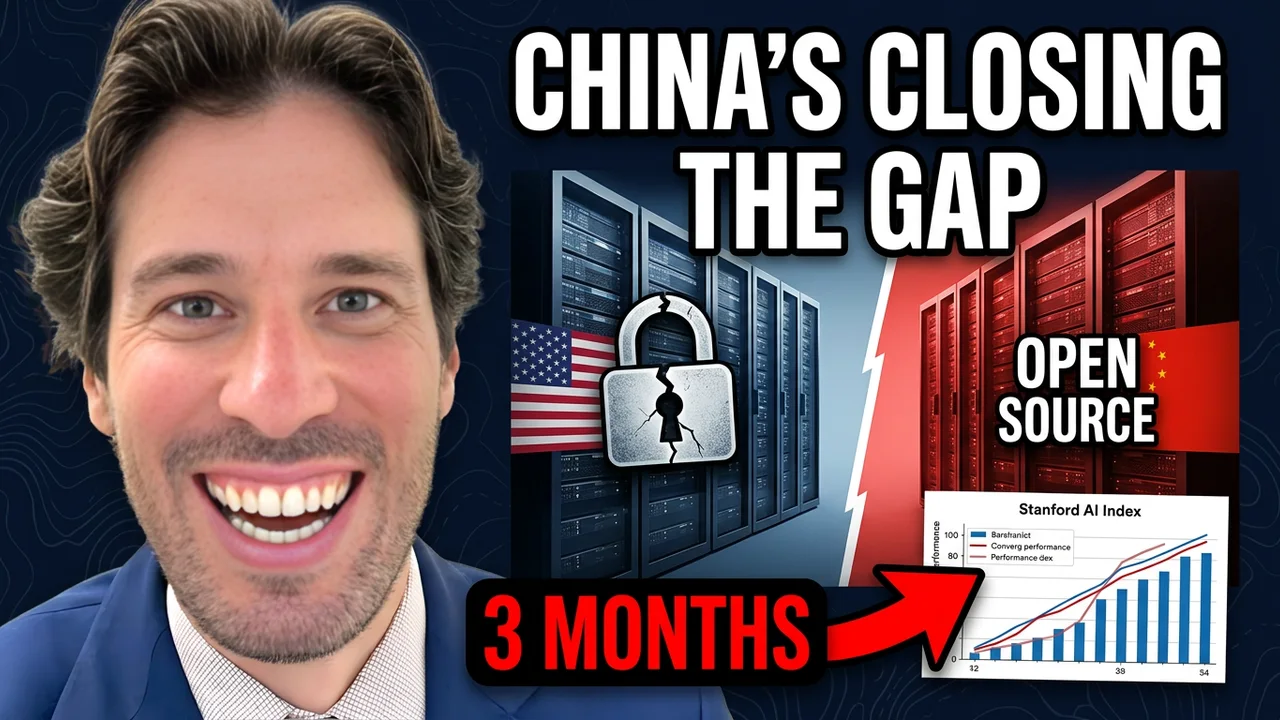
How fast is China's AI gap with the United States actually closing?
China's AI development lag has compressed from roughly 12 months to approximately 3 months — and that compression happened fast. A post inside the icharles.com members community flagged data from the Stanford HAI AI Index annual report and the Epoch AI research on AI development trends. Both indices point to the same conclusion: the gap is nearly gone on the benchmarks that matter most to builders.
The specific benchmarks in question are STEM and programming. Those are not soft metrics. They are the domains where closed-source US models built their reputations. Chinese open-weight models are now competitive there.
What did the US-China AI summit in May 2025 actually reveal?
The summit sent a delegation that included Elon Musk, the Treasury Secretary, and the Boeing CEO. The stated framing, as I read it, was essentially: are you ready to adopt US models and open up some trade instead of mutual blockades?
At [5:23] I said: "I think China just said, no. They just said, no, we're not doing business in AI" — and the market reaction the following Friday, when US futures fell after the delegation returned with nothing announced on AI, made that reading feel correct.
What did get announced was a 500-plane Boeing purchase. That detail stood out to me as strange for a summit billed around AI. My read: China showed the delegation what their unreleased models can do, signaled parity on chips and manufacturing, and sent everyone home with airplane contracts instead of an AI framework.
Jensen Huang eating noodles outside a restaurant went viral the same week. The entertainment cycle ran while the actual negotiation apparently collapsed.
Why are Chinese open-weight models a real threat to closed-source pricing?
An open-weight model is a model whose weights are publicly released, allowing anyone to run it locally or on cheap infrastructure without paying per-token API fees.
You might also like
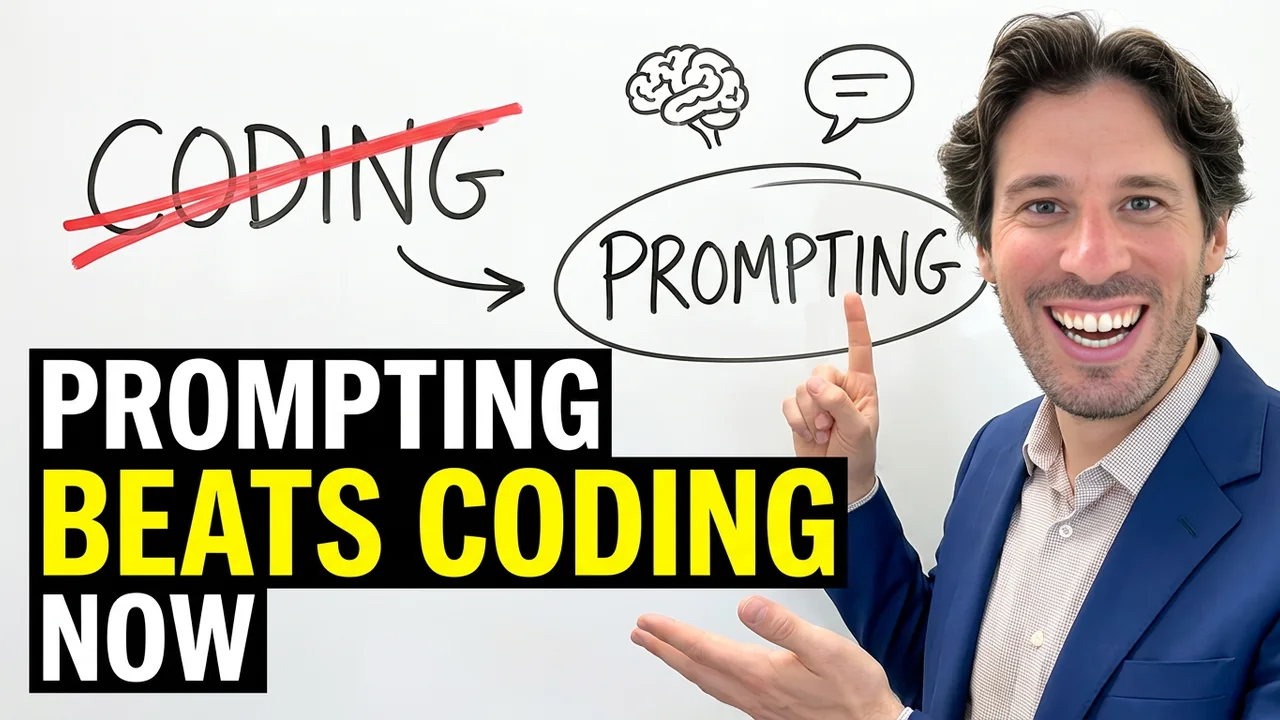
The cost argument is direct. A high schooler whose parents cannot spend $100 a month on Claude Code or OpenAI Codex can still build with a capable open-weight model at zero marginal cost. That is not a niche edge case. That is most of the world's next generation of developers.
The enterprise argument runs the opposite direction. A Fortune 1000 company competing against other Fortune 1000 companies cannot afford to run second-tier tooling on complex reasoning tasks. If their competitors are on the best closed-source model and they are not, they fall behind. The Anthropic enterprise AI platform is explicitly targeting that cohort — the top 1,000 companies that need the best and can pay for it.
What does a hybrid open-and-closed AI stack actually look like?
The bifurcation I see forming is not ideological. It is task-based. Here is how I think about it for my own work:
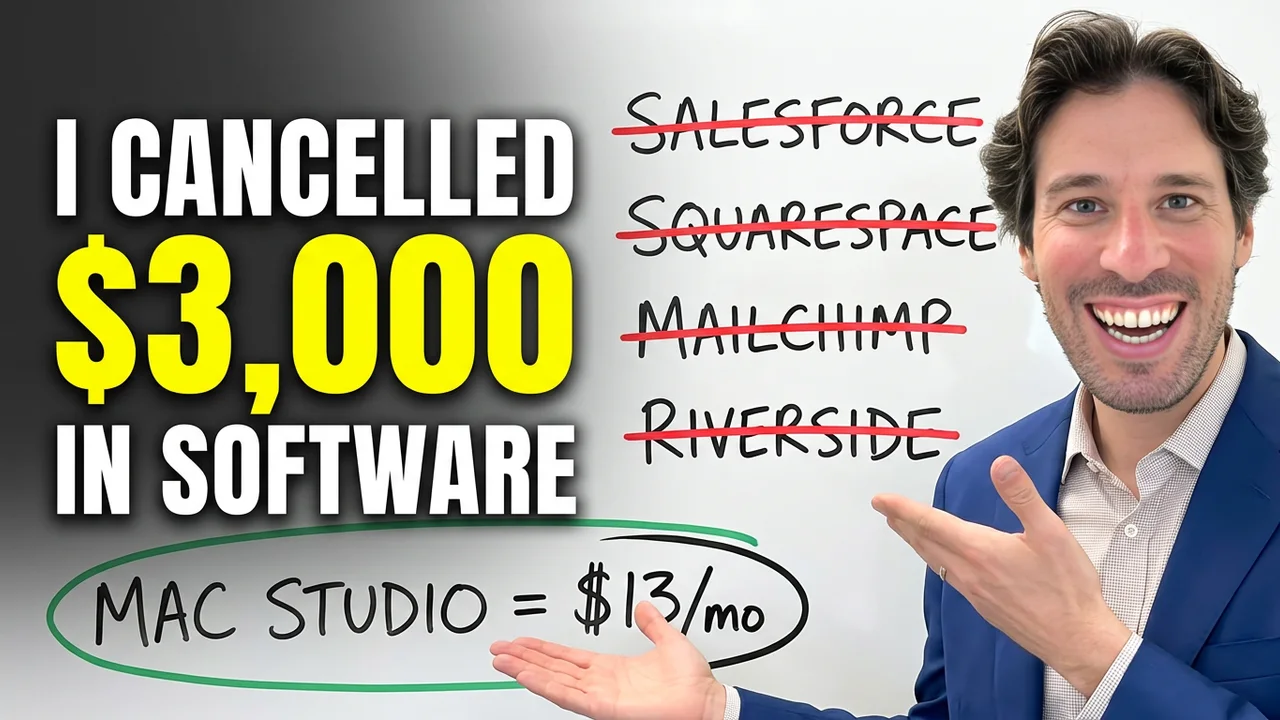
- A CRM birthday email using a template does not need Claude. It does not even need Haiku. A cron job firing a templated message is a zero-reasoning task.
- Opening-line personalization or visual design of that same email might benefit from a lightweight model pass.
- Complex reasoning — legal analysis, financial modeling, healthcare triage logic, architectural planning for a software system — stays on the best closed-source available.
- Mid-tier companies doing high-volume, low-complexity automation will route those workloads to open-weight Chinese models at minimal or zero cost.
- The same company may use closed-source for its 10% of genuinely hard problems.
That is the hybrid model. Not one or the other. Both, segmented by task complexity.
Which industries will stay on closed-source AI regardless of cost?
The sectors I keep coming back to are healthcare, law, banking, and financial services. The reasoning is simple: the cost of a wrong answer in those domains exceeds the cost of the model. A hospital cannot run diagnostic reasoning on a model it cannot audit, cannot trust, and cannot hold accountable through a vendor contract.
That is also where Anthropic's enterprise positioning is strongest. The Anthropic enterprise AI platform is not selling to hobbyists. It is selling to the organizations where a hallucination has legal or clinical consequences.
For my own use, I want the best available for reasoning, design, planning, brainstorming, and feature implementation. If the best is closed-source, I use closed-source. That preference is not loyalty to a brand. It is a performance requirement.
Could a chip breakthrough change the entire US-China compute equation?
This is the most speculative part of my thinking, and I want to be clear it is speculation. The current US strategy, as the Stanford and Epoch AI data describe it, is raw power through scaling — pour money into compute, build bigger closed-source multimodal systems, win on sheer capacity.
That strategy has a ceiling. Compute costs money. Data centers consume water and electricity at a scale that is generating real public opposition. The lobby structures around energy, manufacturing, and technology are not going to dissolve, but they do create pressure for an alternative.
My intuition is that someone will eventually produce a compute approach that does not require the current scaling assumptions. Not incremental efficiency gains — a genuine architectural departure. The historical analogy I used: someone once built an engine that ran on water. Whether or not that specific claim is true, the pattern of suppressed or delayed breakthrough technology in industries with entrenched lobbies is real and documented.
If that breakthrough arrives, enterprise companies get what they actually want: closed-source quality without the data center footprint. That is the scenario where the US-China chip competition looks very different from how it looks today.
What do builders inside the icharles.com community ask about this?
Is China's AI really catching up, or is this benchmark gaming? The Stanford HAI Index and Epoch AI Index are the two most cited independent trackers of global AI capability. Both show Chinese open-weight models reaching competitive performance on STEM and programming benchmarks. Benchmark gaming is a real concern in AI evaluation, but the convergence across two independent indices on the same trend is harder to dismiss than a single dataset.
Will open-weight Chinese models replace paid closed-source APIs for most developers? For routine, low-reasoning tasks — templated emails, simple data transforms, cron jobs — open-weight models are already sufficient and cost nothing to run. For complex reasoning, planning, and domain-specific professional work, closed-source models still hold a meaningful quality edge. The replacement is partial and task-dependent, not total.
Why did the US-China summit produce a Boeing deal instead of an AI agreement? My read is that China declined to negotiate on AI terms. The 500-plane Boeing purchase gave both sides something to announce, but the absence of any AI framework — combined with US futures falling the following Friday — suggests the AI conversation did not go the way the US delegation expected.
Does Anthropic's enterprise focus protect it from Chinese open-weight competition? Largely yes, for now. The Fortune 1000 companies Anthropic targets need vendor accountability, audit trails, and model reliability that open-weight self-hosted deployments do not provide out of the box. That institutional requirement is a moat, though not an infinite one as open-weight tooling matures.
What is the practical difference between scaling-based AI strategy and an architectural breakthrough? Scaling means training larger models on more data using more compute — the current US approach. An architectural breakthrough would mean achieving equivalent or better output with fundamentally less compute, potentially making the current chip-supply competition irrelevant. No such breakthrough is confirmed; this is a forward-looking hypothesis based on the historical pattern of disruptive innovation in compute-heavy industries.

0 Comments
Log in to comment
Not a member yet? Join the community
Pick a meme
KlipyHave a great take?
Drop your email — we'll send a magic link so you can post it. No password.
Not a member of the community? Join today.
Join the community →