Why is finding startup ideas harder than building them?
The bottleneck for most vibe-coders in 2024 isn't the stack — it's the blank page before the first prompt. I hear this constantly: "I know how to build with AI, I know the database, the architecture, the responsive layout — I just don't know what to build." After 314 days of live coding on camera, I've landed on an answer that sounds almost too simple: go outside and look around.
At [0:42] I said: "I literally walk around the world — I'm looking at Times Square — and there is just inefficiency all over this city" — that observation is the whole method in one sentence.
The inefficiency isn't hidden. It's in the dry cleaner's website that breaks on mobile. It's in the mortgage broker who Zaps three systems together and prays the API keys don't expire. It's in the barber who still runs a walk-in queue like it's 2010. The ideas are already there. The skill is learning to see them.
What kinds of local businesses have the worst digital infrastructure?
The short answer: almost all of them. But some categories are reliably worse than others.
Restaurants are paying OpenTable and third-party delivery platforms a percentage of every transaction just to handle reservations and orders they could own themselves. The OpenTable restaurant reservation platform is a mature product — which means a local operator is paying for features they'll never use while losing margin on every cover.
Real estate agents are the clearest example I know from personal experience. I was a real estate agent for 17 years. The workflow looks like this: Mailchimp API and email automation documentation for newsletters, Squarespace for the website, Salesforce CRM platform overview for contacts. None of these talk to each other natively. The standard fix is Zapier — but that's API keys breaking on a Tuesday morning when you have a listing going live.
Law firms are another category I keep coming back to. Their websites read like they were designed in 1995 and haven't been touched since. The content is fine. The presentation is exhausting.
Barbershops are the one that genuinely surprised me. My barber on Long Island still does walk-in only. No reservations. You show up, you wait, and if three people are ahead of you, you come back in two hours — or you don't. Meanwhile, a barber I use in the city has an 8-step booking flow that somehow still asks me to re-enter information it already has on file. Both are broken in opposite directions.
How does the Paperclip AI model show what a local business platform should look like?
Paperclip AI is a platform that bundles a website, CRM, email management, contact forms, and newsletter tools into a single dashboard — one per local business client, all managed from one interface.
You might also like


The model is worth studying because it solves the fragmentation problem directly. Instead of a real estate agent logging into 4 separate tools, everything lives in one place. The operator — the person who built and hosts the platform — manages all their clients from a single panel. Each business gets its own branded front end.
What I find useful about this as a reference isn't that you should clone it. It's that it proves the architecture is buildable. A website plus a CRM plus email management plus a contact form is not a complex system. It's a weekend of vibe-coding, replicated across 20 local clients in the same niche.
What does a tiered QR-code loyalty system actually look like in practice?
This is an idea I worked through live on the whiteboard, and it's worth laying out the full logic because the tiers are what make it interesting.
The core mechanic: every restaurant customer gets a unique QR code. When John scans his code at the door, the system logs the visit, applies a discount, and records the referral chain. Here is how the tier structure I sketched out would work:
- John scans his QR code and receives 10% off his meal.
- John refers a friend. The friend gets 10% off. John gets 15% off his next visit.
- John reaches 10 referrals. His discount moves to 11%.
- John reaches 15 referrals. His discount moves to 15%.
- John reaches 20 referrals. His discount caps at 20% — anything beyond that earns a free drink or a house item.
The restaurant owns this data entirely. No third-party platform takes a cut. The operator knows what John orders, when he comes in, and who he brings. That's a CRM, a loyalty program, and a referral engine in one vibe-coded system.
I run a version of this logic in my own community: refer someone who signs up for a month or a year, and both of you get 50% off. I make nothing on that transaction. But the referral flywheel is worth more than the margin.
Why does silence matter more than research when generating ideas?
This is the part that sounds soft until you try it. The ideation process I described on the whiteboard has 3 steps, and none of them involve a browser tab.
- State the problem out loud. Not the solution — the problem. "This website is terrible and I don't know what it should look like yet."
- Sit in silence. Not with music, not with a podcast. Silence.
- Let the pivot happen. You land on one idea, you follow it, you find the flaw, you pivot. You do this until the idea holds.
The barber example came out of this process. I walked in, waited, got frustrated, and started thinking. By the time I left I had sketched a reservation system, a pre-loaded profile with payment on file, and a one-tap rebooking flow. The problem was obvious. The solution followed from sitting with the frustration instead of dismissing it.
Should you build for every niche or pick one and go deep?
Pick one. This is the advice I keep coming back to, and it's the one most people resist because the other niches look equally promising.
If you focus on restaurants, you build one platform: website, reservations, delivery, promo codes, referral tiers, email newsletter. You deploy it to 10 restaurants. You know every edge case. You know what the health inspector form looks like. You know what a Saturday night reservation surge does to the system. That depth is the moat.
The alternative — building a generic local business platform and pitching it to everyone — means you're competing with Squarespace and Wix on day one. Niche specificity is the only place a solo builder has an actual advantage.
How does the "like it, good at it, money" framework apply to picking a niche?
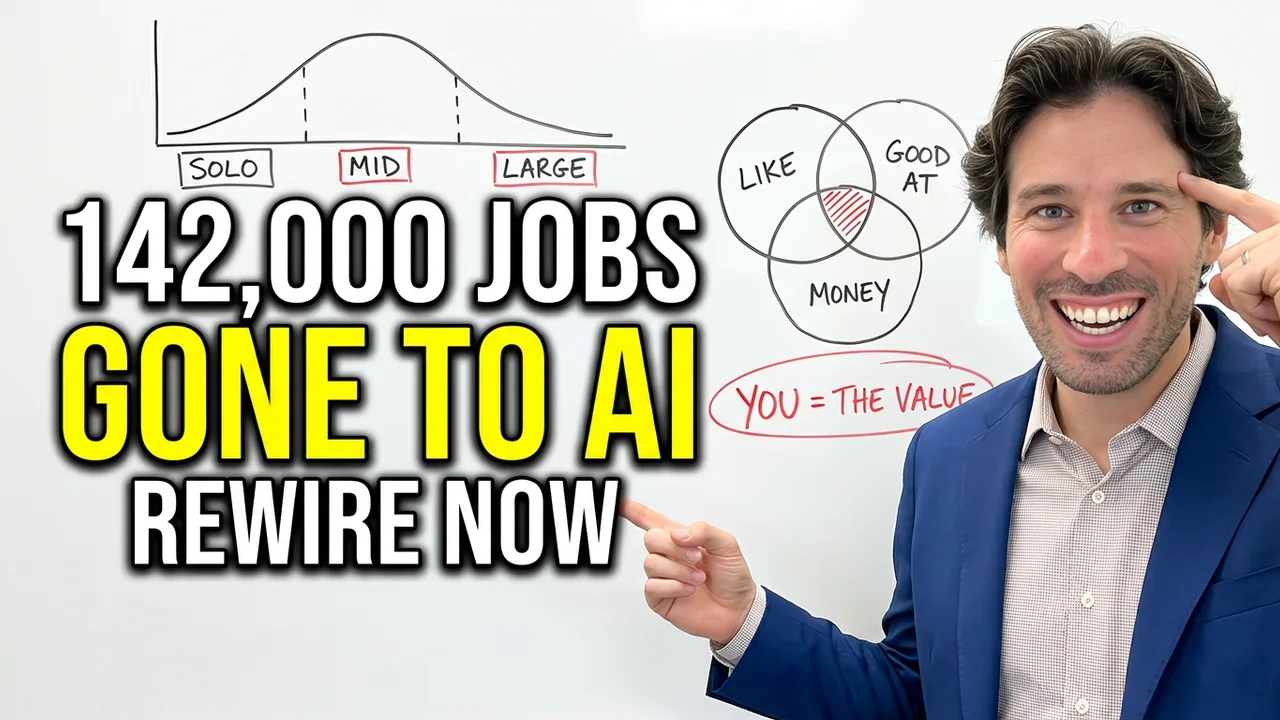
Mike Rowe — the host of Dirty Jobs — made this point in a way I keep returning to. The framework is a 3-part Venn diagram: what you like, what you're good at, and what makes money. Most advice tells you to find the center. Rowe's argument, and mine, is that the center is a myth.
My personal weighting is roughly 50% like it, 25% get good at it, 25% money. The reasoning: if I like something, I will get good at it. I need novelty. I need variety. Forcing myself into a niche I find boring because it's profitable is a path to stopping entirely.
For real estate, I spent 17 years in it. I know the pain points from the inside. That's a legitimate reason to build for that niche — not because the TAM is large, but because I already understand the problem at a level that takes most outsiders years to reach.
What do builders most often ask about finding local business ideas?
How do I approach a local business owner without sounding like I'm selling something? Show, don't pitch. Pull up their website on your phone in front of them. If it breaks on mobile, that's the pitch. I've found that owners who built their site 8 years ago genuinely don't know it looks broken on an iPhone. The conversation starts itself. You're not selling — you're showing them something they can already see.
Do I need to build a custom system for every client, or can I use a template? Templates are the whole point. You build one solid back end — website, CRM, email, contact form — and you swap out the branding, the images, and the copy. The restaurant version adds reservations and a POS. The real estate version adds lead generation and listing alerts. The core is the same. Customization is a layer on top.
Is the QR-code loyalty idea legal for restaurants to run? I'm not a lawyer, and I said on stream that the $500 referral rebate idea for car dealerships might not be legal — check your local rules before you build anything with financial incentives attached. The QR-code loyalty mechanic itself is standard practice. The referral commission structures vary by industry and jurisdiction.
What if the local business already uses a platform like OpenTable or MailChimp? That's actually the opening. They're paying per-seat or per-send fees to platforms that don't talk to each other. A unified system that costs less per month and keeps all the data in one place is a straightforward value proposition. The switching cost is real, but so is the monthly savings.
How do I know when an idea is good enough to start building? When you can state the problem in one sentence without mentioning a solution. "My barber has no reservation system and I waited 45 minutes" is a good problem statement. "I want to build a barbershop app" is not. The cleaner the problem, the faster the build — because you're not inventing requirements, you're solving something you already understand.

0 Comments
Log in to comment
Not a member yet? Join the community
Pick a meme
KlipyHave a great take?
Drop your email — we'll send a magic link so you can post it. No password.
Not a member of the community? Join today.
Join the community →