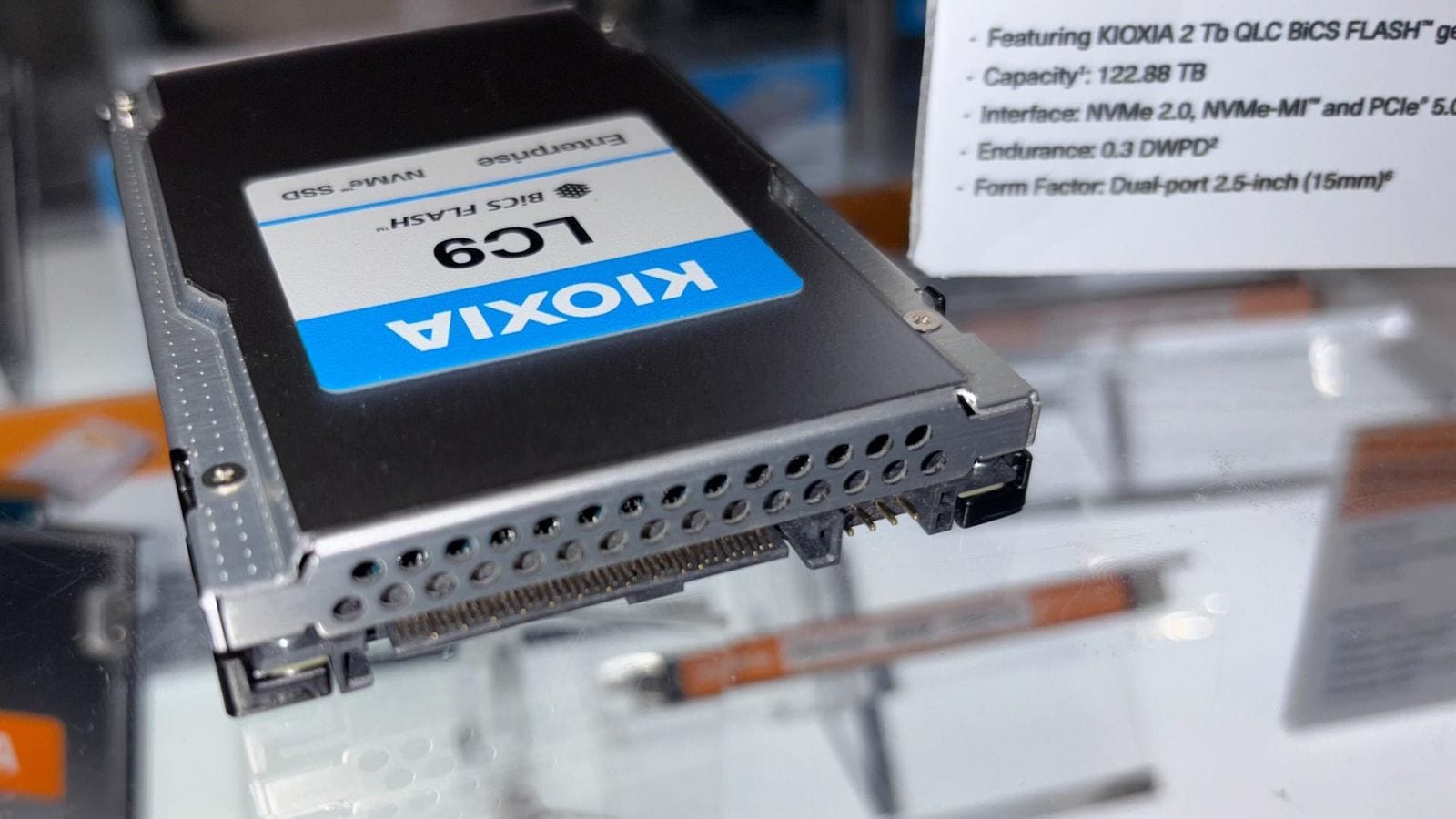
What did Micron just announce in Hiroshima?
Micron Technology broke ground on July 4, 2026 on a ¥1.5 trillion — roughly $9.3 billion — expansion of its factory in Higashihiroshima City, Hiroshima Prefecture, Japan. The new manufacturing building will target production of HBM4E (high-bandwidth memory, fourth generation enhanced), the stacked DRAM chips that sit next to GPUs inside AI accelerators. CEO Sanjay Mehrotra attended the ceremony and said, "Memory demand is increasing like never before."
High-bandwidth memory (HBM) is a type of stacked DRAM that enables AI semiconductors to process more data faster by using wider data channels than conventional memory.
How much is Japan's government contributing?
Japan's Ministry of Economy, Trade and Industry has committed up to ¥500 billion toward the project's capital costs, according to The Next Web's reporting on the groundbreaking. When research and development support already pledged is added in, Tokyo's total backing for Micron's Japanese operations reaches roughly ¥775 billion — covering close to half of the new investment.
Japan's Minister of Economy, Trade and Industry, Ryosei Akazawa, said at the ceremony: "Memory demand is expanding due to generative AI. It is highly significant for our country to produce and contribute to the world."
What products will the new facility make?
The new building will review production of several advanced products:
You might also like

- 1γ (gamma) process DRAM — Micron's senior vice president Manishi Bhatia said the company is considering production of the 1γ process, which he described as "the most advanced DRAM"
- 1δ (delta) process DRAM — the next-generation node after 1γ
- HBM4E — the next-generation product beyond HBM4, featuring wider data channels than HBM3E
Micron plans to introduce manufacturing equipment to the new facility from the second half of 2028, then gradually expand production scale.
Where does the Hiroshima site fit in Micron's history?
Micron acquired the Hiroshima plant in 2013 through the bankruptcy of Japanese DRAM manufacturer Elpida Memory. Chosun reports it is one of Micron's key production bases for DRAM and HBM. CEO Mehrotra noted at the ceremony that Micron's first HBM production wafer was made at this same Hiroshima site.
The expansion is part of a broader Micron programme that also includes leading-edge plants in Boise and a $100 billion manufacturing complex near Syracuse, New York.
How does Micron's current HBM supply look?
Here's what we know so far from Micron's most recent quarterly results: the company can fulfil only between half and two-thirds of customer orders for HBM, with its entire 2026 output already sold out under multi-year contracts. The current AI memory chip shortage shows no sign of easing before the Hiroshima lines begin shipping at volume in 2028.
Consumer electronics makers have already begun absorbing the cost of the DRAM shortage, as manufacturers redirect wafer capacity toward the higher margins that HBM commands.
Who are Micron's rivals in the HBM market?
The three companies that can make HBM at scale are Micron, SK Hynix, and Samsung Electronics. SK Hynix currently leads the market, with Samsung and Micron catching up. Both rivals have been producing HBM at scale for longer than Micron and are running their own expansion programmes.
| Company | HBM Market Position | Key Next Move |
|---|---|---|
| SK Hynix | Market leader | Own expansion programmes underway |
| Samsung Electronics | Second, catching up | Own expansion programmes underway |
| Micron | Third, catching up | Hiroshima expansion; shipments ~2028 |
As Micron secures production infrastructure targeting the post-HBM4E generation, competition among the three memory giants for the next-generation HBM market after 2028 is expected to intensify. This dynamic echoes broader AI packaging battles playing out across the semiconductor supply chain.
Why is Japan investing so heavily in chipmakers?
Japan once led the world in memory manufacturing before Samsung and SK Hynix overtook it in the 1980s and 1990s. Tokyo has committed tens of billions of dollars to chipmakers since 2021 in an effort to rebuild that domestic industry. Efforts include attracting TSMC's factory to Kumamoto and fostering Rapidus' next-generation 2-nanometer process.
Prime Minister Sanae Takaichi last month unveiled a long-term roadmap targeting ¥101.6 trillion in combined public and private investment in semiconductors and AI through 2041. Hiroshima Prefecture expects Micron's investment to create employment for more than 1,000 people locally.
Micron has leaned into the Japan relationship before. In 2023, it announced plans to bring extreme ultraviolet lithography to Japan with up to $3.6 billion in government backing. The company has also signed a multi-year supply agreement with Anthropic covering HBM, DRAM, and storage — a deal that underscores the direct link between AI chip demand and memory supply. The same pressures are reshaping how companies like Apple source memory, as seen in Apple's moves on CXMT chips.
Micron's next concrete milestone: manufacturing equipment moves into the new Hiroshima building from the second half of 2028.

0 Comments
Log in to comment
Not a member yet? Join the community
Pick a meme
KlipyHave a great take?
Drop your email — we'll send a magic link so you can post it. No password.
Not a member of the community? Join today.
Join the community →