What happened with Hesai and the US government?
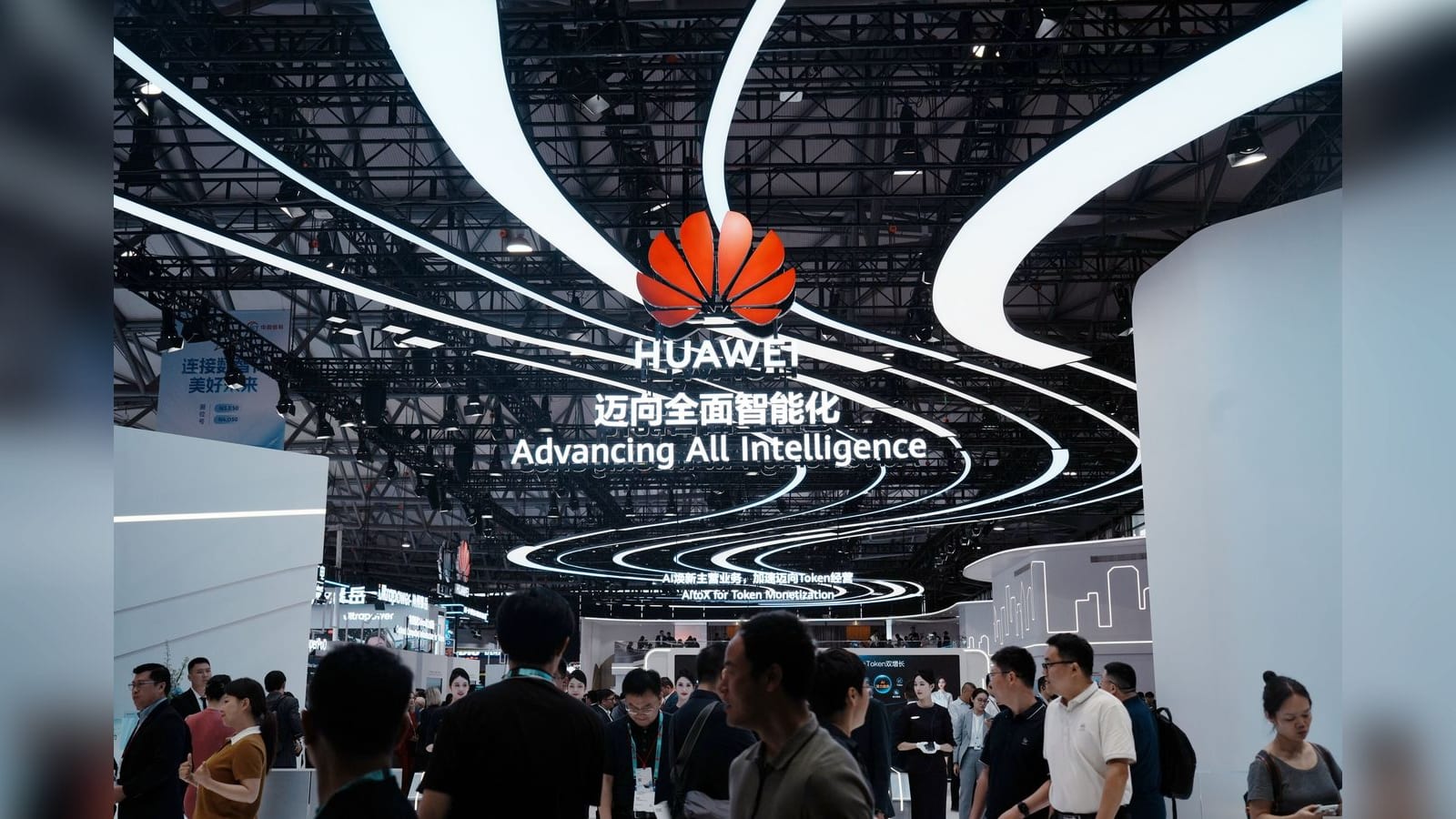
Hesai Technology is a Shanghai-based manufacturer of lidar sensors — laser-based devices that create 3D maps of surroundings for robots and self-driving vehicles. The US Department of Defense blacklisted Hesai in 2024, designating it a Chinese military entity under its Section 1260H list, according to CNBC.
Being on the list bars Hesai from Pentagon contracts. It does not prevent US companies from using Hesai's products in non-military applications.
Hesai co-founder and CEO David Li pushed back directly. "In the DOD case, I don't feel there is sufficient evidence, and it's not logical," Li told CNBC. "We are frustrated by that."
What is Hesai's partnership with Nvidia?
Hesai and Nvidia have worked together since 2019. In December 2021, Nvidia adopted Hesai's Pandar128 lidar as the ground truth sensor for its autonomous driving development systems.
The partnership expanded significantly in January 2026. Nvidia announced Hesai as a certified partner for its Drive Hyperion 10 platform — an open architecture that supports Level 4 autonomous driving by combining cameras, radar, lidar, and ultrasonic sensors, as reported by CnEVPost.
Nvidia CEO Jensen Huang highlighted the platform at CES in January 2026. "Our vision is that some day, every single car, every single truck will be autonomous," Huang said in his keynote.
Hesai's sensors also appear in systems built by Amazon's robotaxi company Zoox, autonomous trucking firms Waabi and Kodiak, and at New York's JFK International Airport, where they monitor passenger and traffic flow.
You might also like



Why do US officials consider Hesai a cyber risk?
Craig Singleton, a senior director for the China Program at the Foundation for Defense of Democracies, told CNBC that lidar sensors collect precise spatial data about roads, buildings, airports, and utility infrastructure.
"That data is so sensitive and it's so precise that it could be weaponized by a hostile foreign power if they ever wanted to target our infrastructure," Singleton said.
Singleton also pointed to Chinese law. US Securities and Exchange Commission rules require China-based companies to disclose government oversight risks. In its own SEC filings, Hesai acknowledged the Chinese government has "significant oversight in regulating our operations and may influence or intervene in our operations at any time."
"Whether they want to transmit that information or not isn't a question, it's mandated by law," Singleton said.
Li responded that Hesai's sensors hold no data because they lack the memory capacity to do so.
What was the 2024 firmware incident?
On March 1, 2024, a firmware error in Hesai's sensors caused disruptions that affected multiple autonomous fleets for over 24 hours. No one has alleged the incident was intentional. Security analysts cited it as an example of the vulnerability that Chinese-made sensors could introduce into US autonomous systems.
How dominant are Chinese lidar firms in the global market?
Here's what we know so far from the sources: Chinese lidar manufacturers control approximately 80% of the global market, according to industry analysts. That scale is supported by China's industrial policies, which have helped domestic firms achieve pricing advantages that Western competitors struggle to match.
Hesai alone delivered 1.6 million lidar units in 2025 — about 1.4 million for ADAS applications and over 200,000 for robotics. The company plans to double its annual production capacity from 2 million units in 2025 to 4 million units in 2026.
Western competitors named in the reporting include Luminar and Ouster.
| Metric | Figure |
|---|---|
| Hesai 2025 lidar deliveries | 1.6 million units |
| ADAS units (2025) | ~1.4 million |
| Robotics units (2025) | 200,000+ |
| Planned 2026 capacity | 4 million units |
| Chinese share of global lidar market | ~80% |
| Hesai–Nvidia partnership start | 2019 |
What has Congress done about Chinese lidar?
US Congress held discussions in December 2025 about the broader national security implications of Chinese lidar technology. No specific legislation has been reported as passed.
The DoD re-listed Hesai on its Section 1260H list in 2025, citing updated intelligence about potential affiliations with China's military-industrial complex.
What are the risks for Nvidia specifically?
Nvidia's autonomous driving platforms depend on sensor partners like Hesai. If US lawmakers move to restrict Chinese lidar in autonomous vehicles or infrastructure, Nvidia would need to find alternative suppliers for its DRIVE platform.
Nvidia reported automotive revenue for fiscal year 2026 was up 39% from a year prior, driven by adoption of its self-driving platforms. The company has described robotics — including self-driving cars — as its second most important growth category after AI chip development.
Hesai is also building a new factory in Bangkok, Thailand — called the Galileo Factory — which is expected to begin production in early 2027. The company was founded in 2014, listed on Nasdaq on February 9, 2023, and listed on the Hong Kong Stock Exchange on September 16, 2025.
Key risk vectors cited by critics and researchers:
- Potential data exfiltration through sensor systems
- Malware delivery through firmware updates
- Chinese law requiring companies to cooperate with intelligence agencies
- The March 2024 firmware error that disrupted autonomous fleets for 24+ hours
The most confirmed next milestone in this story is Hesai's Bangkok factory commencing production in early 2027, and any concrete legislative action following the December 2025 congressional discussions on Chinese lidar.
0 Comments
Log in to comment
Not a member yet? Join the community
Pick a meme
KlipyHave a great take?
Drop your email — we'll send a magic link so you can post it. No password.
Not a member of the community? Join today.
Join the community →