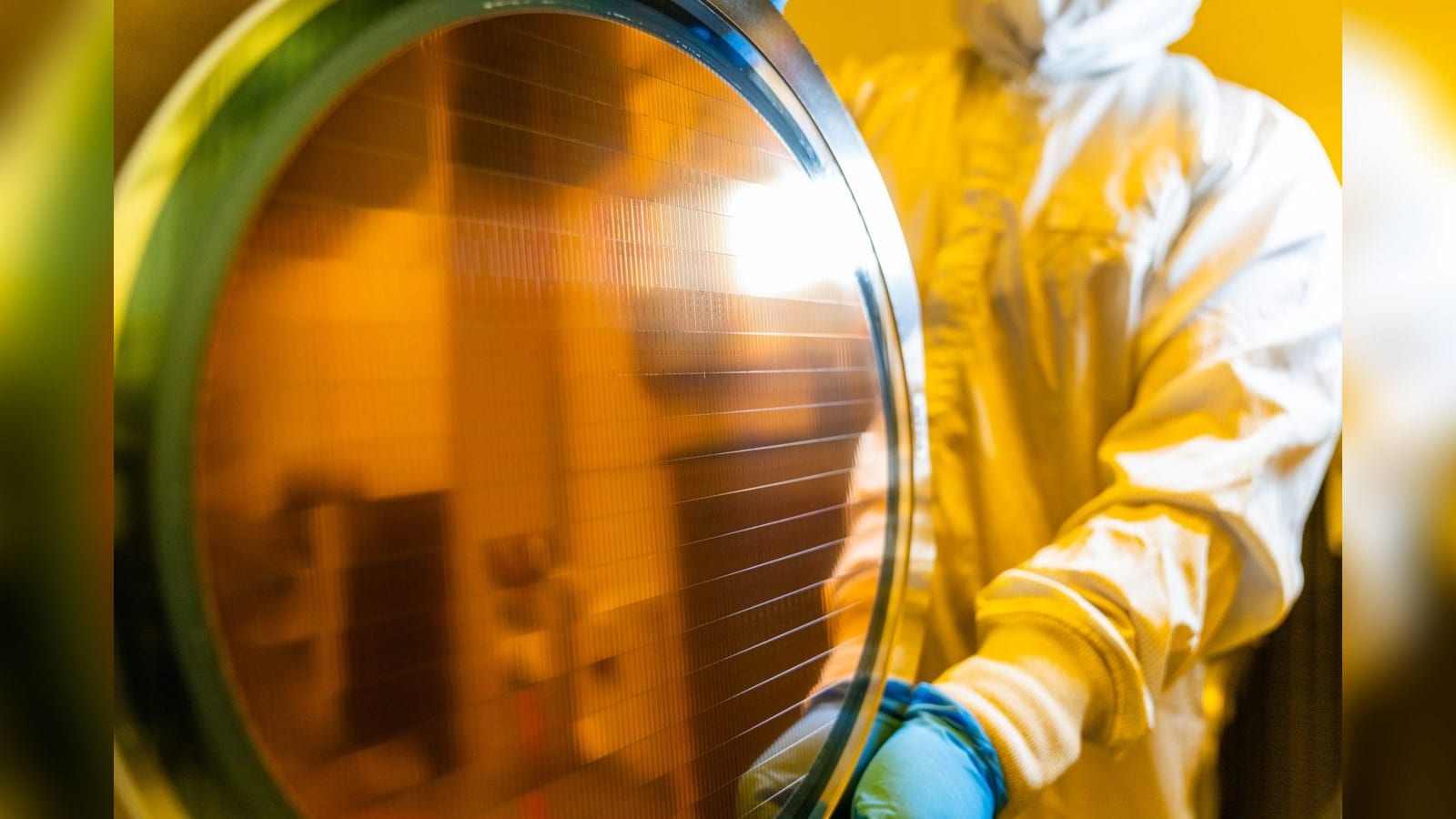
What did Amazon's hardware chief confirm about custom chips?
Amazon is building its own AI chips for Echo, Fire TV, and future consumer devices. Panos Panay, Amazon's senior vice president of devices and services, confirmed this publicly for the first time in a July 2, 2026 interview on CNBC's "The Tech Download" podcast.
"We do make our own end-to-end silicon for the devices that we ship," Panay said.
He named specific products already running Amazon-designed chips: the Echo Show 8, Echo Show 11, and Fire TV. The goal is tighter control over how hardware and software work together — and more secure on-device AI processing.
What is the AZ3 chip and what does it do?
The AZ3 is Amazon's custom chip designed to run AI models directly on a device rather than sending data to the cloud. Amazon unveiled the AZ3 and AZ3 Pro in October 2025. On-device AI is generally considered faster and more private than cloud-based processing, according to CNBC's reporting.
Panay framed the chip strategy around Amazon's broader push for what he called an "ambient experience in the home." Security was a key reason cited for moving to in-house silicon.
Why is Amazon shifting to in-house processors?
Analyst Ming-Chi Kuo, writing on X, tied the move to Amazon's finances. He noted that Amazon's free cash flow for the 12 months ended Q1 2026 fell 95% year over year to about $1.2 billion. That drop came as Amazon ramped up AI spending.
"To maintain financial flexibility and keep funding its AI investment cycle, Amazon is also streamlining its organization and improving the cost structure of its non-AI businesses," Kuo wrote.
You might also like
Here's what we know so far: the chip strategy serves two purposes — better AI performance on consumer devices, and lower costs as Amazon's AI infrastructure spending climbs.
Who is Alchip and what is its role?
Alchip is a Taiwanese chip design company that Amazon has selected as its exclusive partner for back-end chip design and testing, according to Kuo. The arrangement uses a customer-owned tooling (COT) model, which allows Alchip to earn both engineering fees and revenue from processor shipments.
This mirrors Amazon's earlier move into custom AI chips for its data centers, where AWS developed its own silicon to reduce reliance on Nvidia. Amazon introduced its first AI training chip, Trainium, in 2020, followed by Trainium2 in late 2024.
When will the new consumer chip strategy roll out?
The transition to in-house consumer processors is expected to begin in 2027, per Yahoo Finance's coverage of Kuo's analysis. Once fully implemented, annual shipments of Amazon-designed processors could reach about 40 million units.
The rollout will eventually cover Amazon's full lineup of own-brand devices, including Alexa-enabled products like Blink and Ring.
Which devices are affected?
| Device Category | Current Status |
|---|---|
| Echo Show 8 | Already uses Amazon custom silicon |
| Echo Show 11 | Already uses Amazon custom silicon |
| Fire TV | Already uses Amazon custom silicon |
| Kindle | Targeted for in-house chip transition |
| Blink / Ring | Targeted for in-house chip transition |
| Some devices | Still using Qualcomm chips |
Panay confirmed Amazon continues to use chips from Qualcomm for some products while it scales its own silicon program.
What does this mean for Amazon's AI assistant, Alexa+?
Alexa+ is Amazon's upgraded digital assistant, launched for general availability in the U.S. in 2026. It handles more complex queries, learns context, and connects Amazon's full device ecosystem — from Ring doorbells to Echo speakers to Fire TV.
Custom chips are central to Alexa+'s on-device capabilities. Panay said the hardware strategy supports delivering AI features locally, without relying on cloud connectivity for every interaction. Alexa+ competes directly with OpenAI's ChatGPT and Google Gemini for the consumer AI assistant market. Google is using Android's reach to acquire users, while Samsung is building AI features on Gemini models.
What future devices is Amazon working on?
Panay said Amazon has a "whole roadmap of on-the-go devices" — gadgets people carry, collect data with, and talk to. He described these as wearable-style devices that stay contextually connected whether a user is at home or at work.
"You won't have to wait long," Panay said, without naming a specific product.
Last year, Amazon acquired Bee, a company that makes $49.99 wristbands capable of understanding voice, creating lists, answering questions, and drafting notes. Panay also said he believes the industry may be "moving away from a world of apps and screens," with "conversation and context" becoming more important for AI assistants.
The broader on-device AI trend is pushing multiple hardware makers toward custom silicon. Apple has long designed its own chips for similar reasons — tighter hardware-software integration and performance control.
Amazon's chip supply chain moves also come as the global semiconductor industry faces mounting pressure, with companies across the board racing to secure custom silicon capacity.
The most concrete next step from the sources: Amazon's consumer chip transition is expected to begin in 2027, with Alchip serving as the exclusive back-end design and testing partner.


0 Comments
Log in to comment
Not a member yet? Join the community
Pick a meme
KlipyHave a great take?
Drop your email — we'll send a magic link so you can post it. No password.
Not a member of the community? Join today.
Join the community →