What is NATO's Drone Edge initiative?
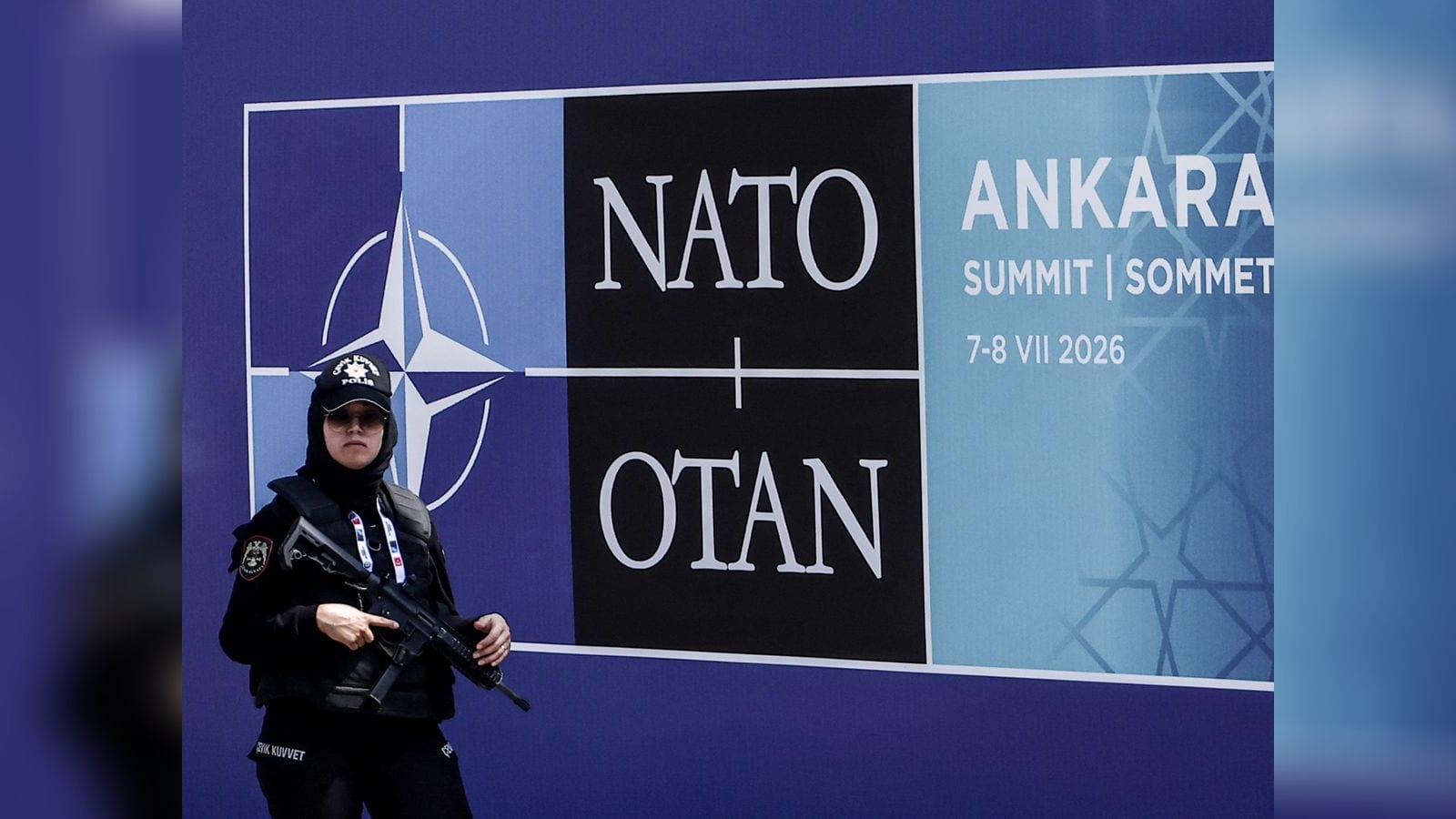
Drone Edge is a NATO-wide counter-drone program that commits $40 billion in allied investment over five years. Secretary General Mark Rutte announced it on July 7, 2026, at the NATO Defence Industry Forum in Ankara. The goal is to significantly expand the Alliance's ability to detect, identify, and neutralize drones threatening allied airspace, according to NATO.
Why did NATO launch this program now?
NATO cited the wars in Ukraine and the Middle East as direct drivers. Drones have fundamentally changed modern warfare and become a decisive factor on the battlefield, the Alliance said. Effective defense now requires the ability to rapidly detect, identify, and neutralize unmanned aerial threats. Here's what we know so far: the scale of the commitment — $40 billion across five years — reflects how seriously allies are treating the drone threat.
How will NATO train more drone operators?
Allies committed to increasing the number of trained drone operators in their armed forces fivefold. NATO set a deadline of the end of 2027 to meet that target. Training will run through the expanded NATO Flight Training Europe (NFTE) program, which covers all aircrew training and will now include drone operators. Finland, France, and Sweden joined NFTE at the Ankara forum, bringing total membership to 20 allied nations. Participating members access 16 flight centers spread across eight countries, as reported by United24 Media.
You might also like




What is the NATO counter-drone marketplace?
The counter-drone marketplace is a new procurement platform NATO will establish to help member states buy anti-drone systems faster and at scale. Systems listed on the marketplace will be NATO-tested and NATO-compatible. The goal is to remove delays in procurement that slow allied readiness. NATO's Supply and Procurement Agency (NSPA) also awarded a separate contract — valued in the hundreds of millions of dollars — to procure surveillance drones for allies.
What else did NATO announce at the Ankara forum?
The Ankara forum produced several additional defense commitments beyond Drone Edge.
Space initiatives announced July 7, 2026:
- Eight allies launched HALO (Hybrid Alliance Layered Operations in Space), a multinational initiative to connect sovereign military satellites into a networked mega constellation for communications, intelligence, and missile tracking.
- Canada became the 15th member of NATO's STARLIFT initiative, which develops a network of launch capabilities across allied spaceports.
- Spain became the 19th country to join APSS (Alliance Persistent Surveillance from Space), the largest multinational space investment in NATO's history.
- Germany's Isar Aerospace signed a contract with Canada's Maritime Launch Services for access to Spaceport Nova Scotia.
- Türkiye announced plans for two additional high-resolution satellites and investment in low-orbital military communications satellites.
Munitions and strike systems announced July 7, 2026:
- Nine allies — Canada, Czechia, Denmark, Finland, Greece, Norway, Slovakia, Sweden, and Türkiye — agreed to develop a prototype for a generic NATO 155mm munition under the GENIFR project.
- Six allies — Denmark, France, Italy, Norway, Türkiye, and the United Kingdom — launched a multinational Ground-Based Precision Strike Capabilities project covering new launchers and missiles.
- Türkiye announced a major national investment in ATMACA land-based, long-range cruise missiles.
These announcements connect to a broader allied push on autonomous defense systems and the growing role of drone technology in both military and civilian contexts.
Who is leading the critical raw materials project?
NATO Secretary General Mark Rutte announced a new multinational High Visibility Project on defence critical raw materials on July 7. Twelve allies are participating: Belgium, Canada, Denmark, Finland, Greece, Italy, Luxembourg, the Netherlands, Norway, Spain, Sweden, and Türkiye. The project focuses on acquiring, storing, transporting, and managing critical raw materials and components essential for defense production. Rutte said: "For our defence to remain ready and strong, we need our industrial base and our supply chains to be resilient."
The raw materials initiative mirrors broader concerns about supply chain vulnerability that have also shaped AI governance and defense tech funding discussions globally.
Key NATO Drone Edge figures at a glance
| Item | Detail |
|---|---|
| Total investment | $40 billion over five years |
| Drone operator target | 5× current numbers |
| Deadline for operator training | End of 2027 |
| NFTE member count (post-Ankara) | 20 allied nations |
| NFTE flight centers | 16 centers across 8 countries |
| NSPA surveillance drone contract | Hundreds of millions of dollars |
The confirmed next step: NATO allies must fulfill their drone operator training commitments by the end of 2027, with the Alliance providing support to member states throughout that period, per NATO's official announcement.




0 Comments
Log in to comment
Not a member yet? Join the community
Pick a meme
KlipyHave a great take?
Drop your email — we'll send a magic link so you can post it. No password.
Not a member of the community? Join today.
Join the community →