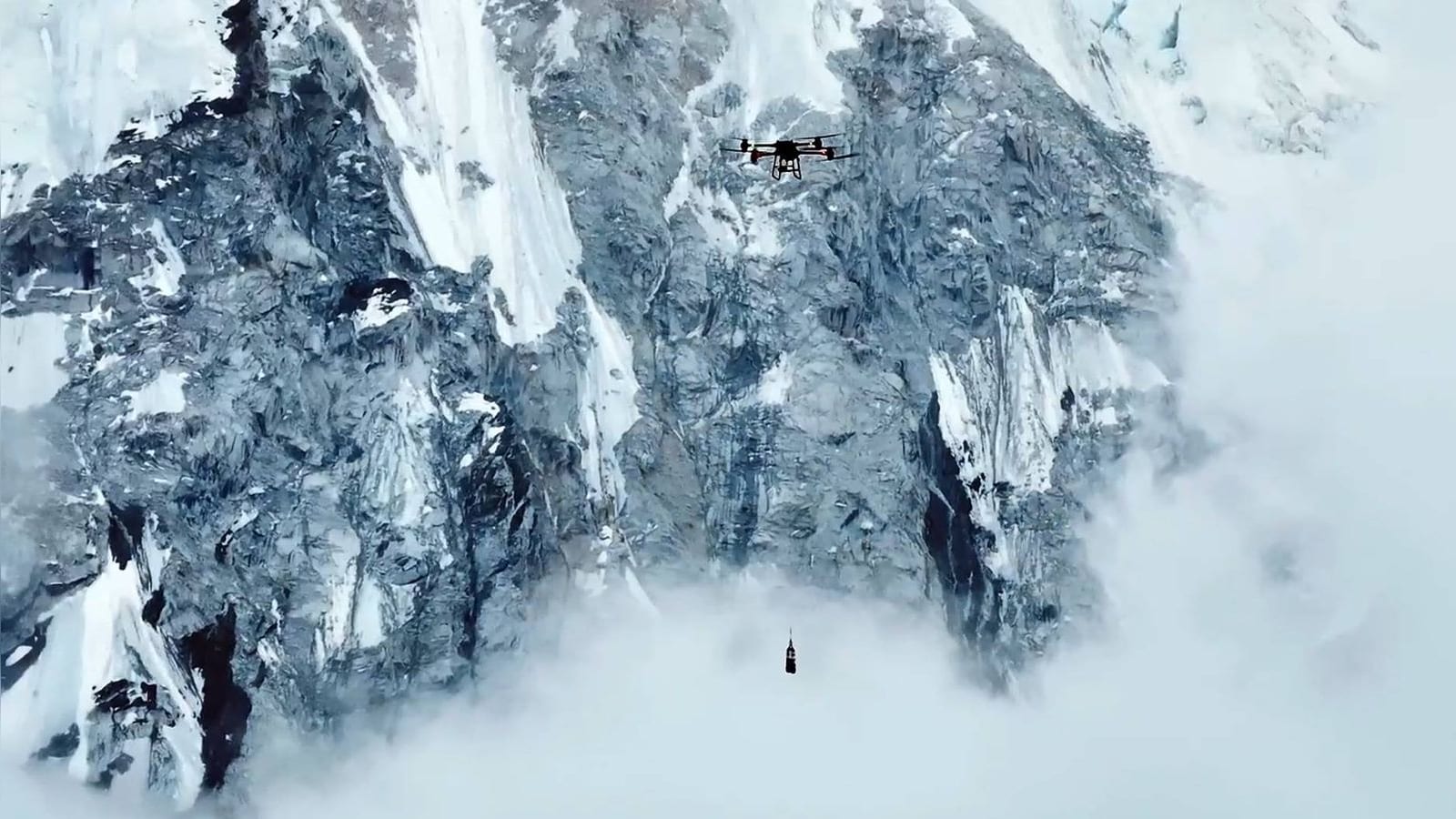
DJI Unveils the EV50 After Everest Test Flights
DJI has unveiled the EV50 — its first fixed-wing eVTOL cargo drone — after the aircraft reached 8,861 metres (29,072 feet) on Mount Everest. The mission was carried out for Peking University over 12 days inside the Qomolangma National Nature Reserve. (Source)
The EV50 uses a compound-wing design. It has eight vertical-lift rotors and three pusher propellers. It carries up to 50 kg (110 lbs) and hits 160 km/h (99 mph) unloaded. Its range is 150 km (93 miles) when empty. The 7-metre (23-foot) wingspan houses a 270-litre (9.5 cubic-foot) cargo bay.
What the EV50 Did on Everest
The drone completed 32 takeoffs and landings during the 12-day mission. Twelve of those sorties carried atmospheric data collection instruments into the ultra-high-altitude troposphere. The aircraft also achieved a continuous climb of 3,730 metres (12,238 feet).
DJI said the mission marked the first time Peking University researchers used drones to complete fine-scale observations of atmospheric pollutants at that altitude. (Source)
Why Electric Propulsion?
DJI chose electric propulsion to avoid two specific problems: exhaust emissions and downwash. Downwash is the downward deflection of airflow from rotors. Both issues can interfere with precision scientific instruments. A combustion engine would have caused both at the measurement altitudes involved.
You might also like



EV50 Key Specs
| Specification | Detail |
|---|---|
| Payload capacity | 50 kg (110 lbs) |
| Maximum range (empty) | 150 km (93 miles) |
| Top speed (unloaded) | 160 km/h (99 mph) |
| Wingspan | 7 metres (23 feet) |
| Cargo compartment | 270 litres (9.5 cu ft) |
| Max altitude reached | 8,861 metres (29,072 feet) |
| Continuous climb | 3,730 metres (12,238 feet) |
| Vertical-lift rotors | 8 |
| Pusher propellers | 3 |
The FlyCart 100's Nine-Day Permit Ban
While the EV50 was making its scientific debut, DJI's FlyCart 100 hit a regulatory wall in Nepal. The FlyCart 100 is DJI's next-generation delivery drone. It has been operating in the Everest region to ferry loads and collect garbage from high camps, including Camp I and base camp.
On April 30, Nepal's Ministry of Home Affairs cancelled the FlyCart 100's permit. No specific reason was given. The cancellation came after American company Freefly's Alta X Gen 2 drone sought permission for its own Everest test flight.
Airlift Technology Pvt Ltd — the Nepali company running the FlyCart 100 — reapplied to the Home Ministry. The ministry lifted the ban on May 4. The Department of National Parks and Wildlife Conservation (DNPWC) then issued a clearance letter on May 8, allowing operations to resume. (Source)
Airlift Technology had not reapplied for permission for the Freefly drone as of that report.
Who Operates the FlyCart 100?
Airlift Technology Pvt Ltd is the Nepali operator. It works with two local bodies:
- Khumbu Pasang Lhamu Rural Municipality
- Sagarmatha Pollution Control Committee
Their goals are garbage collection from Camp I and load ferrying from base camp on Everest.
A Timeline of the FlyCart 100 Permit Saga
- April 30 — Nepal's Ministry of Home Affairs cancels the FlyCart 100's permit. No reason is given. Freefly's Alta X Gen 2 had sought an Everest test flight slot.
- May 4 — The Home Ministry lifts the ban after Airlift Technology reapplies.
- May 8 — The DNPWC issues a clearance letter. FlyCart 100 operations resume.
What This Means for High-Altitude Drone Operations
Here's what we know so far: both the EV50's scientific debut and the FlyCart 100's permit saga show that high-altitude drone work faces engineering limits and regulatory ones.
DJI's history on Everest goes back two decades — from early flight-control experiments to current cargo transport and scientific observation. The EV50 is the company's first fixed-wing eVTOL entry into that lineage. (Source)
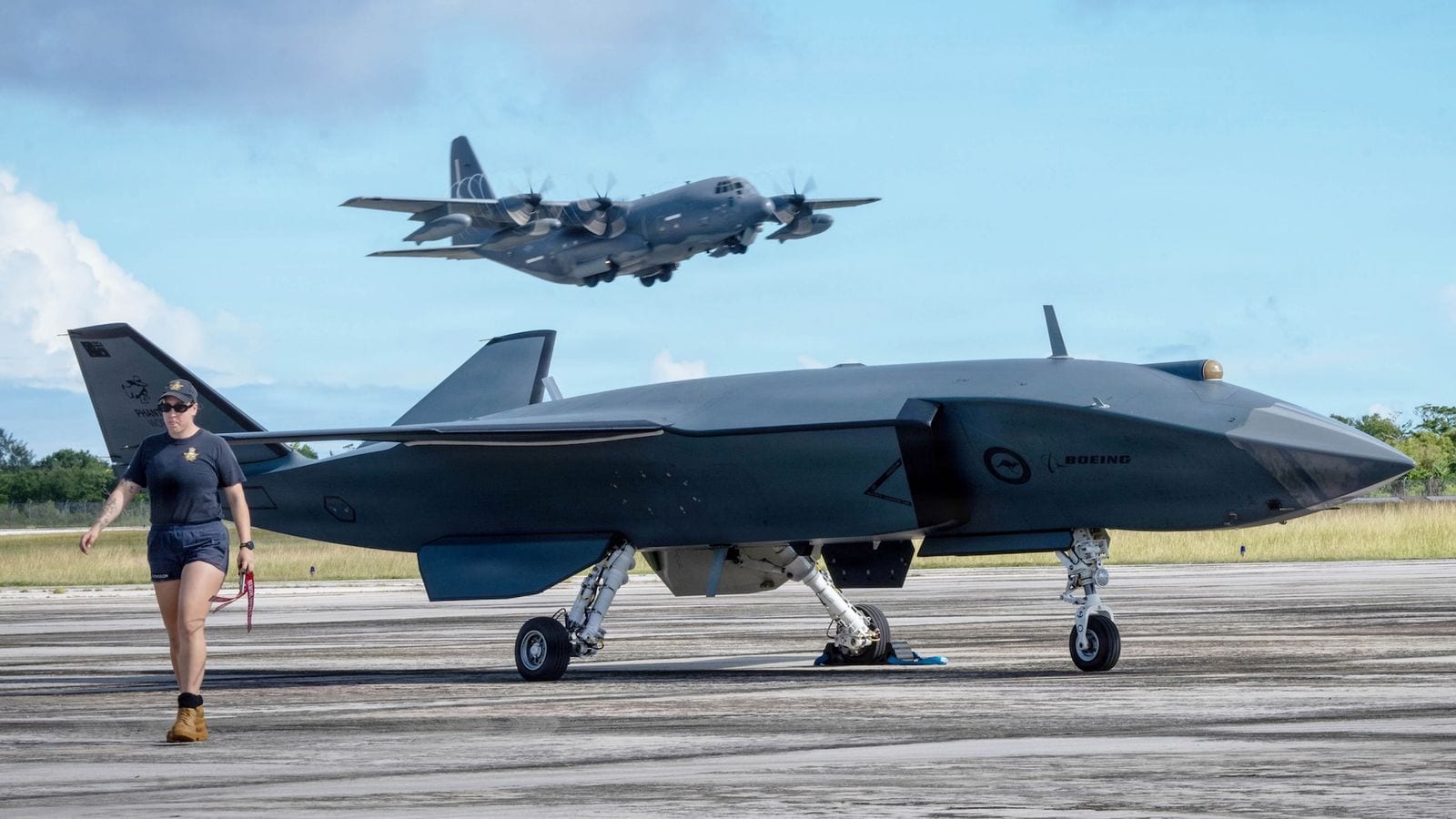
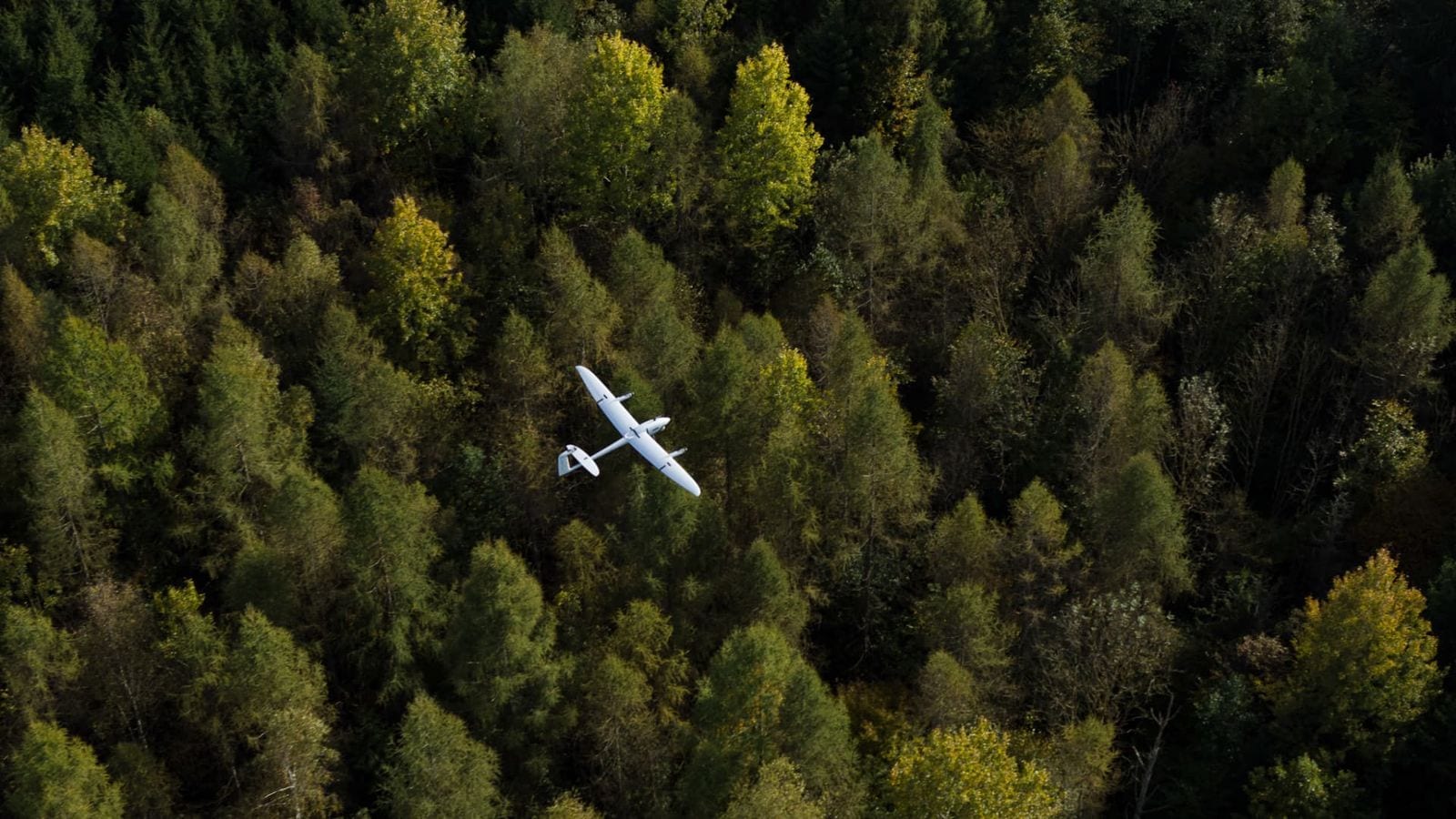
For those tracking where autonomous aircraft are heading, the EV50's Everest data sits alongside broader industry moves. NATO's drone initiative is reshaping defense logistics at scale. Quantum Systems' funding round signals serious capital flowing into fixed-wing drone platforms. The compound-wing approach DJI used on the EV50 also echoes design choices seen in Boeing's MQ-28, which blends autonomous flight with hybrid aerodynamic configurations.
The confirmed next step for the FlyCart 100 is continued garbage collection and load ferrying in the Everest region under the DNPWC clearance issued May 8.

0 Comments
Log in to comment
Not a member yet? Join the community
Pick a meme
KlipyHave a great take?
Drop your email — we'll send a magic link so you can post it. No password.
Not a member of the community? Join today.
Join the community →