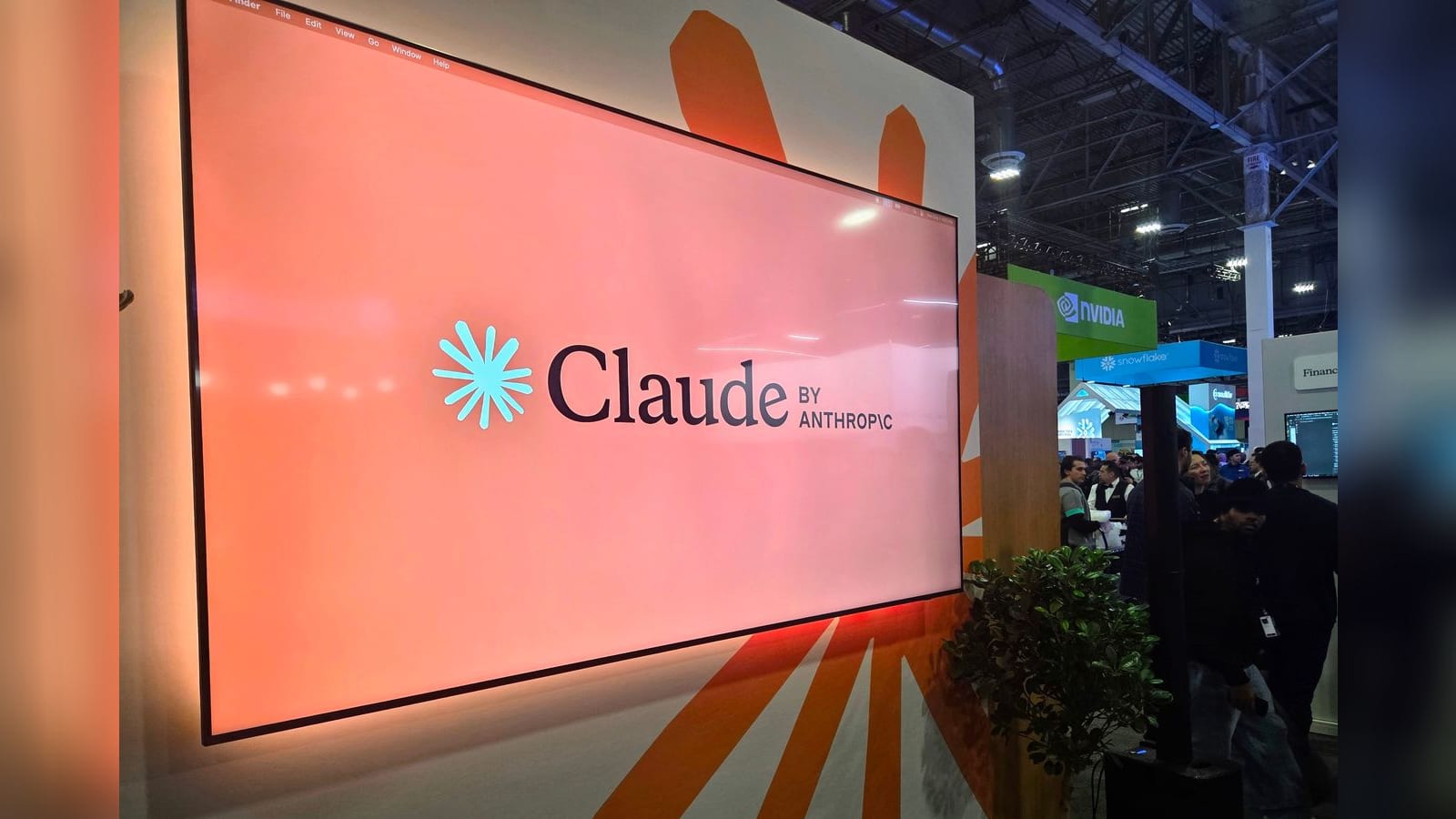
What happened with Anthropic's Fable 5 and Mythos 5 export controls?
The US Department of Commerce lifted export restrictions on Anthropic's Claude Fable 5 and Mythos 5 models, roughly three weeks after flagging them as national security risks. Anthropic confirmed the news in a post on X: "We've received notice that the Department of Commerce has lifted export controls on Claude Fable 5 and Mythos 5. We'll begin restoring access tomorrow."
Commerce Secretary Howard Lutnick told Anthropic in a letter that the company would "no longer need a license for exports or in-country transfers of its Claude Mythos and Claude Fable AI models," according to Ars Technica.
Why did the US government restrict the models in the first place?
The government abruptly cut off access to both models on June 12. The reason: officials discovered vulnerabilities in the safeguards designed to prevent misuse, TechXplore reported. Researchers feared the models could be exploited to bypass cybersecurity measures.
The Trump administration had invoked national security concerns to limit the release of advanced models from major US AI companies, including Anthropic.
When was access restored, and to whom?
Here's what we know so far about the timeline of restrictions and restorations:
You might also like

| Date | Event |
|---|---|
| June 12 | US government cuts off access to Fable 5 and Mythos 5 |
| June 22 | Small group of US cybersecurity firms authorized to access Mythos 5 |
| June 26 | US organizations have Mythos 5 access restored |
| July (announced) | Fable 5 available globally; Mythos 5 access expansion begins |
Fable 5 is now available globally. Mythos 5 access was restored to US organizations on June 26, and Anthropic said it is working with the government to expand Mythos access to a "broader set of domestic and international partners."
What did Anthropic agree to in exchange for the lift?
Lutnick's letter acknowledged that Anthropic had "taken steps in close coordination with the US government to address the risks" posed by the models. Facing a longer delay, Anthropic agreed to expand its partnership with the government. The company also:
- Set up a program to work with hackers to red-team its models
- Created a dedicated internal team to monitor reports of emerging jailbreak threats around the clock
Lutnick reminded Anthropic in the letter that the US "reserves the right to re-evaluate the decisions" and reimpose export controls.
What is the Glasswing program?
Glasswing is an Anthropic program that allows cybersecurity researchers at trusted companies to access Mythos 5 for defensive purposes. Anthropic said it is now working with the government to expand Mythos access to a broader set of domestic and international partners through this program.
What is GRAM, and how does it relate to Anthropic's safety work?
Separately, researchers at AE Studio — in collaboration with Anthropic — published a method called Gradient-Routed Auxiliary Modules (GRAM), a pretraining technique that isolates dangerous knowledge to specific modules within a language model. Those modules can be switched on or off to control what a model knows, making it possible to restrict access to sensitive capabilities based on user trust level.
The research, posted to Anthropic's alignment blog, covers experiments on models ranging from 50 million to 5 billion parameters. The authors found that a single GRAM-trained model can approximate multiple models, each trained with a different category of dangerous data filtered out.
The four dual-use domains tested were:
- Virology
- Cybersecurity
- Nuclear physics
- Specialized code
Anthropic noted this research is preliminary and has not been applied to production models. The work was led by Ethan Roland, Murat Cubuktepe, and Erick Martinez at AE Studio, with contributions from Cem Anil and Alex Cloud at Anthropic.
This kind of AI safety research sits alongside the behavioral and access-control measures Anthropic already uses — including refusal training, classifiers, and tiered deployment — each of which the paper notes can be jailbroken or requires retuning for every release.
The broader context is a US government increasingly focused on AI national security risks, with companies like Anthropic now operating under agreements that give Commerce the right to reimpose restrictions at any time.
Anthropic's confirmed next step is expanding Mythos 5 access to a broader set of domestic and international partners through the Glasswing program.

0 Comments
Log in to comment
Not a member yet? Join the community
Pick a meme
KlipyHave a great take?
Drop your email — we'll send a magic link so you can post it. No password.
Not a member of the community? Join today.
Join the community →