
What did Jensen Huang say at the Morgan Stanley roadshow?
Nvidia CEO Jensen Huang appeared in person at Morgan Stanley's non-deal roadshow (NDR) in California this week. He was joined by CFO Colette Kress and Head of Investor Relations Toshiya Hari. The central message: Nvidia's quarterly revenue is approaching $100 billion, and growth is still speeding up, not slowing down.
Morgan Stanley analyst Joseph Moore described the closed-door session as carrying a "positive tone." Moore's post-meeting report framed Nvidia's current phase as one of "accelerating growth." The firm reiterated Nvidia as its top semiconductor pick, keeping an Overweight rating and a $288 price target — roughly 42% above recent closing levels.
Is Rubin Ultra actually delayed?
Before the roadshow, market rumors had circulated that Rubin Ultra — Nvidia's next-generation flagship GPU architecture — could slip to 2028. Jensen Huang directly denied those claims at the meeting.
Moore confirmed that Rubin Ultra will still ship next year. He acknowledged that certain rack-level design elements are being adjusted: the original Kyber rack configuration is being replaced by what he called a "better solution" that may support larger-scale compute domains. Moore characterized this strictly as a system-architecture optimization, not a timeline change. Both 800V power delivery and inter-rack optical interconnects are progressing as planned. For more background on the Kyber rack situation, see our earlier reporting on the Nvidia Kyber NVL144 delay.
Which ASIC customer shifted to nearly 50% Nvidia compute?
Here's what we know so far: Moore's report described a "fairly representative frontier model" that was previously built primarily on ASICs, with very low Nvidia involvement. That customer's Nvidia compute share has now risen to nearly 50%.
You might also like

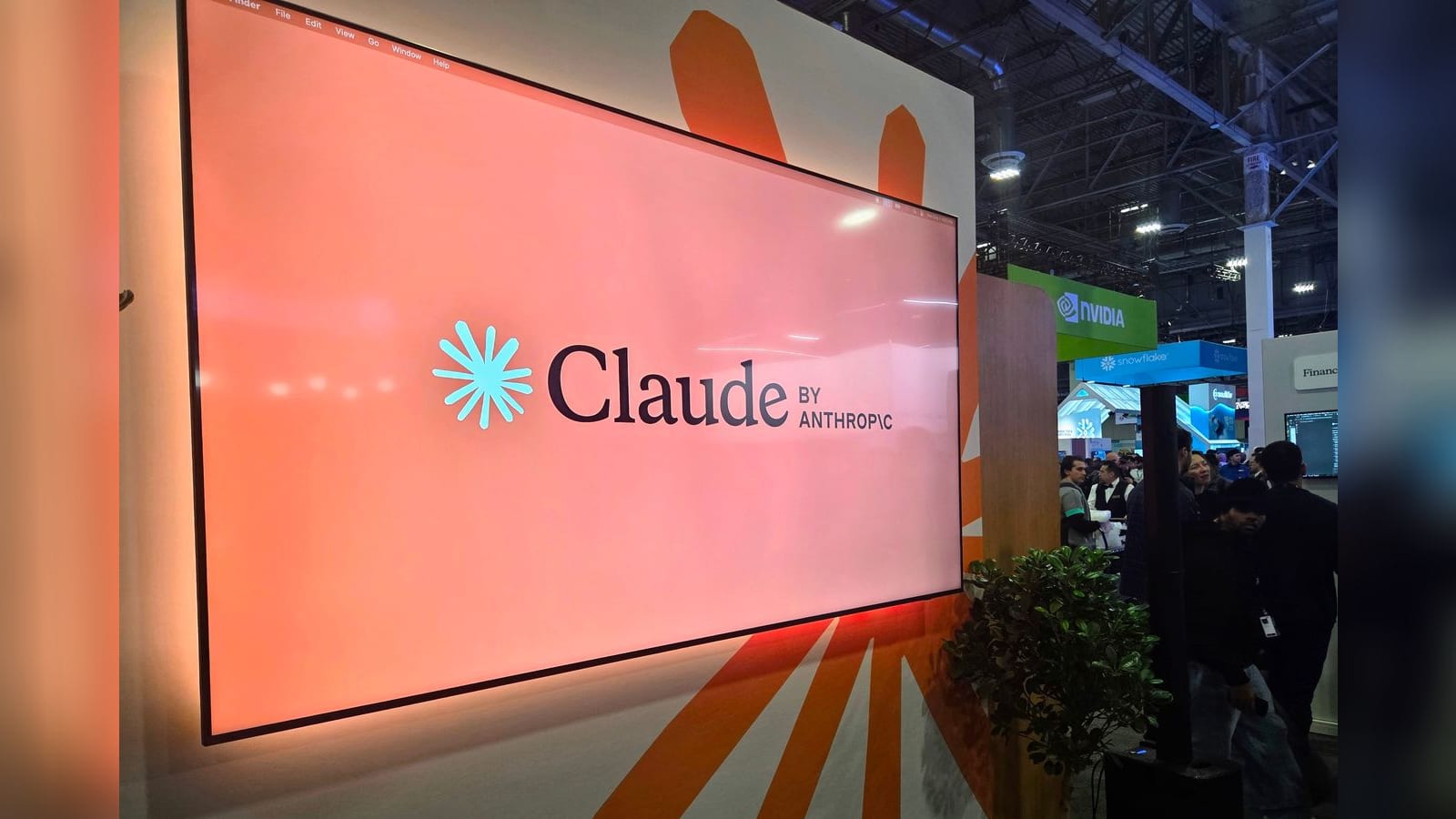
Morgan Stanley did not name the customer. However, the sources note that the market focused on Anthropic, given its profile as a frontier-model developer whose primary cloud partner, Amazon, is the main driver of the Trainium custom chip program. The shift is significant because it directly challenges the narrative that custom ASICs are steadily replacing Nvidia GPUs.
Moore's position is that ASIC growth and Nvidia expansion can happen at the same time. His reasoning: customers compare total cost per token, not bare chip prices. He cited industry research showing Nvidia's solutions still offer lower cost per token in many scenarios, keeping it competitive in both training and inference. Moore also noted that Nvidia's overall share in AI computing has actually increased from 2024 to 2026, according to the Morgan Stanley report via finance.biggo.com.
What are Nvidia's three growth drivers right now?
Nvidia outlined three distinct demand segments at the roadshow:
| Segment | Share of Revenue | Key Detail |
|---|---|---|
| AI labs | ~20% of total demand | Includes customers shifting back from ASICs to GPUs |
| Traditional hyperscalers (Microsoft, Meta, Amazon, Google) | ~50% of revenue | Expansion constrained by power, land, and data center build timelines |
| Sovereign AI, new AI clouds, enterprise | Emerging fastest-growing segment | Less exposed to in-house ASIC competition; favors integrated solutions |
Sovereign AI deserves a closer look. Governments are building domestic compute infrastructure driven by data security and industrial self-reliance. These projects tend to favor Nvidia's full-stack solutions and are less affected by proprietary ASIC competition.
How big is Nvidia's CPU business getting?
Nvidia reiterated a CPU business target of approximately $20 billion for the current fiscal year. Moore noted that nearly half of that could come from standalone CPU racks.
Vera is Nvidia's next-generation CPU, designed for single-threaded workloads. It features a larger die area, fewer cores, and memory access optimized for AI-specific use cases. The fact that nearly half the CPU revenue may come from standalone racks signals that Vera is moving beyond its role as a management node inside GPU servers and into the broader general-purpose server market. This expansion mirrors trends in the Apple-Broadcom chip deal space, where custom silicon is increasingly competing across the full server stack.
Networking is expanding Nvidia's revenue footprint too. As AI clusters grow larger, data transmission between GPUs becomes a bottleneck. Nvidia is positioning itself as an AI infrastructure platform covering GPUs, CPUs, network interconnects, and system architectures — not just a single-GPU supplier.
Why is Nvidia courting value investors now?
As Nvidia's market cap approaches $5 trillion, many growth funds are nearing internal single-stock concentration limits on their Nvidia positions. Moore noted that Nvidia is shifting its communication to appeal to value-oriented investors as well as growth-focused ones. Enhanced shareholder return programs are part of that strategy, as reported by moomoo.com.
The company's core challenge, per Moore, is no longer insufficient demand. It is execution: managing power availability and supply chain constraints as revenue scales toward and beyond the $100 billion quarterly mark. Builders and founders tracking the broader chip supply picture may also want to follow the Rapidus 2nm funding push, which reflects how much global compute infrastructure investment is accelerating.
Morgan Stanley's confirmed next milestone: Rubin Ultra ships next year, on the original timeline.

0 Comments
Log in to comment
Not a member yet? Join the community
Pick a meme
KlipyHave a great take?
Drop your email — we'll send a magic link so you can post it. No password.
Not a member of the community? Join today.
Join the community →