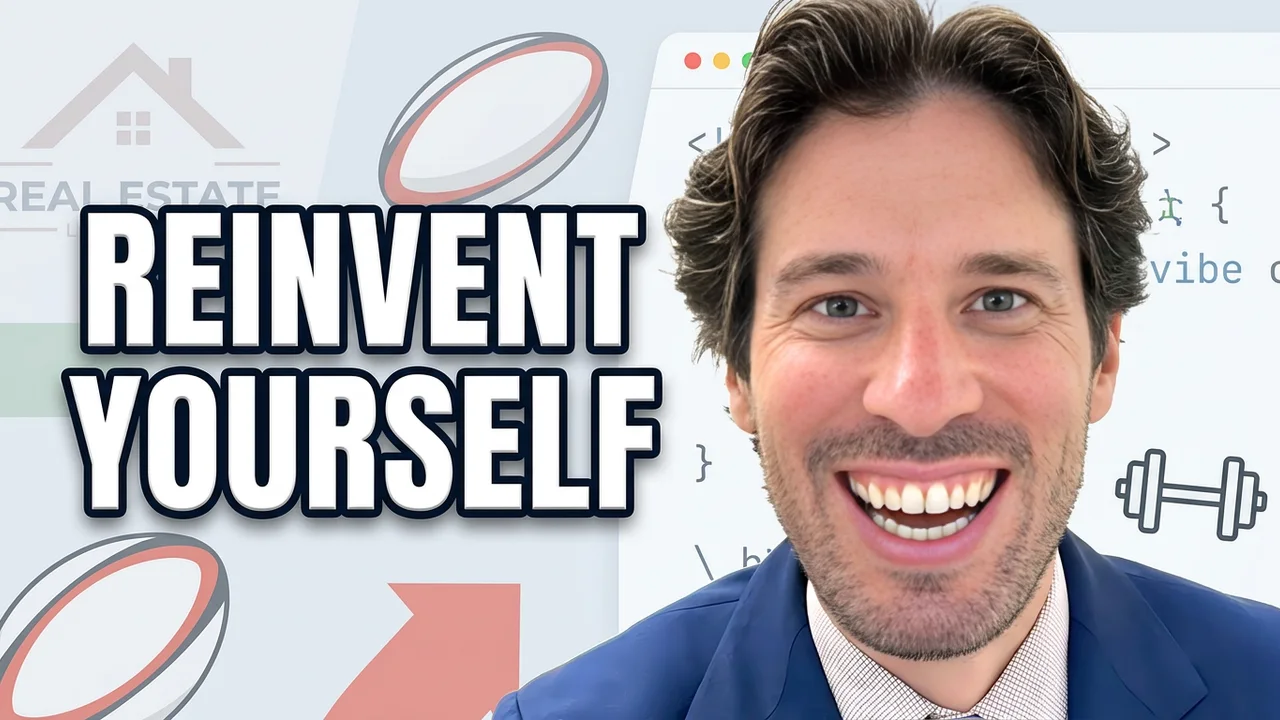
What actually happens when your professional identity disappears?
The 4-phase social response to identity change is something I have lived through at least 4 times — and I am living through it again right now, in July 2026, on Day 330 of building in public. The phases are not metaphorical. They are a predictable sequence: first people reject the new you, then they reluctantly accept it, then they get angry when you keep going, and finally — only if you refuse to retreat — they celebrate you.
Most people never reach phase 4. They get pulled back in phase 1.
Why does AI make identity change urgent right now?
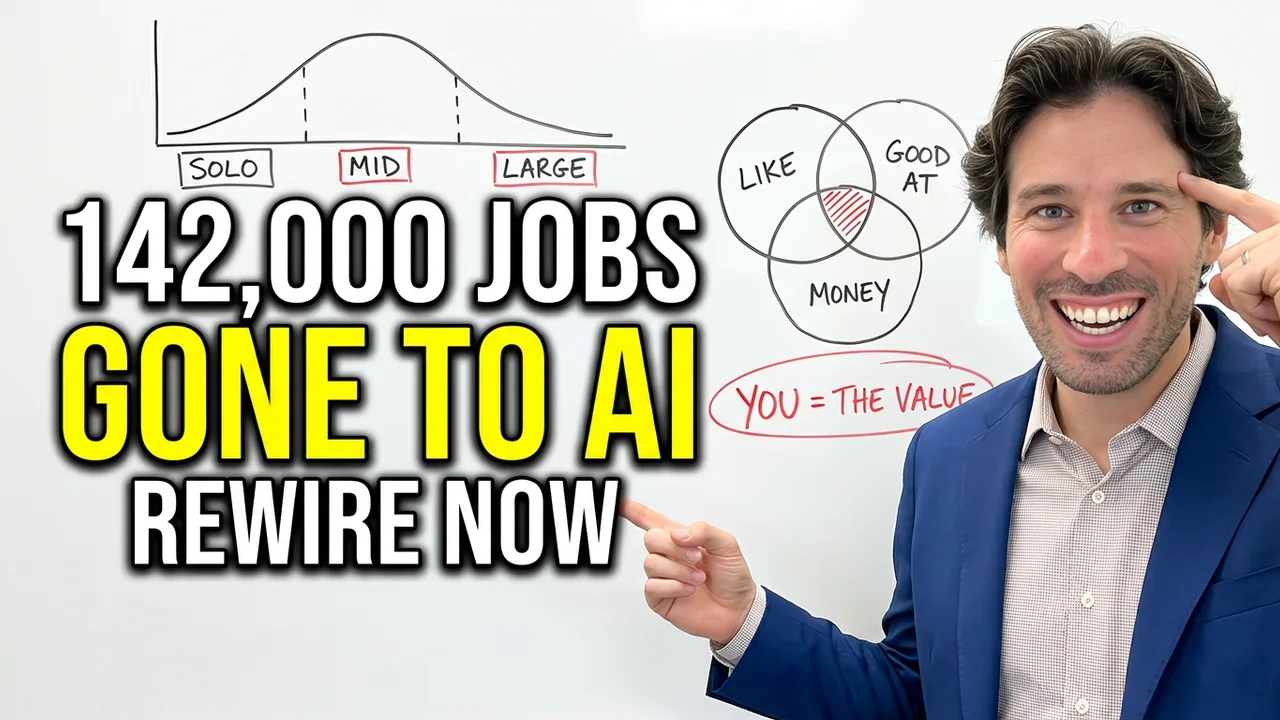
AI, automation, and robotics are not just changing job descriptions. They are eliminating entire categories of work that people built their self-concept around. I am not talking about a philosophical crisis. I mean someone who grew up being "the programmer," "the HR person," "the marketer" — and that job is now structurally gone, not temporarily displaced.
When the job disappears, the identity attached to it disappears with it. That is the crisis. And it is coming for a lot of people faster than they expect.
How did my own identity collapse at 22 — and what did I do?
I graduated college and walked into Oppenheimer Funds because my brother was in finance, my dad was an accountant, and most of my close friends were heading the same direction. New York City was finance. So I followed the current.
But I was 22 or 23, not making much money, and the identity markers I had carried through college — rugby, fraternity, being the guy who knew where to go — meant nothing in that city. The women I knew were dating 27- and 28-year-olds with houses in the Hamptons. I was invisible. My old identity was gone and the new one had not formed yet.
At [0:03] I said: "my identity was shattered" — and that phrase is the honest description of what a career transition actually feels like before anyone calls it a pivot.
You might also like
What did the 2008 financial crisis force me to decide?
The 2008 collapse hit New York later than the rest of the country, but it hit. Housing went down. Banks went down. The whole system needed a bailout. I left Oppenheimer Funds around March 2009 and moved into real estate — not because I had a plan, but because I knew I could not stay.
The immediate social response was phase 1, pure rejection. Friends asked how I would get clients when none of them were buying. I was 23. Nobody in my circle knew any real estate agents. The questions were fair, but the subtext was: get back in here, this is not who you are.
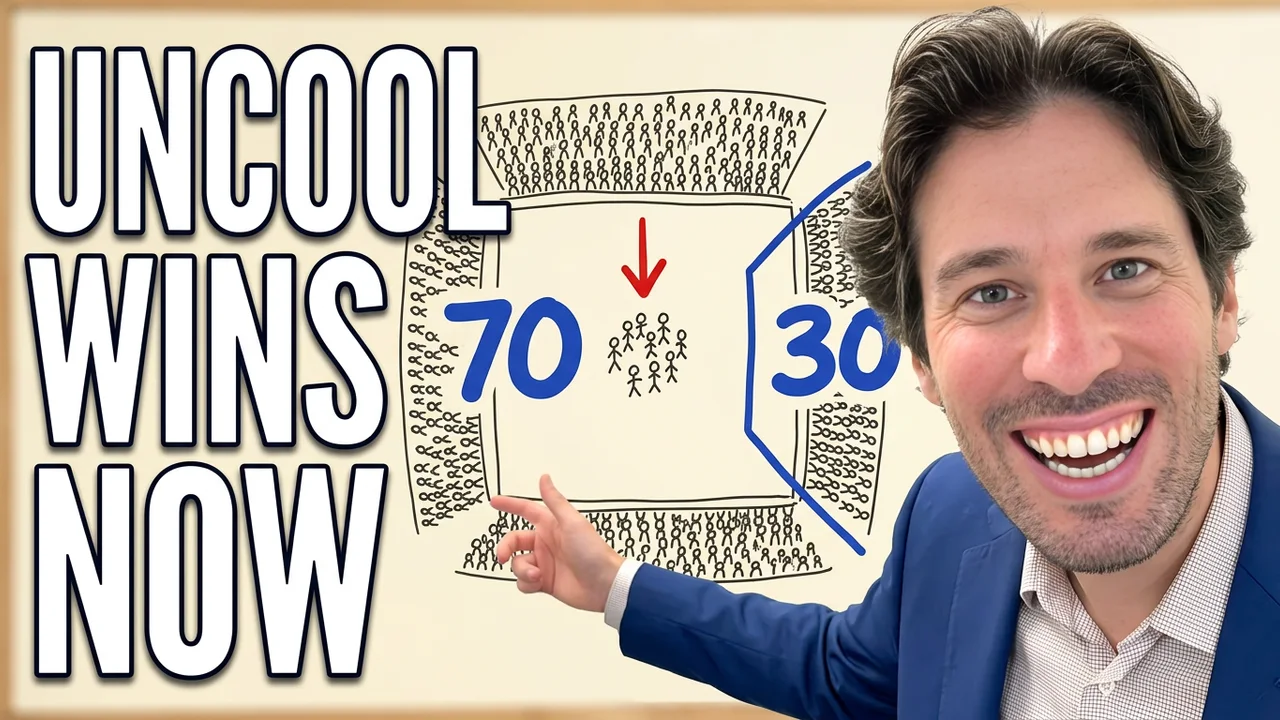
This is the mechanism the Australians and Scandinavians named tall poppy syndrome cultural research — the social reflex to cut down anyone who starts to stand above the group's shared baseline. It is not malice. It is group homeostasis. But it will end your momentum if you let it.
What are the 4 phases every identity shift moves through?
Every time I changed — finance to real estate, solo agent to broker-owner, active drinker to 5 days sober — the people around me ran the same sequence:
- Rejection. "You're not a real estate agent. You're 23. Nobody knows you."
- Reluctant acceptance. "Okay, yeah, you're doing the real estate thing. Fine."
- Anger or withdrawal. "You're not coming out Friday nights anymore? You're waking up early on Saturday? Get back here."
- Celebration. This only arrives if you never return to the old identity. Most people never see it.
The pattern repeated when I launched Botensten Properties International around 2013 and 2014. The objections were identical in structure: Where's your office? Owners don't trust small companies. How are you going to handle objections? Phase 1 again, louder.
How does momentum interact with identity — and why did I lose it?
Momentum is not a metaphor. I went live on YouTube 5 days a week, same time, same format. Viewership climbed — 9 viewers, 10, 18, 20. Then I dropped off for a week. Everything collapsed back toward zero.
The social version of this is identical. If you retreat from your new identity — even once, visibly — the people around you reset their expectations. They go back to celebrating the old you. The new identity loses all accumulated credibility. Joe Dispenza's framing that I keep returning to is that your identity becomes your personal reality. The moment you act like the old identity is still valid, it is.
Consistency is not a productivity tip here. It is the structural requirement for making it through phases 1 through 3.
Why does Claude Code feel like the identity I was always building toward?
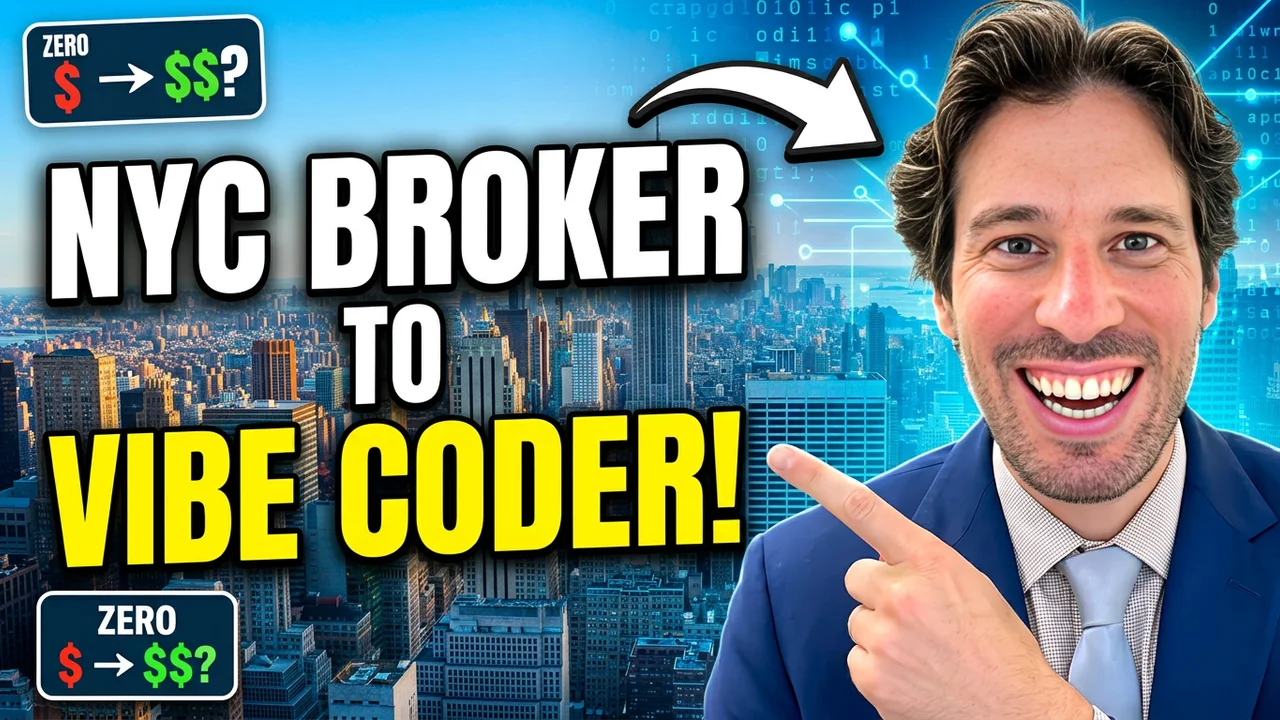
In 2025 I found Claude Code official documentation and something clicked that I had not felt since I was 12 or 13 years old with my hands on a keyboard for the first time. I have since vibe-coded apps, websites, a CRM, a community, and an email list — most of it at a cost that would have been unthinkable even 5 years ago.
Solopreneurship has never been less expensive to start. The camera and microphone cost money. The video itself does not. That asymmetry is real, and it is the reason I believe this identity shift — unlike the ones driven by crisis — is one I am choosing with full awareness.
As of July 2026, I am working 3 active identity changes at once: sobriety (5 days in at the time of this recording), returning to the gym after years away from the triathlete I used to be, and building consistently with AI tools. The 2008 financial crisis overview forced my first real identity reset. This one I am initiating myself.
What do builders ask about identity change and AI displacement?
Is it normal to feel like your identity is gone when your job disappears? Yes, and it is not a weakness. When a job category disappears — not just your specific role, but the whole function — the self-concept built around it collapses with it. Charles describes this as identity being "shattered" rather than "disrupted." The feeling is accurate. The task is building a new one, not recovering the old one.
What is tall poppy syndrome and how does it affect career transitions? Tall poppy syndrome is the social pressure to cut down anyone who rises above the group's shared level. Charles observed it in Scandinavia and Australia but experienced it personally in New York — friends and colleagues pushing back every time he moved toward a new identity, from real estate agent to broker-owner to sober builder. The pressure is not always hostile; sometimes it reads as concern.
How long does it take to move through all 4 identity phases? Charles does not give a fixed timeline, and that is honest. His finance-to-real-estate shift started around March 2009 and the brokerage phase began around 2013 — roughly 4 years between pivots. The phases are not calendar-driven. They are driven by whether you maintain the new behavior long enough for your social circle to exhaust its resistance.
Can you run multiple identity changes at the same time? Charles is attempting 3 simultaneously as of mid-2026: sobriety, physical training, and consistent AI-driven building. His framing is that they are additive — each one reinforces the momentum of the others. The risk he acknowledges is that losing momentum in one area can pull the others back toward zero.
What role does consistency play in identity change? Consistency is the mechanism, not a side benefit. Charles watched his YouTube viewership climb to 18 to 20 viewers through 5-days-a-week live streaming, then collapse when he went dark for a week. The same dynamic applies socially: one visible retreat to the old identity resets how everyone around you reads your new one. The new identity has to be performed consistently before it becomes the default assumption.
0 Comments
Log in to comment
Not a member yet? Join the community
Pick a meme
KlipyHave a great take?
Drop your email — we'll send a magic link so you can post it. No password.
Not a member of the community? Join today.
Join the community →