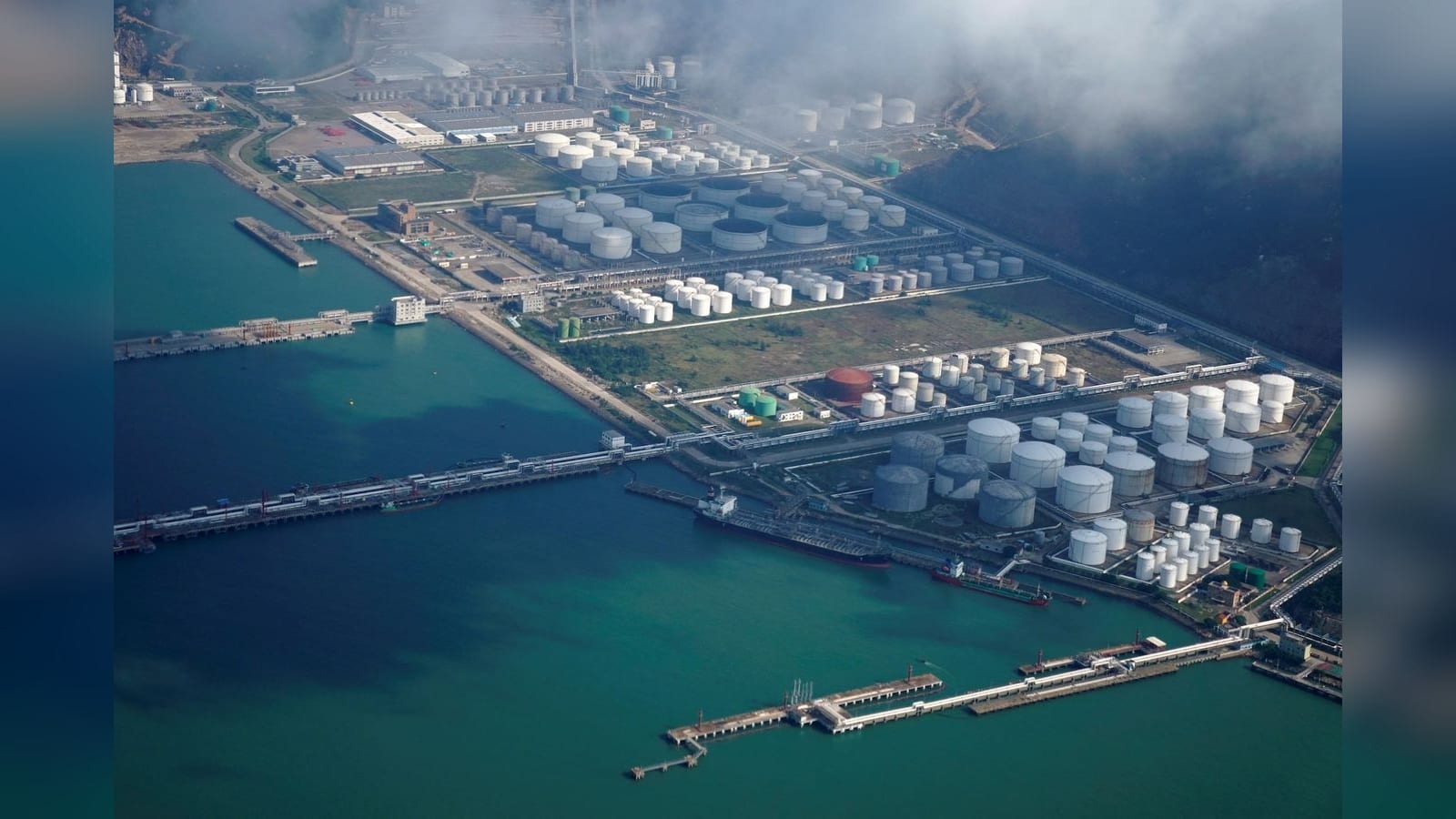
How big are China's strategic oil reserves compared to the US?
China held nearly 1.4 billion barrels of strategic oil as of December 2025, according to the US Energy Information Administration. The US Strategic Petroleum Reserve (SPR) — the government's emergency crude stockpile, established in December 1975 — held 413 million barrels at the same time. That means China entered the Iran conflict with more than three times the US reserve level.
The EIA also estimates China added an average of 1.1 million barrels per day to its strategic inventories throughout 2025. Preliminary data showed China kept building those stocks into early 2026, before the conflict began.
What is China's Strategic Petroleum Reserve, exactly?
China does not publicly disclose its reserve levels. The EIA estimated China's stockpile by combining import, export, refining, and inventory data from third-party and official sources. For this analysis, the EIA counted both government-held and commercial inventories as strategic, because China's state-owned companies were directed since 2024 to add emergency oil to commercial stockpiles.
The EIA estimates China's government-held inventories alone averaged about 360 million barrels in December 2025 — close to the US SPR's 413 million barrels. China's commercial crude inventories reached an estimated 1 billion barrels, compared with 411 million barrels held commercially in the United States.
You might also like


How did China's reserves compare to the entire IEA membership?
Yahoo Finance reported that China's 1.4 billion barrels exceeded the combined stockpile of all 32 members of the International Energy Agency, which totaled 1.2 billion barrels. The IEA includes the United States, Japan, and most of Western Europe.
The US, meanwhile, had been drawing down its reserve. After selling over 8 million barrels in the first half of April 2026, the SPR stood at about 405 million barrels. President Trump announced plans to release a total of 172 million barrels from the SPR in the coming months to combat high prices caused by the Iran war.
How did the Iran war affect China's oil imports?
China cut its daily oil imports by roughly a third during the war, according to the Straits Times. The pullback was driven largely by higher prices. It also helped ease some upward pressure on global oil markets caused by the near-complete closure of the Strait of Hormuz.
China was able to reduce imports so sharply because it had been buying more oil than it needed before the conflict. The crude stockpiles held by China's state-owned energy companies remained nearly full. Storage tanks at Chinese refineries were brimming with petrol, diesel, and other refined products. Beijing did not appear to tap its vast strategic reserves at all.
Here's what we know so far about the reserve gap: the US was rebuilding its SPR only slowly in 2024 and 2025, after massive withdrawals following Russia's invasion of Ukraine, while China was aggressively filling its own.
What happens when the Strait of Hormuz reopens?
The US and Iran were negotiating over reopening the Strait of Hormuz and restoring Persian Gulf oil exports, per the Straits Times. If normal traffic fully resumes, numerous tankers carrying oil bound for China that were stranded in the Persian Gulf during the war would begin moving again. Their eventual arrival at Chinese ports is likely to produce a temporary surge in deliveries.
Despite that prospect, China is not expected to quickly ramp up purchases from the region. Its stockpiles remain full, and there is little immediate pressure to rebuild.
Key figures: China vs. US oil stockpiles (December 2025)
| Metric | China | United States |
|---|---|---|
| Total strategic inventories | ~1.4 billion barrels | ~413 million barrels (SPR) |
| Government-held inventories | ~360 million barrels | ~413 million barrels (SPR) |
| Commercial crude inventories | ~1 billion barrels | ~411 million barrels |
| 2025 daily additions to reserves | ~1.1 million bbl/day | Limited deposits |
| Import change during Iran war | Cut by ~one-third | SPR drawdown of 172M bbl planned |
This reserve asymmetry is part of a broader China energy security picture. China is also estimated to control about 85% of the world's supply chain capacity for solar panels and 80% of lithium-ion battery capacity, according to a recent IEA finding cited by Yahoo Finance. The country's AI efficiency edge in technology development reflects a similar pattern of strategic resource positioning across sectors.
The scale of China's oil preparation also draws comparisons to how other large actors plan for disruption. Figure AI's robot deployment and Bain's AI-driven M&A analysis are examples of how strategic resource allocation — whether physical or digital — is reshaping competitive positioning globally. The SpaceX post-IPO pullback similarly shows how geopolitical and supply-chain risks ripple across asset classes.
The most important confirmed fact from these reports: China's state-owned energy company stockpiles remained nearly full as of the post-war period, and Beijing did not tap its strategic reserves during the conflict.


0 Comments
Log in to comment
Not a member yet? Join the community
Pick a meme
KlipyHave a great take?
Drop your email — we'll send a magic link so you can post it. No password.
Not a member of the community? Join today.
Join the community →