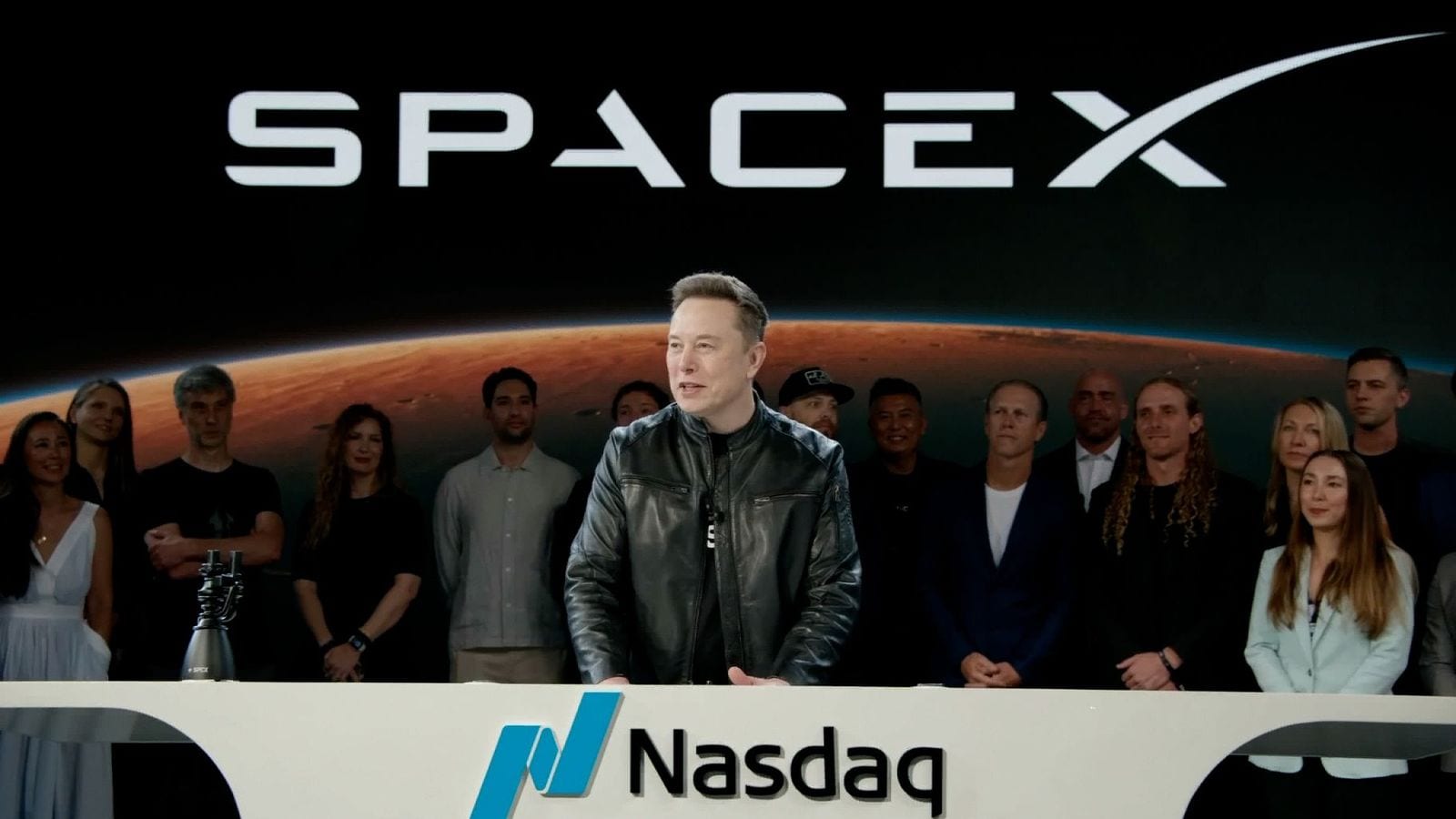
SpaceX Passes Amazon in Market Value
SpaceX shares rose 10.1% to $211.80 on Tuesday, June 16. That pushed the company's market cap to nearly $2.8 trillion. Amazon was last valued at $2.66 trillion. SpaceX had only gone public four trading days earlier, according to The Next Web.
The move followed a 19% jump on Monday — the first full trading day after the debut. On Friday, June 12, the stock closed at around $161 after being priced at $135 per share. By Monday's close it had added roughly $31 to settle at $192.50, per CNBC.
How Big Was the SpaceX IPO?
SpaceX priced its IPO at $135 a share and raised $75 billion. Multiple outlets called it the largest initial public offering ever attempted. The starting valuation was $1.75 trillion. Debut-day volume topped 500 million shares — close to Facebook's 2012 debut, when nearly 580 million shares traded.
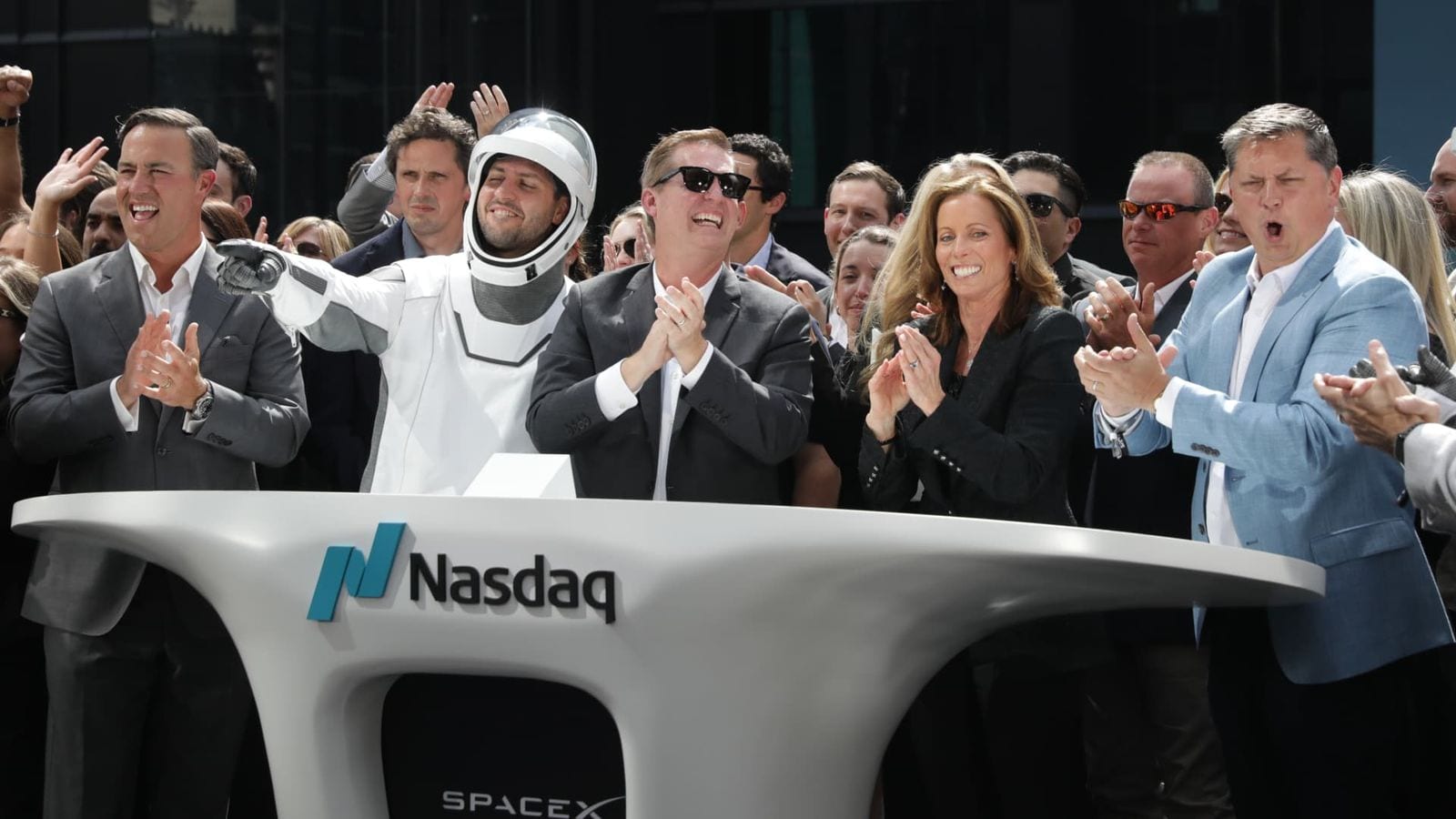
SpaceX President and COO Gwynne Shotwell rang the Opening Bell at the Nasdaq on June 12, 2026.
Why Did the Stock Move So Fast?
The IPO floated only about 4.2% of SpaceX's shares. Once underwriters exercised the greenshoe option in full, that rose to roughly 4.9%. A thin float chasing heavy retail demand can move a price far and fast.
You might also like
On Tuesday alone, more than $1.16 billion worth of SpaceX shares changed hands. Reuters reported that figure was several times the combined trading volume of Nvidia, Microsoft, Tesla, and Apple on the same day. A newly listed company outtrading four of the most heavily traded stocks on the market — combined — is not a normal week on the Nasdaq.
Retail demand was broad before the first share ever traded. Japanese buyers alone purchased $2.2 billion worth of shares during the IPO.
SpaceX by the Numbers
| Metric | Figure |
|---|---|
| 2025 revenue | $18.7 billion |
| 2025 net loss | Nearly $5 billion |
| IPO price | $135 per share |
| Friday close (June 12) | ~$161 per share |
| Monday close (June 15) | $192.50 per share |
| Tuesday price (June 16) | $211.80 per share |
| IPO market cap | $1.75 trillion |
| Tuesday market cap | ~$2.8 trillion |
| Amazon market cap | $2.66 trillion |
| Shares floated | ~4.2% (up to ~4.9% with greenshoe) |
| Q1 2026 capex | $10.1 billion |
Starlink, SpaceX's satellite-internet division, generated the bulk of revenue and effectively all operating profit in 2025. Its average revenue per user has slipped, and the growth math has got harder. Starship and the xAI operations remain capital sinks.
SpaceX's capital spending in Q1 2026 totaled $10.1 billion. That compares to $4.1 billion in the same period a year earlier. The majority went toward artificial intelligence. In February, Musk merged SpaceX with his AI startup xAI.
What Musk Said About Future Revenue
On Sunday, June 14, Elon Musk posted on X that SpaceX "might be able to reach approximately" $1 trillion in revenue in 2030. He added: "And I would be surprised if revenue is not greater than $1T in 2031." SpaceX reported $18.7 billion in revenue in 2025.
The listing also made Musk a trillionaire on paper. His and insiders' voting control of the company survived the float intact, per The Next Web.
What Analysts Think
We read the analyst landscape as unusually split — the bull and bear cases are far apart.
- CFRA started coverage with a "sell" rating and a 12-month price target of $115. That is a nearly 29% drop from Friday's close. The firm cited "extremely ambitious growth strategy, elevated valuation expectations, and significant capital intensity."
- Morningstar analyst Nicolas Owens valued SpaceX at $63 per share in a June 8 note and called the stock "overvalued."
- NewStreet Research started coverage with a $165 price target. Analyst James Ratzer said investors need "a kind of 20 to 25-year time frame" to justify the valuation. He argued SpaceX has "at least a 10-year lead" over rivals in rocket launch. He also said Musk will likely control "about 90 to 95% of all launch capacity" in space over the next four to five years.
Paulina Roszkowska, a finance lecturer at Bayes Business School, told CNBC that SpaceX has made "a lot of promises" but those need to turn into cash flow. She also said the IPO prospectus lacks details on governance or execution risks.
How SpaceX's IPO Stacks Up
- SpaceX raised $75 billion — the largest IPO on record
- Debut-day volume topped 500 million shares, near Facebook's 580 million in 2012
- Tuesday's $1.16 billion in volume exceeded the combined volume of Nvidia, Microsoft, Tesla, and Apple
- The free float of ~4.2% is far smaller than typical large-cap listings
For anyone tracking how AI infrastructure bets are priced by public markets, SpaceX's debut sets a new reference point. The xAI merger and orbital data center plans connect directly to the Nvidia Vera CPU infrastructure race. The thin float dynamic also matters for anyone watching how subscription models affect tech valuations — Starlink's average revenue per user has already slipped. That pressure is similar to what companies like those covered in AI observability funding rounds face when growth math tightens.
NewStreet's Ratzer told CNBC that Starship's launch capacity is central to every SpaceX bet — from Starlink direct-to-cell to orbital data centers. That kind of long-horizon infrastructure story also echoes debates around supply chain delays slowing other major tech products.
The next confirmed data point: whether SpaceX holds its position above Amazon's $2.66 trillion market cap at the closing bell. A stock with this thin a float can give back gains on the same mechanics that created them, per CNA.


0 Comments
Log in to comment
Not a member yet? Join the community
Pick a meme
KlipyHave a great take?
Drop your email — we'll send a magic link so you can post it. No password.
Not a member of the community? Join today.
Join the community →