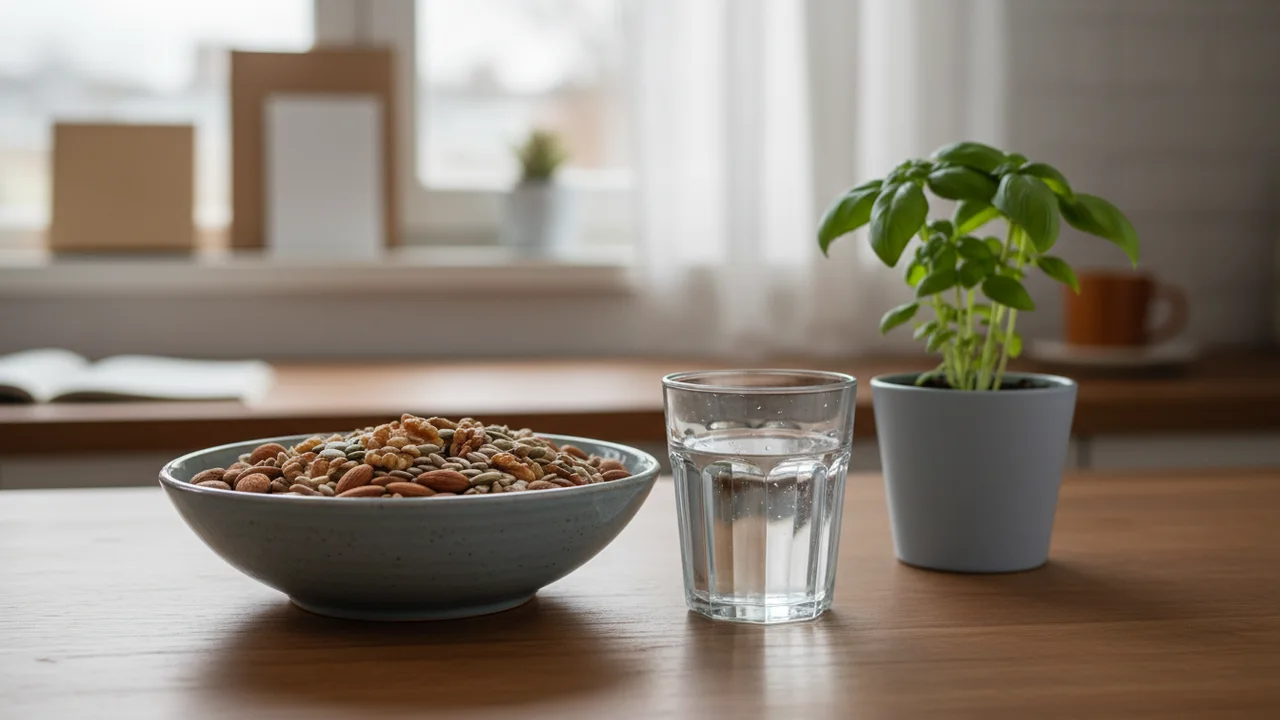
You stop sugar cravings naturally by stabilizing blood sugar: eat protein and fiber at every meal, drink water before you reach for a snack, sleep 7-9 hours, and train regularly. The American Heart Association caps added sugar at 25 grams (6 teaspoons) per day for women and 36 grams for men. Cravings shrink when your blood sugar stops spiking and crashing — not when you white-knuckle your way past the pantry.
Why Do You Crave Sugar in the First Place?
Most sugar cravings come from blood-sugar swings, not weak character. When you eat refined carbs alone, blood sugar spikes, insulin surges, and the crash that follows triggers a fast, urgent hunger for more sugar.
That loop repeats every few hours if your meals are carb-heavy and protein-light. Minerals matter too: the National Institutes of Health notes that chromium helps regulate blood sugar, and it shows up in whole grains, nuts, and vegetables. Stress and habit stack on top of biology — your brain learns that 3pm means a cookie. Break the blood-sugar swing and the habit loop, and the pull weakens fast.
What Are the Fastest Natural Ways to Stop Sugar Cravings?
The fastest natural fixes are hydration, protein, and a short delay. Drink a full glass of water and wait ten minutes before deciding — a study in the Journal of the Academy of Nutrition and Dietetics found water intake reduced sugar cravings in some people.
Run these five steps when a craving hits:
- Drink 8-12 ounces of water and wait 10 minutes.
- Eat 20-30 grams of protein (eggs, Greek yogurt, jerky) if it is near a meal.
- Take a 5-minute walk to interrupt the habit cue.
- Reach for a pre-set healthy snack — a piece of fruit with a handful of nuts.
- Name the trigger out loud: hunger, boredom, stress, or tiredness.
The Academy of Nutrition and Dietetics recommends keeping fruit and nuts on hand precisely because the craving usually beats your willpower to the kitchen. Decide before you are hungry.
Can Food Choices Actually Kill the Craving?
Yes — food choices are the strongest lever, because fiber and protein blunt the blood-sugar spike that starts the cycle. The USDA notes that eating regular meals built on high-fiber, high-protein foods helps stabilize blood sugar and reduce cravings.
Swap the food, not just the amount. Here is how common cravings map to a better choice:
| Craving / trigger | Common sugary pick | Natural swap that works |
|---|---|---|
| Afternoon energy dip | Candy bar, soda | Apple + almonds, sparkling water |
| Sweet after dinner | Ice cream | Berries with plain Greek yogurt |
| Morning coffee sugar | Flavored syrup latte | Coffee + cinnamon, no syrup |
| Salty-sweet stress snack | Pastry | Dark chocolate square + nuts |
| Thirst mistaken as hunger | Fruit juice | Water, then fruit if still hungry |
Each swap keeps the pleasure but slows the sugar hit. Books like In Defense of Food and How Not to Die make the same case: whole foods with fiber change how your body handles sugar.
How Do Sleep, Exercise, and Stress Change Cravings?
Sleep, exercise, and stress control the hormones behind cravings. The CDC reports that not getting enough sleep disrupts the hormones that regulate hunger and fullness, which pushes you toward quick sugar the next day.
Exercise works on the other side of the equation. A study in the Journal of Clinical Endocrinology and Metabolism found that exercise improves insulin sensitivity, so your body manages blood sugar with less of the spike-crash drama. Stress and emotion drive cravings too — research in the journal Nutrients found that mindfulness-based interventions reduced sugar cravings and improved eating habits. Aim for 7-9 hours of sleep, 3-4 training sessions a week, and a two-minute breathing reset when stress spikes.
What I Learned About Sugar During a 5am Brick Session
I learned my worst sugar cravings were really a fueling and sleep problem, not a discipline problem. During an Ironman build, I ran a Saturday brick — 90-minute bike straight into a 30-minute run — on five hours of sleep and a coffee.
By mid-afternoon I wanted every sweet in the house. It wasn't hunger for junk; it was my body screaming for glycogen it never got refueled, on top of the hormone disruption from a short night. So I changed the inputs, not my willpower. I started eating a real protein-and-carb breakfast within an hour of finishing, protected 8 hours of sleep before long sessions, and kept dates and nuts on the counter instead of candy. The cravings dropped by more than half within two weeks. My faith practice helped here too: I treat my body as something I'm stewarding, not punishing — that framing made the discipline feel like care, not restriction. Fuel the work, guard the sleep, and the craving stops being a fight.
How Do You Reduce Sugar Cravings for Good?
Long-term, you reduce cravings by building defaults that make blood-sugar stability automatic. The goal is fewer decisions, not more willpower — you want the healthy choice to be the easy one.
Build these habits over the next month:
- Anchor every meal with protein and fiber before any refined carb.
- Keep the American Heart Association added-sugar limits — 25g/day for women, 36g for men — as a daily ceiling.
- Read labels for hidden sugars (dextrose, syrup, concentrate, anything ending in -ose).
- Pre-stock fruit, nuts, and yogurt so the craving never wins by default.
- Protect sleep and training as non-negotiable, the same way you'd protect a meeting.
Taper instead of quitting cold — cut sugary drinks first, then desserts, then hidden sources. Within a few weeks your taste recalibrates and fruit tastes plenty sweet. That's not deprivation; that's your palate coming back.