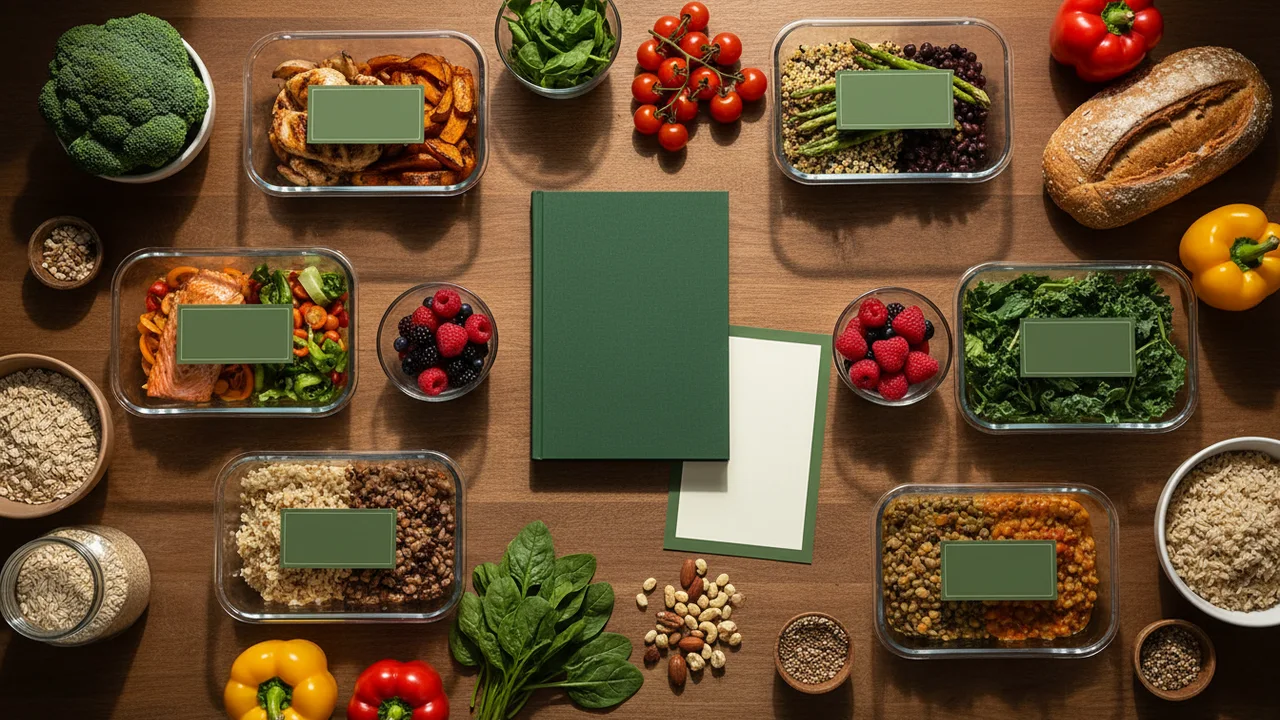
Meal prep for energy and weight loss means planning your portions in advance and batch-cooking whole foods once or twice a week. A 2019 study in the Journal of the Academy of Nutrition and Dietetics found participants who prepped meals lost an average of 5-10% of their body weight. Center each plate on lean protein, vegetables, whole grains, and healthy fats. The prep itself is the trick: when the good food is already cooked, you stop deciding and start eating well by default.
What are the benefits of meal prep for energy and weight loss?
Meal prep helps you lose weight and hold energy because it fixes portions and food quality before hunger makes the choice for you. The Academy of Nutrition and Dietetics recommends planning meals ahead specifically for portion control and adequate nutrition. When lunch is already in a container, you don't grab the drive-through.
Steady energy comes from steady eating. The National Institutes of Health notes that eating frequent, smaller meals across the day can support energy and weight loss. Prepped food makes that pattern easy instead of aspirational. You also save money and cut the decision fatigue that quietly wrecks most diets by 6pm.
How do I get started with meal prep for weight loss?
Start with one meal, one shopping trip, and two cooking sessions a week. Don't prep 21 meals your first Sunday — you'll burn out and toss soggy leftovers. Pick the meal you most often get wrong (usually lunch) and solve only that for two weeks.
A simple starting sequence:
- Choose 2-3 proteins, 3-4 vegetables, and 2 whole-grain bases for the week.
- Shop once from a list so you're not improvising in the store.
- Cook proteins and grains in bulk; roast vegetables on sheet pans.
- Portion into containers you can grab without thinking.
- Store 3-4 days in the fridge; freeze the rest.
The USDA's weight management guidance points to whole, unprocessed foods as the base — that keeps prep cheap and filling.
What are the best foods to include in my meal prep plan?
The best meal-prep foods are lean proteins, vegetables, whole grains, and healthy fats — the same mix the American Heart Association Healthy Eating Plate recommends. Protein keeps you full and protects muscle while you lose fat. Fiber-rich vegetables and whole grains slow digestion so energy doesn't spike and crash.
| Component | Good picks | Why it works |
|---|---|---|
| Protein | Chicken, eggs, Greek yogurt, lentils, fish | Fullness, muscle retention |
| Vegetables | Broccoli, spinach, peppers, zucchini | Volume, fiber, few calories |
| Whole grains | Brown rice, oats, quinoa | Slow-release energy |
| Healthy fats | Olive oil, avocado, nuts | Satiety, nutrient absorption |
Books like How Not to Die and In Defense of Food land on the same plain idea: eat mostly whole foods, build around plants, and stop over-engineering it.
How can I portion control my meals for optimal weight loss?
Portion by fixed containers and your hand, not by eyeballing a loaded plate when you're already hungry. A practical target per meal: a palm of protein, a fist of vegetables, a cupped hand of whole grains, and a thumb of fat. This travels anywhere without a food scale.
Containers do the enforcing. When you pre-split food into single servings, the portion decision is already made and made calmly. That's the whole point — you decided at full blood sugar, not at empty.
What I learned prepping food around a triathlon block
During a heavy Ironman training block, I blew up my nutrition the same way most people do: I trained hard, came home starving after a 5am brick session, and ate whatever was fastest. My energy was a roller coaster and the scale wouldn't move even on 15-hour weeks.
What fixed it wasn't a new diet — it was Sunday prep. I started cooking rice, chicken, and roasted vegetables in bulk and portioning them into containers on Sunday and Wednesday. After a hard session I'd grab a ready container instead of deciding. Within a few weeks my afternoon energy leveled out and my body composition finally started moving. The lesson stuck with me as a discipline principle: you don't rise to your intentions, you fall to your systems. A prepped fridge is a system. Willpower at 7pm is not. I still prep the same way on my hardest weeks — it's the single habit that most protects both my training and my waistline.
How can I stay motivated and consistent with my meal prep routine?
Stay consistent by shrinking the task, not by summoning more willpower. Prep the same 3-4 base meals for a few weeks until it's automatic, then rotate. Novelty is where consistency goes to die — boring and repeatable beats exciting and abandoned.
A few tactics that hold up:
- Anchor prep to a fixed time (Sunday 4pm) so it becomes a standing appointment.
- Keep a short menu of meals you actually like — you won't eat food you dread.
- Prep in a doubled batch so one session covers two or three days.
- Freeze extra portions as insurance for the week you don't feel like cooking.
Consistency compounds. Miss a week, restart the next — the goal is a durable habit, not a perfect streak.