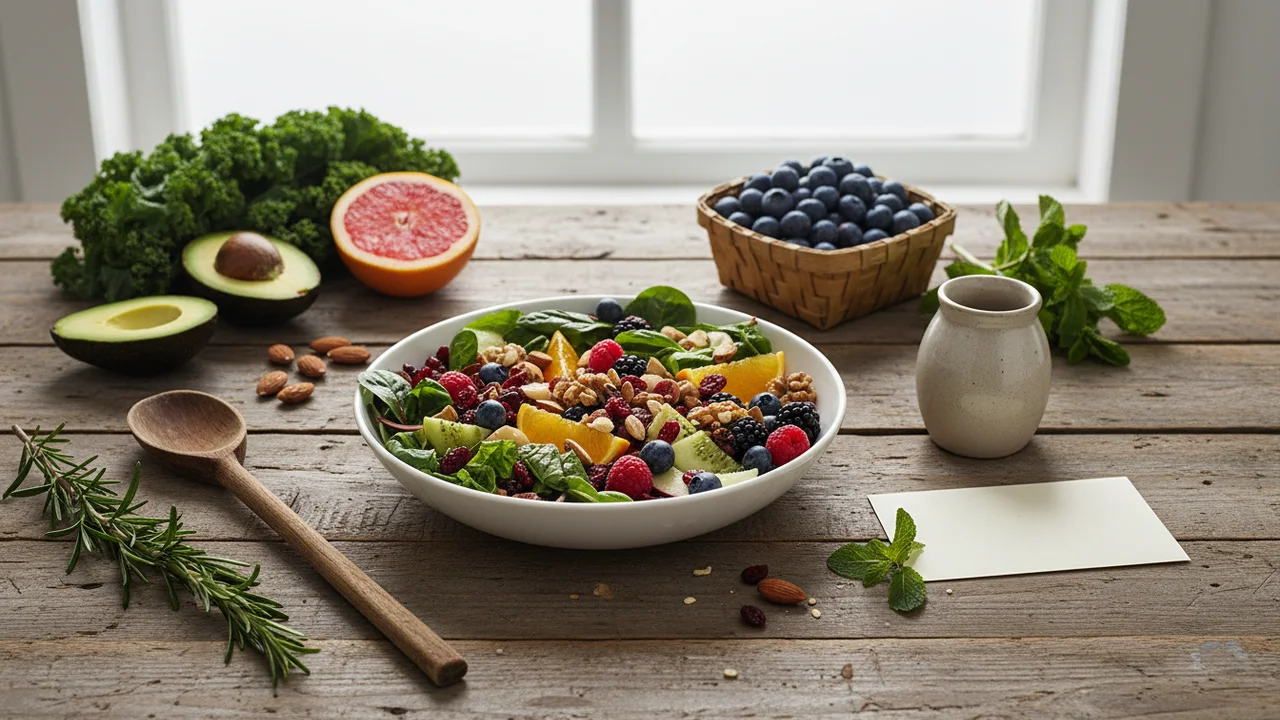
The best diet for longevity is a mostly-plant, minimally-processed pattern built around vegetables, legumes, whole grains, nuts, and fish — the same template the PREDIMED trial linked to roughly 30% fewer heart attacks and strokes. No single food wins. What extends healthspan is the pattern: high fiber, enough protein to hold muscle, low added sugar, and eating until you are about 80% full.
What is the best diet for longevity?
The best diet for longevity is a whole-food, plant-forward pattern — Mediterranean or Blue Zones style eating. Decades of research point to the same core: lots of fiber, mostly plants, moderate protein, healthy fats, and very little ultra-processed food.
The strongest evidence comes from the PREDIMED trial published in the New England Journal of Medicine, where a Mediterranean diet with extra olive oil or nuts cut major cardiovascular events by about 30% versus a low-fat control. Fiber matters just as much. A 2019 Lancet meta-analysis by Reynolds and colleagues found people eating 25-29 grams of fiber a day had the lowest rates of death from all causes.
Here is how the main patterns compare:
| Diet pattern | Core foods | Longevity evidence |
|---|---|---|
| Mediterranean | Olive oil, fish, vegetables, legumes, nuts | Strongest — PREDIMED, ~30% fewer cardiac events |
| Blue Zones | Beans, greens, whole grains, little meat | Observational — world's longest-lived populations |
| Standard Western | Refined grains, red and processed meat, added sugar | Linked to higher mortality and chronic disease |
Why do the world's longest-lived people eat mostly plants?
The world's longest-lived people eat roughly 90-95% plants. In the original Blue Zones — Okinawa, Sardinia, Ikaria, Nicoya, and Loma Linda — meat appears a few times a month, not a few times a day, according to Dan Buettner's Blue Zones research.
Beans are the cornerstone in every zone. Okinawans also practice hara hachi bu — stopping at about 80% full — which caps calories without counting them. The everyday plate looks similar across cultures:
- A daily serving of beans or lentils
- Vegetables and leafy greens at most meals
- Whole grains instead of refined ones
- Nuts, seeds, and olive oil as fat sources
- Fish over red and processed meat
How much protein do you actually need as you age?
Aim for 1.2 to 1.6 grams of protein per kilogram of body weight per day once you pass 40. Muscle is the organ of longevity: adults can lose roughly 1% of muscle mass per year after 50 — a decline documented in Volpi and colleagues' review of aging muscle in Current Opinion in Clinical Nutrition & Metabolic Care — and strength strongly predicts how independently you will live in your 80s.
This is where Peter Attia's book Outlive pushes back on strict low-protein longevity dogma. Sarcopenia — age-related muscle loss — is a bigger real-world threat for most people than eating slightly too much protein. Spread it across meals, favor legumes, fish, eggs, and dairy, and pair it with resistance training so the protein has something to build.
What should you cut first?
Cut ultra-processed food and added sugar before you touch anything else. These are the clearest dietary drivers of the metabolic disease that shortens lifespan, and removing them delivers more benefit than any superfood you could add.
Work through it in order:
- Sugar-sweetened drinks — soda, energy drinks, sweetened coffee
- Packaged snacks and refined-grain baked goods
- Processed meats like bacon, sausage, and deli meat
- Refined seed-oil fried foods and fast food
You do not need to be perfect. You need these to stop being daily defaults.
What I eat during a heavy triathlon training block
During an Ironman build I can burn over 4,000 calories on a long-ride Saturday, and that taught me longevity eating and performance eating are not enemies. Early in one block I chased that burn with sports drinks and white bagels, and by Wednesday I felt flat, inflamed, and slow to recover.
So I rebuilt the plate. Breakfast after a 5am brick session is oats, berries, Greek yogurt, and a scoop of protein — fiber and protein together. Lunch is a big bowl of lentils or beans, olive oil, and whatever vegetables are in the fridge. I still take fast carbs, but on the bike, where they get used, not on the couch. Recovery held, sleep improved, and my resting numbers dropped. The pattern that trains best is the same one that ages best.
How do you start eating for longevity this week?
Start with three changes you can keep: eat a cup of beans or lentils daily, make half your plate vegetables, and stop eating when you are about 80% full. Consistency over years beats perfection for a month.
Build it in this order:
- Add one bean or lentil serving every day
- Swap one refined grain for a whole grain at each meal
- Drop sugary drinks and replace them with water, tea, or coffee
- Put a protein source and a vegetable on every plate
- Eat slowly and stop before you feel stuffed
Do those five for a month and the harder changes get easier, because your cravings recalibrate. Longevity is not built by one diet you survive — it is built by a pattern you actually keep.