What is Amazon's $25 billion bond sale?
Amazon launched an eight-part U.S. investment-grade bond sale on Tuesday, July 7, 2026, seeking to raise at least $25 billion. The offering includes tranches with maturities ranging from three to 40 years, all maturing on July 9 of their respective years, according to Yahoo Finance.
The size and expected pricing were first reported by Bloomberg News.
What are the bond terms and pricing?
The offering covers eight tranches with the following initial price guidance:
| Tranche | Maturity | Initial Spread Over Treasuries |
|---|---|---|
| Floating rate note | 2029 (3-year) | SOFR equivalent |
| Fixed rate | 3-year | 65 basis points |
| Fixed rate | 5-year | 80 basis points |
| Fixed rate | 7-year | 90 basis points |
| Fixed rate | 10-year | 100 basis points |
| Fixed rate | 20-year | 120 basis points |
| Fixed rate | 30-year | 130 basis points |
| Fixed rate | 40-year | 145 basis points |
The bonds were expected to price on Tuesday, July 7.
What credit ratings does Amazon carry?
Fitch assigned Amazon's proposed notes a rating of AA-, per Fitch Ratings. Amazon also carries a rating of AA from S&P and A1 from Moody's.
You might also like


Why is Amazon raising debt now?
Amazon's free cash flow fell to $1.2 billion in the first quarter of 2026. That is a 95% drop year-over-year, as reported by MarketWatch. Declining free cash flow across Big Tech has pushed companies to raise debt to fund ongoing AI infrastructure spending.
Amazon has set a capital expenditure forecast of $200 billion for 2026 — the only one of the four major hyperscalers to keep its forecast unchanged after first-quarter earnings.
How much are Big Tech companies spending on AI in 2026?
The four largest US tech companies — Alphabet, Amazon, Meta, and Microsoft — are now projected to spend a combined $700 billion on AI in 2026. Here is how that breaks down:
- Microsoft: $190 billion
- Amazon: $200 billion
- Alphabet: $180–$190 billion
- Meta: $125–$145 billion
Three of the four companies raised their spending forecasts after first-quarter earnings. Amazon was the only one to hold its original projection steady.
Who is criticizing Big Tech's AI spending?
Gary Marcus, an entrepreneur and prominent AI researcher, called the combined spending "the greatest capital misallocation in history" in a post on X following the earnings announcements. "None are making major profits on AI; none has a technical moat; a massive price war is inevitable. And few of their customers are seeing major returns on investment," Marcus wrote. He added that hyperscalers are pouring money into large language models that can be commoditized and are difficult to monetize.
Here's what we know so far: Wall Street analysts have not gone as far as Marcus, but they have become more selective. JPMorgan analyst Doug Anmuth wrote that both Amazon and Alphabet showed strong cloud backlog growth, which he said justified the spend. However, Anmuth downgraded Meta to neutral from overweight, citing intensifying competition and a harder path to returns on AI capital spending, given that Meta has no public cloud platform to rent out its infrastructure.
Is Amazon the only hyperscaler raising debt?
No. Meta announced plans for a six-part investment-grade bond issuance on April 30, 2026, with Bloomberg reporting the total raise would be between $20 billion and $25 billion. That followed Meta's $30 billion debt raise in October 2025 — the company's largest-ever issuance. Credit-research firm CreditSights reiterated an underperform rating on Meta's bonds, warning that Meta is flooding the market with debt.
Alphabet's free cash flow also dropped 47% to $10.1 billion in the first quarter, adding to sector-wide pressure on cash generation. Concerns about AI power grid constraints are also a factor analysts have flagged as spending scales. The broader market context — including events like SpaceX joining Nasdaq 100 on the same day as Amazon's bond launch — reflects how rapidly capital is moving across the tech sector in mid-2026.
William Blair analyst Dylan Carden noted in a Thursday research note that supply-chain shortages with memory chips have led to price increases, further pushing up capital expenditure totals across the group.
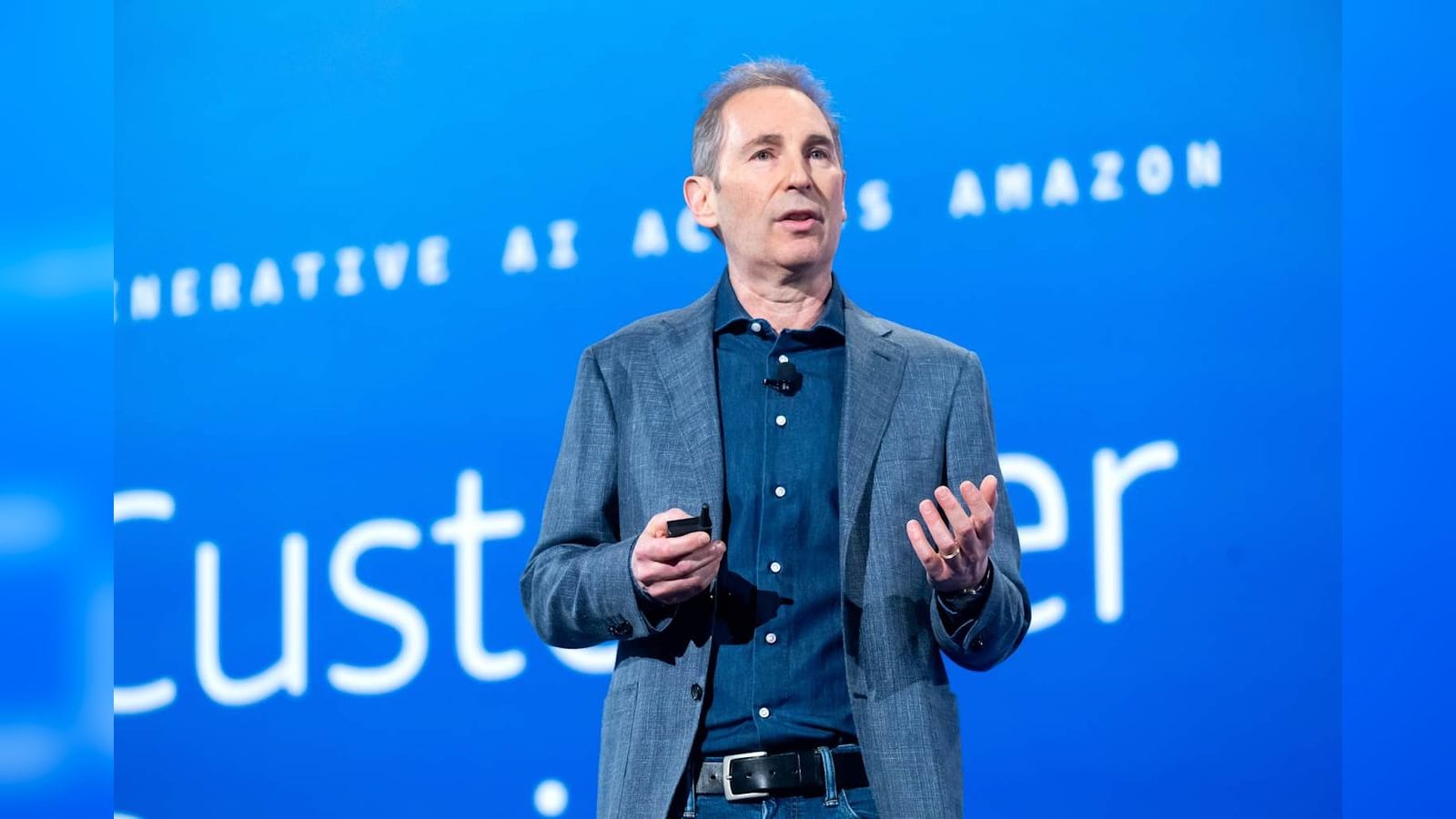
Amazon CEO Andy Jassy has previously spoken publicly about the company's AI spending plans. The company cited being capacity-constrained as a key reason for the accelerated infrastructure buildout — a rationale shared by all four hyperscalers on their earnings calls. Builders tracking AI capital spending trends will want to watch how Amazon's cloud backlog converts to revenue as this debt comes due. The broader economic backdrop — including China-US tariff developments — also shapes the environment in which these bonds are being issued.
Amazon's eight-part bond offering was expected to price on Tuesday, July 7, 2026.

0 Comments
Log in to comment
Not a member yet? Join the community
Pick a meme
KlipyHave a great take?
Drop your email — we'll send a magic link so you can post it. No password.
Not a member of the community? Join today.
Join the community →