Why are companies moving away from expensive AI models?
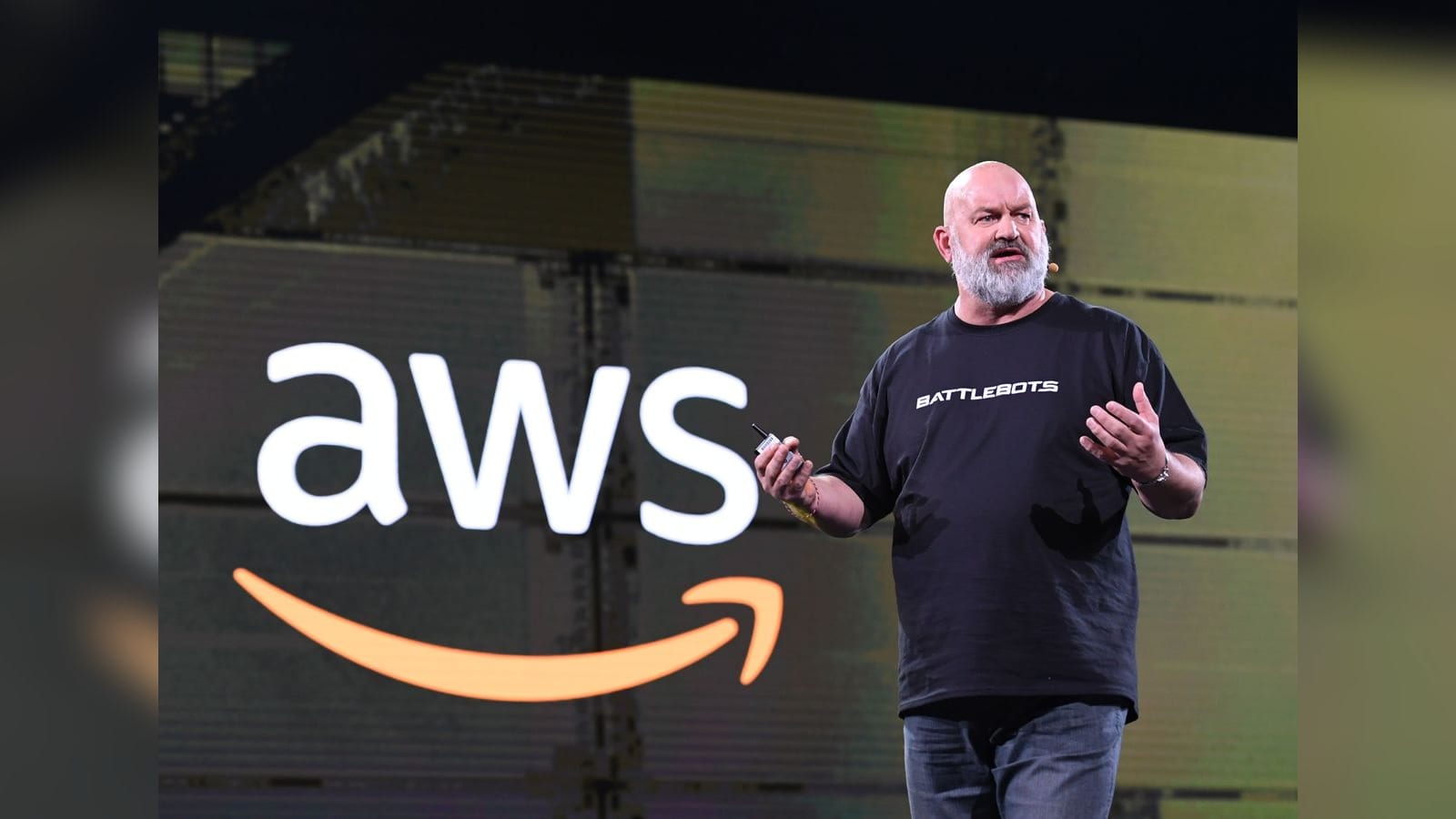
Amazon CTO Werner Vogels says companies are shifting toward cheaper, open-source AI models to control mounting costs. He made the remarks on the sidelines of the UN's AI for Good Summit in Geneva.
"We see a shift happening between the cheaper open source models and the bigger expensive models," Vogels told Fortune.
The trigger is simple: AI bills are getting scary. Uber burned through its entire 2026 AI budget in just four months. Another unnamed company reportedly spent half a billion dollars in a single month after failing to cap employee AI usage.
What is "tokenmaxxing" and why is it a problem?
Tokenmaxxing is a term for companies that treated rising AI token consumption as a proxy for productivity — the more tokens used, the more "AI-forward" the company appeared. Now those bills are arriving.
A token is the basic unit of data an AI model processes, roughly equivalent to about a word and a half of English text. Frontier models from OpenAI, Anthropic, and Google DeepMind charge by the token. At scale, those costs compound fast.
According to Reuters reporting via finance-commerce.com, executives including Microsoft's Satya Nadella, Palo Alto Networks' Nikesh Arora, and Coinbase's Brian Armstrong have all said smaller, cheaper models can handle a large share of corporate needs.
How do open-source AI models compare to proprietary ones?
Here's how the two approaches stack up based on what the sources report:
You might also like




| Factor | Proprietary Frontier Models | Open-Source / Open-Weight Models |
|---|---|---|
| Examples | OpenAI, Anthropic, Google DeepMind | Various open-weight releases |
| Pricing | Billed per token | Free to download |
| Infrastructure | Managed by provider | User pays for own cloud compute |
| Transparency | Limited | More inspectable, modifiable |
| Fine-tuning | Restricted | Easier on own data |
| Best for | Top-tier performance tasks | Cost-sensitive, scalable deployments |
Open-source models can usually be downloaded for free. Users then pay for their own cloud computing infrastructure. According to Vogels, this often still works out cheaper than using the most advanced proprietary models.
"Cost is a very important part of your architecture," Vogels said. "Do you really need to have the biggest, highest-end model to solve this? The answer is no, you don't."
Why does transparency matter in AI model selection?
Vogels said companies aren't just chasing lower prices. Trust and transparency are also driving the shift, particularly in healthcare, government, and humanitarian work.
"Transparency becomes extremely important," he said. "People want to know what is the data that goes into it."
Open-source models let developers inspect and modify code. They also make it easier to fine-tune a model on proprietary data. As Vogels put it: "If these people serve vulnerable communities. If they don't trust the system, they won't use it."
One caveat: even most open-weight model providers do not fully disclose all the data used in initial training, per Fortune's reporting.
What new tool did Amazon launch at the AI for Good Summit?
At the Summit, Vogels launched a new Amazon open-source AI tool for scientific research. The tool connects the AWS Registry of Open Data — which holds more than 1,100 datasets from NASA, NOAA, and the NIH — to AI assistants.
Researchers can search those datasets using plain natural language instead of navigating complex data catalogs. A user could, for example, request satellite imagery or genomics datasets with specific licensing terms in a single query.
Amazon says the tool is designed to lower technical barriers for scientists at under-resourced institutions and speed up research in fields like climate science and public health.
What is Vogels' advice for software engineers right now?
Vogels introduced the concept of the "Renaissance developer" — his term for engineers who combine deep technical expertise with broad, cross-disciplinary curiosity. He described it as a "T-shaped" model: deep in one domain, wide enough to understand the systems around it.
Here's what Vogels specifically recommended for developers navigating the AI coding era:
- Review AI-generated code carefully. Someone still has to catch what the model gets wrong. "You can't say to the regulator, oh, AI made a mistake," he said.
- Build collaboration skills. When hiring, Vogels said he now weighs teamwork over raw technical fluency — things like open-source contributions or demonstrated ability to work inside a team.
- Stay curious beyond your stack. Vogels advises his own engineers to take one afternoon a week to read a paper or test a new tool.
- Don't panic about entry-level displacement. Vogels called anxiety over AI replacing junior engineers "primarily noise," noting that programming languages can be learned in a month or two once someone knows how to learn.
This context matters for builders on iCharles tracking the vibe coding wave — the same AI spending surge that's pushing Amazon toward a $25B bond sale for AI infrastructure is also the one forcing enterprise customers to rethink costs.
As we see it, the clearest signal from Vogels' remarks is that the "use the best model for everything" default is over — cost architecture is now a first-class engineering concern.
The shift also connects to broader questions about how hyperscalers are positioning themselves. Amazon's AI spending commitments suggest the company is betting that more workloads — including open-source ones — will run on AWS infrastructure regardless of which model layer customers choose.
For context on how other AI labs are responding to cost pressure, see how Anthropic's expansion is playing out at the infrastructure level, and how Google's AI training practices factor into the transparency debate Vogels raised.
The most concrete next step from the Summit: Amazon's new open-data search tool is live, connecting researchers to more than 1,100 datasets from NASA, NOAA, and the NIH via natural language queries.


0 Comments
Log in to comment
Not a member yet? Join the community
Pick a meme
KlipyHave a great take?
Drop your email — we'll send a magic link so you can post it. No password.
Not a member of the community? Join today.
Join the community →