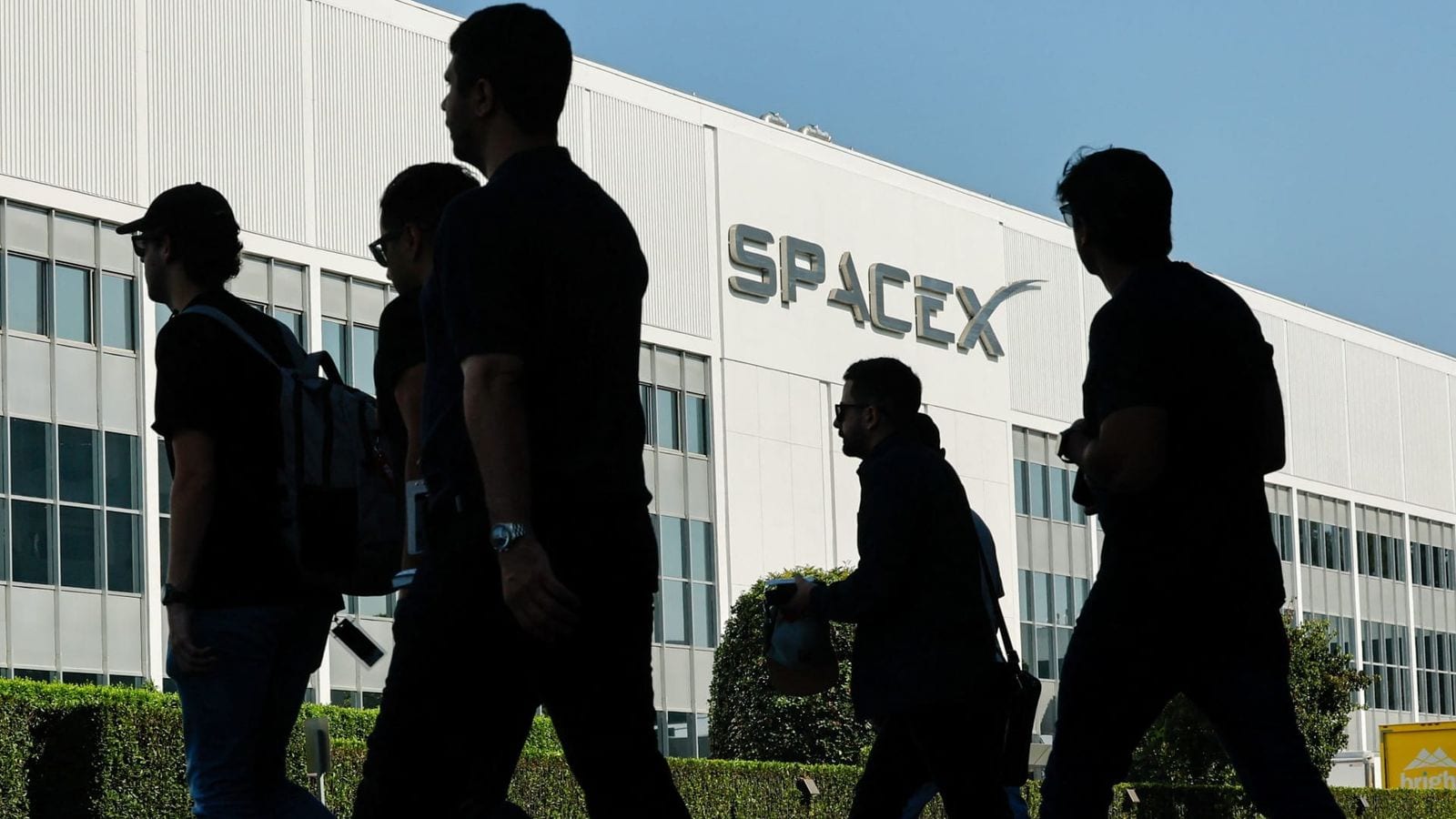
What happened when SpaceX's analyst quiet period ended?
Morgan Stanley set a $300 price target on SpaceX (SPCX) on July 7, 2026 — the highest on Wall Street — as 22 underwriting banks lifted their post-IPO quiet period and resumed coverage. At least six brokerages, including Goldman Sachs and UBS, issued buy ratings on the stock. SpaceX closed at $160.42 on July 7, meaning Morgan Stanley's target implies an 87% upside from that price.
The 22-bank syndicate was led by Goldman Sachs and also included Morgan Stanley, Bank of America, Citigroup, and JPMorgan. They handled SpaceX's $86 billion IPO, which priced at $135 per share on June 11, 2026, according to Futunn reporting.
How did SpaceX stock perform after its IPO?
SpaceX opened its first trading day at $150 — above its $135 offering price. It peaked at $201.80 on June 16, giving it a market cap of $2.6 trillion and making it the world's sixth-largest company at that point. The stock then reversed. By the time the quiet period lifted, it had fallen to $157.54, pushing its market cap below $2.1 trillion — a 22% drop from the peak.
Here's what we know so far about where analyst targets cluster:
| Analyst/Firm | Rating | 12-Month Price Target |
|---|---|---|
| Morgan Stanley | Buy (Overweight) | $300 |
| Wall Street average (12 analysts) | — | $223 |
| Argus | Hold | — |
| Morningstar (Nicholas Owens) | Sell | — |
| CFRA (Keith Snyder) | Sell | $115 |
The range across all 12 analysts tracking the stock runs from $165 to $401. Of those 12, eight have issued a buy rating, per KuCoin's reporting.
What is Morgan Stanley's thesis on SpaceX?
Morgan Stanley analysts wrote: "SpaceX can scale the conversion of energy into intelligence and commercialize it through consumer and enterprise solutions in the AI era." The firm projects revenue reaching $319 billion by 2030 and $3.3 trillion by 2040. Their bear-case price is $75; their bull-case is $600.
This kind of long-range AI-era revenue framing echoes how Wall Street has positioned other large-scale infrastructure bets. For context on how government AI contracts are being structured alongside private-sector forecasts, see the Palantir-NVIDIA Nemotron deal for US government AI.
You might also like



How does SpaceX's valuation compare to other tech companies?
SpaceX trades at a price-to-sales ratio of 41 times expected revenue over the next 12 months. For comparison:
- Palantir Technologies — the highest P/S multiple in the S&P 500 — trades at 32x
- Apple trades below 9x projected sales
- Microsoft trades below 9x projected sales
SpaceX is projected to generate roughly $36 billion in revenue in 2026 and has not yet achieved profitability. Analysts at Bloomberg Intelligence's George Ferguson team wrote in a June 30 report: "Despite expectations for substantial growth in revenue and profits over the next five years, SpaceX remains overvalued. Even if sales increase nearly ninefold and EBITDA grows seventeenfold by 2030, our model indicates that its valuation would still exceed the 2026 valuation levels of profitable behemoths such as Microsoft, Meta, Google, and Amazon."
Published estimates suggest SpaceX could reach modest profitability by 2028, with revenue quadrupling to $160 billion by then.
What do the skeptical analysts say?
Not everyone is bullish. CFRA analyst Keith Snyder issued a sell rating with a $115 price target — below the IPO offering price — citing excessive valuation and significant capital intensity. In a June 12 note, Snyder wrote: "The current investment thesis requires investors to underwrite multiple highly uncertain expectations simultaneously."
Morningstar's Nicholas Owens also issued a sell rating. Argus maintained a hold, noting that SpaceX's valuation multiples may take several years to revert to more normal levels.
David Trainer, CEO of research firm New Constructs, put it plainly: "It's priced not just perfectly — but beyond reality, even beyond this world."
Vikram Rai, Portfolio Manager at First New York, was equally blunt about the long-range forecasts: "I might not live long enough to see that day. When forecasts are pushed so far into the future, they're simply impossible to verify."
Why did SpaceX join the Nasdaq 100 at the same time?
SpaceX's inclusion in the Nasdaq 100 index coincided with the quiet period expiration. Because many funds track the Nasdaq 100, the index inclusion is estimated to generate $4.9 billion in inflows into the stock. David Trainer noted this timing helps reduce share price volatility.
The Nasdaq 100 is a stock index that tracks 100 of the largest non-financial companies listed on the Nasdaq exchange. SpaceX's addition means index-tracking funds must buy the stock automatically. Companies like Microsoft's AI unit and other large-cap tech names are also benchmarked against this index.
What are Wall Street's long-range revenue forecasts for SpaceX?
The revenue projections vary widely across firms:
- Goldman Sachs Research — $474 billion in total revenue by 2030
- Evercore ISI — sales surpassing $1 trillion by 2031
- Morgan Stanley — revenue as high as $3.3–$3.4 trillion by 2040
Robert Grundle, Senior Portfolio Manager at Allspring Global Investments, noted: "A significant portion of the company's future value hinges on revenue streams that remain, to some extent, distant. This inevitably leads to far greater stock price volatility compared to most more mature and stable enterprises."
Art Hogan, Chief Market Strategist at B. Riley Wealth, added: "Everyone is talking about how high this company could go by 2030, not its realistic performance over the next 12 months."
For builders tracking how AI infrastructure spending intersects with large-cap valuations, the Tesla Optimus production ramp at Fremont offers another data point on how hardware-heavy, long-horizon bets are being priced in 2026.
The next concrete milestone is the arrival of the full wave of research reports from all 22 underwriting banks, which began publishing on July 8, 2026 — the first trading day after the quiet period lifted.



0 Comments
Log in to comment
Not a member yet? Join the community
Pick a meme
KlipyHave a great take?
Drop your email — we'll send a magic link so you can post it. No password.
Not a member of the community? Join today.
Join the community →