What did Neuralink just accomplish with the dura mater?
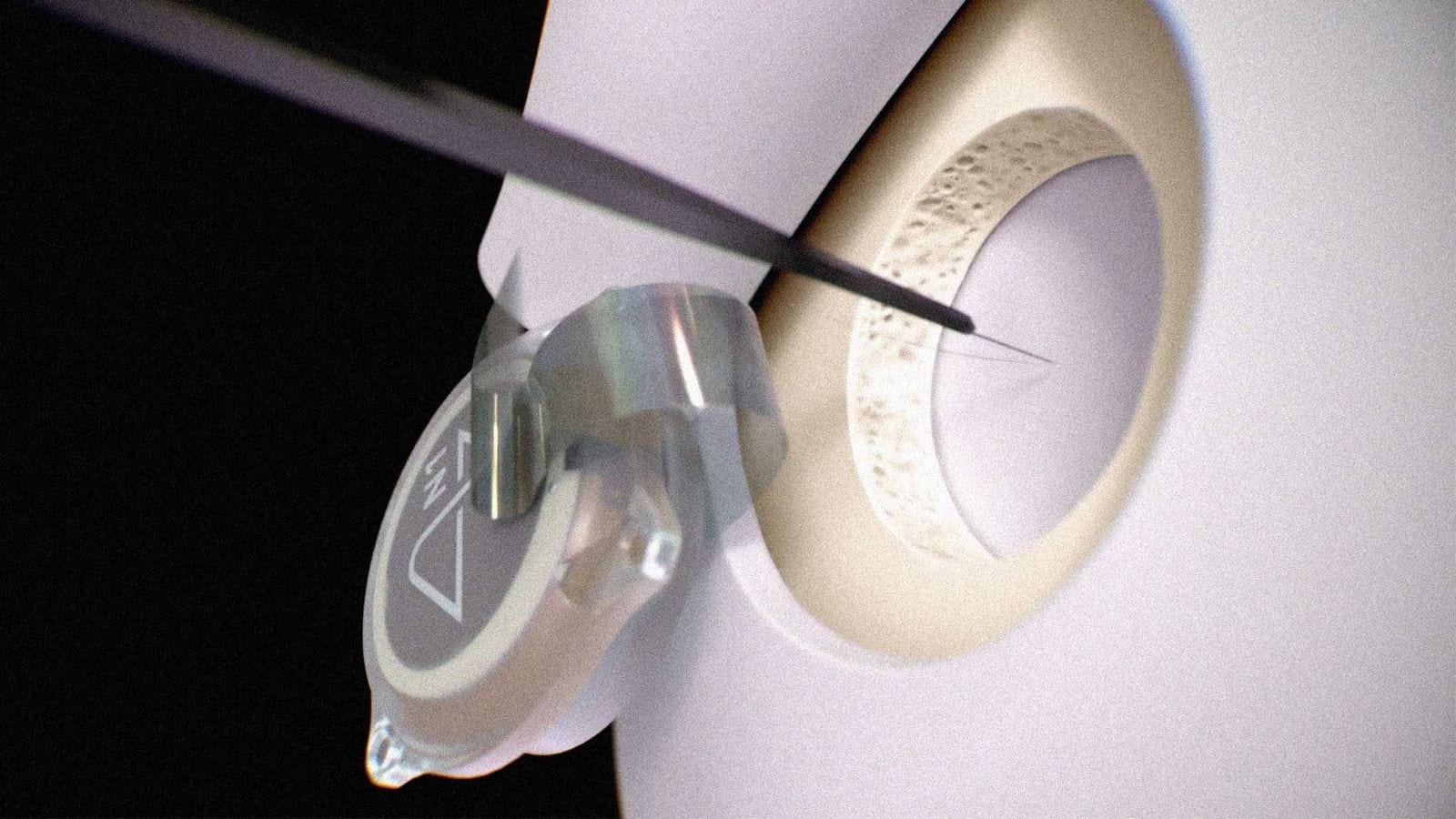
Neuralink successfully inserted its ultra-thin electrode threads through the dura mater — the brain's tough outer protective membrane — without cutting it open. This approach, called transdural insertion, skips a step that traditional brain implant surgery requires: a durectomy, or slicing through the membrane before placing electrodes.
Elon Musk highlighted the milestone on June 30, 2026, calling the transdural method a transformative step for both safety and procedural simplicity, according to KuCoin's report on the technique.
Why does leaving the dura intact matter?
The dura mater is more than 10 times thicker than Neuralink's electrode threads, which are thinner than a human hair. Cutting through it traditionally introduces infection risk and extends recovery time.
By leaving the dura intact, Neuralink's approach theoretically reduces the window for infection and minimizes surgical trauma. The company's robotic system uses a precision needle to push polyimide-based electrode threads through the intact dura and into the cerebral cortex, while actively avoiding blood vessels.
How does the Neuralink implant system work?
The threads connect to Neuralink's N1 implant, a coin-sized device that sits flush against the skull. It contains roughly 1,000 or more electrodes spread across multiple threads.
A surgical robot handles the insertion. The robot is designed to place threads with precision — threading through the dura and into the brain while navigating around blood vessels.
Where did the first Neuralink surgeries outside the U.S. take place?
The University Health Network (UHN) performed the first Neuralink implant surgeries outside the United States at Toronto Western Hospital. The two procedures took place on August 27 and September 3, 2025.
You might also like



Both patients had cervical spinal cord injury. Dr. Andres Lozano, the Alan and Susan Hudson Cornerstone Chair in Neurosurgery at UHN, led the surgeries, as reported by Yahoo Finance.
What is the CAN-PRIME study?
CAN-PRIME — short for Canadian Precise Robotically Implanted Brain-Computer Interface — is the clinical trial under which UHN performed these surgeries. Its goal is to evaluate the safety of Neuralink's N1 implant and its R1 surgical robot, and to assess whether people with quadriplegia can control external devices using thought.
Patients with limited or no hand function due to cervical spinal cord injury or ALS may be eligible. Recruitment for CAN-PRIME is currently open.
Who is leading the Canadian trial?
Dr. Andres Lozano is the lead investigator for CAN-PRIME at UHN. He described the surgeries as "a convergence of neuroscience, engineering, and clinical care."
Dr. Thomas Forbes, Surgeon-in-Chief at UHN, said the achievement "reflects the dedication and expertise of our world-leading surgical and research teams."
UHN is Canada's largest hospital-based research organization, with 10 sites and more than 44,000 staff members.
What is Neuralink's broader clinical trial timeline?
Here's what we know so far about the key milestones in Neuralink's human trial history:
| Date | Event |
|---|---|
| January 2024 | First human implant — patient Noland Arbaugh, U.S. |
| May 2023 | FDA granted approval to begin human trials |
| August 2024 | Second U.S. participant, referred to as "Alex," received implant |
| November 2024 | Health Canada approved UHN to recruit for CAN-PRIME |
| August 27, 2025 | First Neuralink surgery outside the U.S., Toronto Western Hospital |
| September 3, 2025 | Second Canadian surgery, Toronto Western Hospital |
| June 30, 2026 | Elon Musk publicly highlights transdural insertion milestone |
Neuralink is currently running clinical trials in the United States, Canada, the United Kingdom, and the United Arab Emirates.
What can current Neuralink participants do with the device?
Participants in Neuralink's U.S. trials have used the implant to control computers, smartphones, and robotic arms. The second U.S. participant, Alex, has been improving his ability to play video games and started learning computer-aided design software to work on 3D objects.
The Canadian patients will participate in follow-up appointments and research sessions as they learn to use the BCI device.
This kind of brain-computer interface research sits alongside broader efforts in AI-assisted medicine — including drug discovery tools and large-scale AI infrastructure that underpin the compute needed to decode neural signals at scale.
The CAN-PRIME trial also reflects a growing trend of tech companies — from SpaceX-linked engineering teams to AI labs — deploying specialized talent into medical and scientific domains.
The Canadian trial uses a two-ton robot to implant 64 electrodes, each with 16 contacts, into the hand-motor areas of patients' brains. Neuralink designed the electrodes and implantation system and will decode signals from the electrodes. UHN's doctors are responsible for patient selection, surgery safety, and health monitoring.
Patients who qualify must have severe quadriplegia due to ALS or spinal cord injury. They have surgery in Toronto and use the technology at home.



0 Comments
Log in to comment
Not a member yet? Join the community
Pick a meme
KlipyHave a great take?
Drop your email — we'll send a magic link so you can post it. No password.
Not a member of the community? Join today.
Join the community →