What happened when Grok 4.5 and GPT-5.6 launched?
SpaceXAI released Grok 4.5 on Wednesday, July 9, 2026. OpenAI followed with GPT-5.6 less than 24 hours later. Both companies pitched their models as tools for coding, research, and everyday knowledge work. Neither topped the published benchmarks — Anthropic's Claude Fable 5 held the lead across every major coding test in the comparison.
The dual launch is covered in detail by Technext's side-by-side analysis of all three model families.
How does Grok 4.5 perform on coding benchmarks?
Grok 4.5 sits in the middle of the pack. On DeepSWE 1.1 — a benchmark that scores how reliably a model closes real developer-submitted bugs — Grok 4.5 scored 53%. Opus 4.8 scored 59%, GPT-5.5 scored 67%, and Claude Fable 5 topped the field at 70%.
On SWE-Bench Pro, a broader software-engineering test, Grok 4.5 scored 64.7%. That beat GPT-5.5's 58.6%, but trailed Opus 4.8 at 69.2% and Fable 5 at 80.4%.
On an aggregate multi-domain leaderboard, Grok 4.5 ranked 9th overall with a score of 76.3. Its coding score of 68.6 was the lowest of any model on that board, according to Electrek's reporting.
There was also a benchmark problem at launch. Cursor disclosed in a footnote that an earlier snapshot of its own codebase was accidentally included in Grok 4.5's training data — the same codebase its in-house benchmark tests against. That metric was excluded from the published comparison and the data removed for future models.
What is Grok 4.5's real pricing advantage?
Grok 4.5 is SpaceXAI's frontier coding model, priced at $2 per million input tokens and $6 per million output tokens. That undercuts both major rivals by a wide margin.
Here's how the three model families compare on price and key benchmark scores:
| Model | Input ($/M tokens) | Output ($/M tokens) | DeepSWE 1.1 | SWE-Bench Pro |
|---|---|---|---|---|
| Grok 4.5 | $2.00 | $6.00 | 53% | 64.7% |
| GPT-5.6 Sol | $5.00 | $30.00 | — | — |
| GPT-5.6 Terra | $2.50 | $15.00 | — | — |
| GPT-5.6 Luna | $1.00 | $6.00 | — | — |
| Claude Fable 5 | — | — | 70% | 80.4% |
Grok 4.5 also uses far fewer tokens per task. On SWE-Bench Pro, it averaged roughly 15,954 output tokens per job. Opus 4.8 averaged about 67,020 tokens on the same task — more than four times as many. On the Coding Agent Index, Grok 4.5 in Grok Build costs $2.49 per task, versus $5.07 for GPT-5.5 in Codex and $11.80 for Fable 5 in Claude Code.
Per task on the aggregate leaderboard, Grok 4.5 runs at roughly $0.13, versus $1.57 for Claude Fable 5.
You might also like
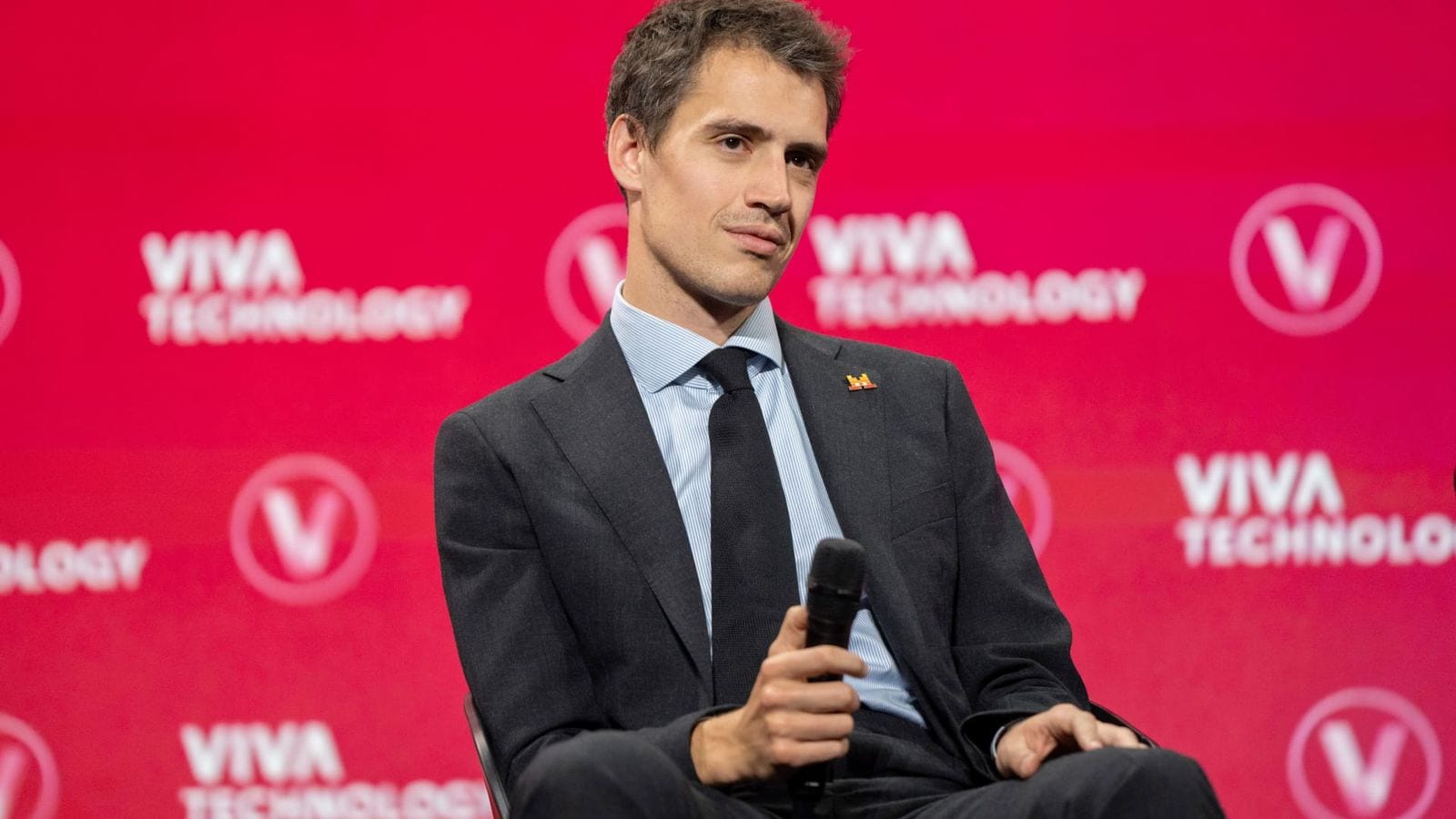
Musk did not dispute the capability gap. "In fairness, Fable is definitely better than Grok 4.5, but most tasks don't require Fable-level capability," he wrote on X.
For more on the Grok 4.5 launch details and SpaceXAI's positioning, see our earlier coverage.
What is GPT-5.6 and how is it structured?
GPT-5.6 is OpenAI's three-tier model family released in July 2026, consisting of Sol, Terra, and Luna. Sol is the flagship tier, priced at $5 per million input tokens and $30 per million output tokens. Terra runs at $2.50/$15, and Luna at $1/$6.
OpenAI describes Sol as its strongest model yet, with gains in coding, biology, and cybersecurity. It also ships with a new "ultra mode" that coordinates subagents for complex tasks. OpenAI's system card disclosed that Sol showed improved chain-of-thought controllability compared with GPT-5.5.
GPT-5.6 followed an unusual path to release. The Trump administration's cybersecurity executive order required frontier labs to submit powerful models for government review before public release. OpenAI limited GPT-5.6 to vetted partners in late June. After testing by the Commerce Department's Centre for AI Standards and Innovation, OpenAI expanded access globally. CEO Sam Altman publicly noted the company does not view government-gated rollouts as a sustainable long-term model.
Our coverage of the GPT-5.6 Sol preview has more on the government review process.
Why did Musk tell Tesla engineers to switch to Grok?
Elon Musk sent a memo to Tesla staff on Friday, July 10, telling them to switch to Grok "when possible," citing Grok 4.5's lower token costs. The directive followed Tesla setting a $200 weekly limit on employee spending on AI tools from Anthropic, OpenAI, and Google. That cap does not apply to xAI's Grok.
Four people familiar with internal usage told reporters that Tesla engineers broadly prefer Anthropic's Claude for day-to-day development work. xAI product lead Andrew Milich has been working with Tesla staff to troubleshoot Grok issues during a months-long internal beta.
Musk also asked engineers to email him directly with feedback on the model. The story was first reported by The Information.
Here's what we know so far about the internal rollout: Tesla has been testing beta versions of Grok for months, yet engineers kept choosing Claude when given the option.
What are Grok 4.5's known weaknesses?
Artificial Analysis flagged a notable accuracy problem. Grok 4.5's score on the AA-Omniscience Index rose from 35 to 52 percent — but its hallucination rate jumped from 25 to 54 percent at the same time. The model knows more, but it is also more confident when it is wrong.
On LiveBench, the Grok family only just reached the bottom of the top tier — the same spot occupied by open Chinese models that cost a fraction of the price.
Musk compared Grok 4.5 to Opus 4.7, not Anthropic's current flagship. Opus 4.7 has since been superseded by Opus 4.8, and Anthropic's top release is now Claude Fable 5. That makes Musk's own stated comparison one generation behind the models it is being measured against.
For context on how agentic coding models are being evaluated across this generation of releases, see our full launch recap.
How was Grok 4.5 trained?
SpaceXAI trained Grok 4.5 in collaboration with Cursor, the AI coding platform SpaceX is acquiring in a reported $60 billion deal. Training used debugging traces and real developer session data rather than static code repositories alone. The model was trained on tens of thousands of Nvidia GB300 GPUs. EU availability is expected in mid-July 2026.
SpaceXAI benchmarked Grok 4.5 against GPT-5.5, not GPT-5.6, because GPT-5.6 launched only hours after Grok's announcement.
Frequently asked questions
What score did Grok 4.5 get on DeepSWE 1.1? Grok 4.5 scored 53% on DeepSWE 1.1, which measures how reliably a model resolves real developer-submitted GitHub issues. That placed it behind GPT-5.5 at 67%, Opus 4.8 at 59%, and Claude Fable 5 at 70%. It ranked 9th overall on an aggregate multi-domain leaderboard with a score of 76.3, and posted the lowest coding score on that board at 68.6.
How much does Grok 4.5 cost per million tokens? Grok 4.5 is priced at $2 per million input tokens and $6 per million output tokens. On an aggregate benchmark leaderboard, it costs roughly $0.13 per task, compared to $1.57 per task for Claude Fable 5. On the Coding Agent Index, Grok 4.5 in Grok Build costs $2.49 per task versus $11.80 for Fable 5 in Claude Code.
What are the three tiers of GPT-5.6? GPT-5.6 ships as Sol, Terra, and Luna. Sol is the flagship at $5 per million input tokens and $30 per million output tokens. Terra is priced at $2.50 input and $15 output. Luna runs at $1 input and $6 output. OpenAI describes Sol as its strongest model yet, with a new "ultra mode" that coordinates subagents for complex tasks.
Why did Tesla cap employee AI spending at $200 per week? Tesla set a $200 weekly limit on employee spending on AI tools from Anthropic, OpenAI, and Google. The cap does not apply to xAI's Grok. Musk followed the cap with a memo telling staff to switch to Grok "when possible," citing its lower token costs. Despite months of internal beta testing, four people familiar with usage said Tesla engineers broadly prefer Anthropic's Claude for development work.
What hallucination problem did Grok 4.5 show in testing? Artificial Analysis found that Grok 4.5's score on the AA-Omniscience Index rose from 35 to 52 percent, but its hallucination rate jumped from 25 to 54 percent at the same time. The model performs better on more questions but is also more likely to be confidently wrong. This was flagged as a notable weakness alongside the model's otherwise strong token efficiency numbers.

0 Comments
Log in to comment
Not a member yet? Join the community
Pick a meme
KlipyHave a great take?
Drop your email — we'll send a magic link so you can post it. No password.
Not a member of the community? Join today.
Join the community →