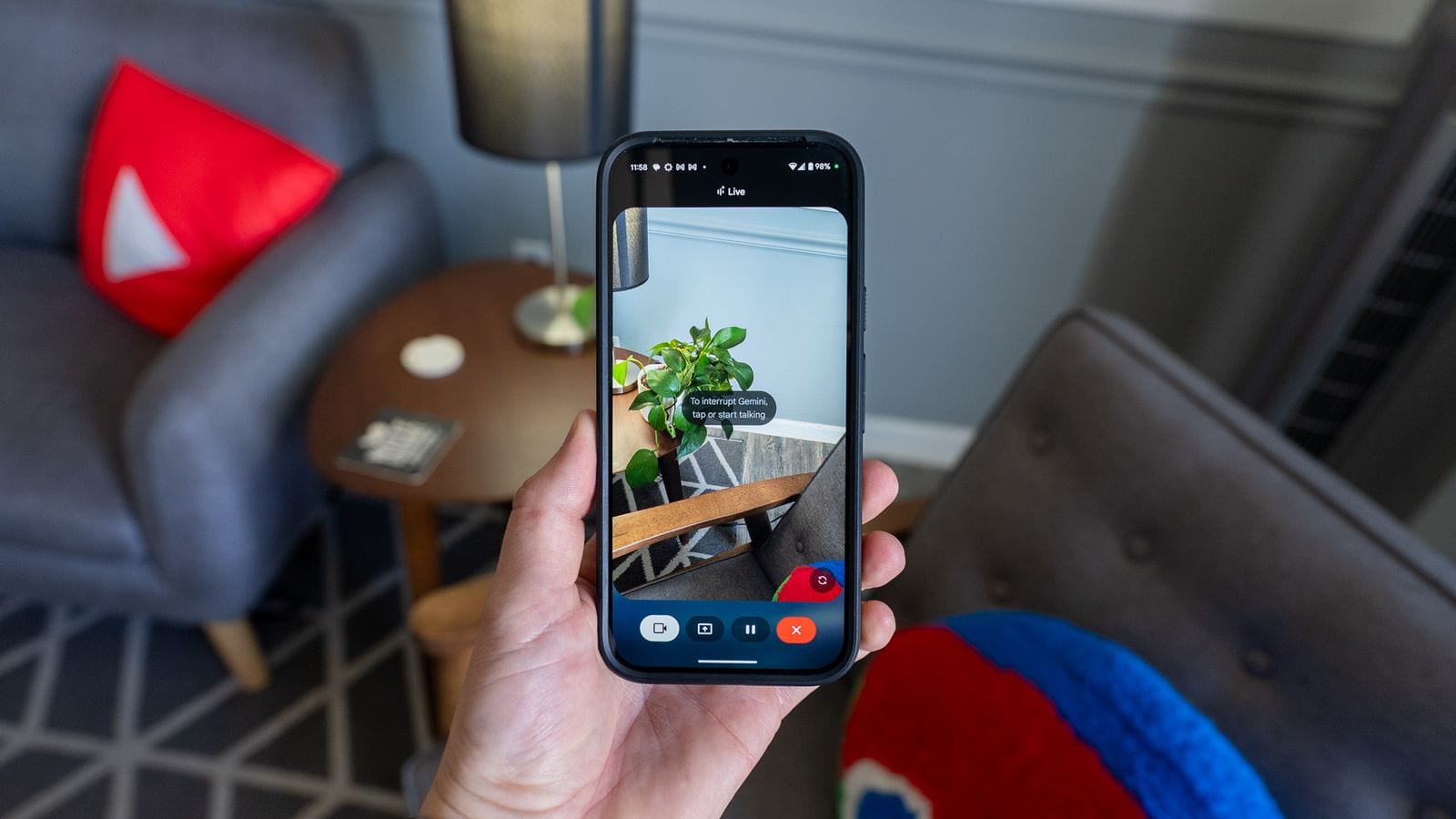
What is GPT-Live-1?
GPT-Live-1 is OpenAI's new voice model for ChatGPT that can listen and speak at the same time. OpenAI research lead Kundan Kumar called it the company's "smartest voice model" yet during a press briefing. A mini version is also launching alongside it. Both are rolling out now to all ChatGPT users — free and paid — on mobile apps and the web.
OpenAI says it may take a day or two for the models to reach every account, according to CNET.
How is GPT-Live-1 different from the old voice mode?
ChatGPT previously used a turn-based voice model. That older system could only respond after you finished speaking. It didn't always produce accurate answers and sometimes struggled with natural conversational flow.
GPT-Live-1 replaces that with what OpenAI calls continuous interaction — a framework that lets the model receive input and produce output at the same time. "This is a full duplex model," said Atty Eleti, product lead for ChatGPT voice. "What it really means is that it can speak and listen at the same time."
Here's a quick before/after comparison:
| Feature | Old Voice Mode | GPT-Live-1 |
|---|---|---|
| Listen + speak simultaneously | No | Yes |
| Real-time translation | No | Yes |
| Offload reasoning to GPT-5.5 | No | Yes |
| Visual answers (weather, scores) | No | Yes |
| Wake word / listen-only mode | No | Yes |
| Filler words ("um," "er") | No | Yes |
What can GPT-Live-1 actually do?
Several new capabilities come directly from the full-duplex design:
- Live translation. You can speak in English and ChatGPT translates into Spanish, Hindi, or another language with only a short delay — while you're still talking, not after you stop.
- Parallel reasoning. When GPT-Live-1 needs to think hard, it can hand the task off to GPT-5.5. "GPT-Live can still remain in conversation with the user," Kumar said, and then "seamlessly weaves" the answer back in when ready.
- Visual answers. The model can generate graphics for weather reports, sports scores, and similar data. "Sometimes the best answer is displayed, not spoken out loud," Eleti said.
- Listen-only mode. You can ask GPT-Live-1 to stay quiet until called on. It will acknowledge it's listening with phrases like "mhmm," "yeah," or "got it."
- Filler words. The model now uses "ums," "ers," and "likes" to sound more like a person thinking out loud.
How does the parallel reasoning feature work?
This is one of the more technically interesting parts of the launch. GPT-Live-1 can delegate complex questions to GPT-5.5 — OpenAI's frontier text model — while keeping the conversation going.
You might also like




"When GPT-Live has to think hard for a question, it can delegate its reasoning and complex task to GPT-5.5, which can do things in parallel," Kumar explained. Once GPT-5.5 finishes, GPT-Live-1 folds the answer back into the conversation without breaking the flow.
Eleti drew a direct parallel to human behavior: "This is exactly how humans interact with each other. We keep the conversation going while we think in the background."
As we see it, this architecture is the most consequential technical shift here — it lets a lightweight voice model punch above its weight by borrowing compute from a heavier model on demand.
Who can use GPT-Live-1, and when?
GPT-Live-1 is available to all ChatGPT users as of July 8, 2026. That includes free-tier accounts. It works on the mobile app and on the ChatGPT website. OpenAI noted the rollout may take a day or two to reach everyone.
The launch is separate from OpenAI's expected GPT-5.6 series drop, which CNET reported is also coming. Users can choose from three intelligence levels inside the voice mode, depending on how detailed they want responses to be.
This update is also distinct from the OpenAI inference cost work the company has been doing on its text models.
What are the privacy and safety settings?
OpenAI automatically opts users out of AI training when using voice mode. Audio clips are stored for 30 days — giving the model context from prior conversations — and can be deleted by the user.
On safety, OpenAI says GPT-Live-1 has expanded safeguards and performed better than previous models on "key safety areas" including self-harm, psychosis, violence, and sexual content. The model also has built-in guardrails that steer it away from harmful responses or end conversations entirely in "higher-risk" situations, The Verge reported.
OpenAI acknowledged the broader risk of making AI sound more human. Several lawsuits have already been filed over harms linked to anthropomorphizing AI, particularly for users struggling with mental health.
How does GPT-Live-1 compare to Siri and Alexa?
One notable difference: unlike Siri and Alexa, ChatGPT's voice mode will actively listen until it is manually disabled. It doesn't time out after a single command. The wake-word feature lets it sit quietly in the background, but it stays on until you turn it off.
Builders exploring AI voice interfaces and AI model comparisons will want to note that distinction — always-on listening is a meaningful product choice, not just a feature flag.
Frequently asked questions
What is GPT-Live-1? GPT-Live-1 is OpenAI's new full-duplex voice model for ChatGPT, launched on July 8, 2026. It can listen and speak at the same time, unlike the previous turn-based voice system. It supports live translation, can offload complex reasoning to GPT-5.5, and can generate visual answers for things like weather reports and sports scores.
Is GPT-Live-1 free to use? Yes. GPT-Live-1 is rolling out to all ChatGPT users, including free-tier accounts, on both the mobile app and the ChatGPT website. OpenAI says the rollout may take a day or two to reach every user. A mini version of the model is also available alongside the full GPT-Live-1.
What does "full duplex" mean in GPT-Live-1? Full duplex means the model can process incoming audio and produce spoken output at the same time. The previous ChatGPT voice mode was turn-based — it waited until you stopped talking before responding. Full duplex allows features like real-time translation and mid-sentence interruption handling without the lag of the older system.
How does GPT-Live-1 handle real-time translation? GPT-Live-1 can translate your speech into another language — such as Spanish or Hindi — while you are still talking, not after you finish. This is made possible by the continuous interaction framework, which lets the model receive and produce audio streams simultaneously rather than waiting for a complete utterance before processing.
Does OpenAI use GPT-Live-1 audio for AI training? No. OpenAI automatically opts users out of AI training when they use voice mode. Audio clips from voice conversations are stored for 30 days to give the model context from prior sessions, but users can delete those recordings. OpenAI also says the new model has stronger safety guardrails than previous voice models.



0 Comments
Log in to comment
Not a member yet? Join the community
Pick a meme
KlipyHave a great take?
Drop your email — we'll send a magic link so you can post it. No password.
Not a member of the community? Join today.
Join the community →