What happened to Microsoft's carbon emissions in 2025?
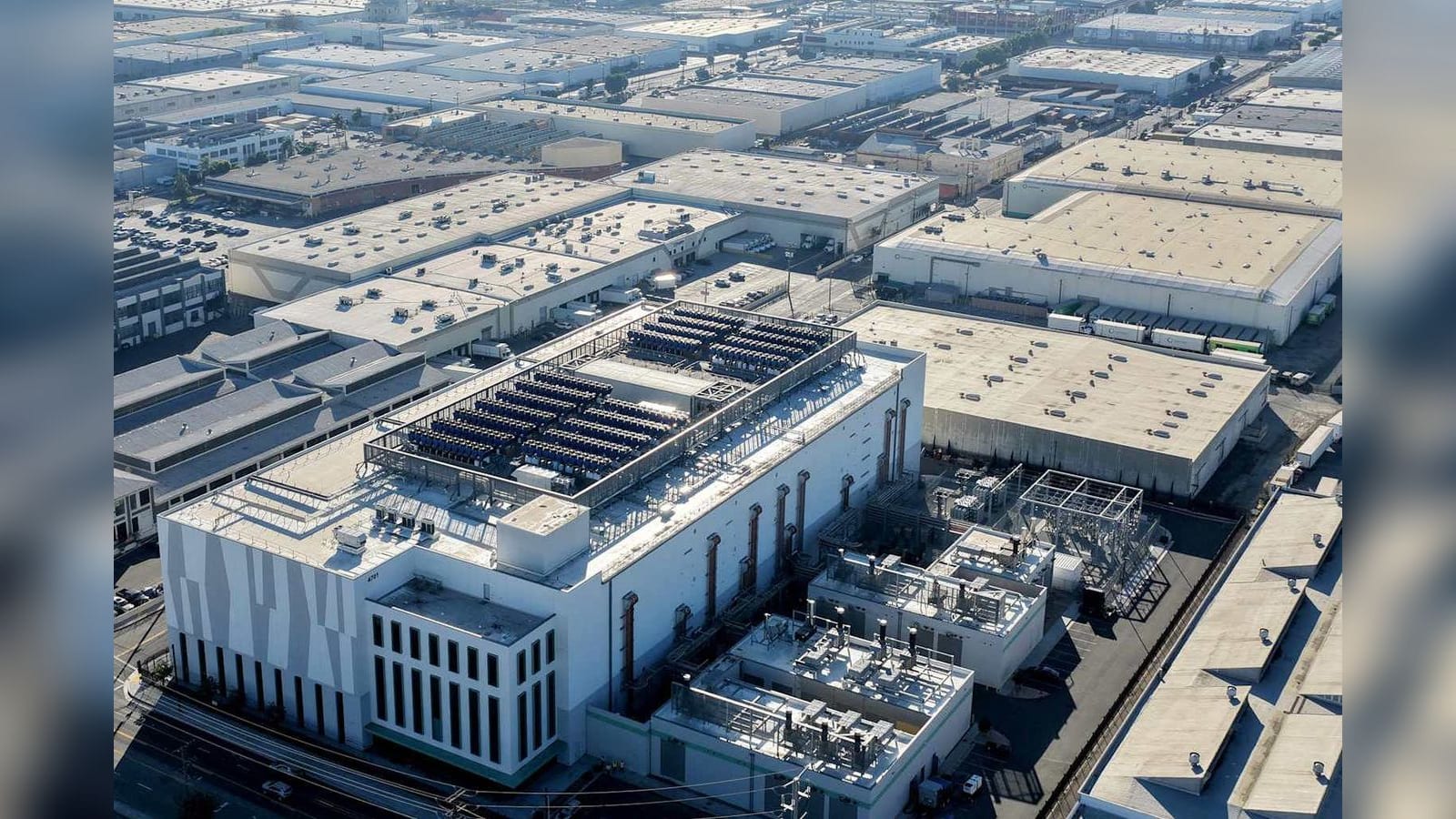
Microsoft's carbon emissions rose 25% in 2025, the company disclosed in its annual sustainability report. The Redmond, Wash.-based company produced 34 million metric tons of CO2 equivalent last year. After subtracting carbon it paid to remove from the atmosphere, the net figure drops to 20 million metric tons — roughly equal to the total emissions of Panama or Lithuania.
Microsoft's total electricity consumption also grew by 24% in 2025. The company attributed the increase to rapid data center expansion to support AI workloads.
How do Microsoft, Amazon, and Google emissions compare?
Here's what we know so far from the three sustainability reports released in late June and early July 2026:
| Company | 2025 Emissions (CO2e) | Year-over-Year Change | Long-term Change vs. 2019 |
|---|---|---|---|
| Microsoft | 34 million metric tons (gross) | +25% | Not reported |
| Amazon | 80.85 million metric tons | +16% | +58% |
| 18.8 million metric tons | +18% | +82% |
Amazon's emissions now exceed those of Austria (71 million tons) or Greece (71.5 million tons), according to DW's reporting citing EU emissions data. Google's emissions have nearly doubled since 2019.
Why are AI data centers driving emissions up?
AI data centers consume enormous amounts of electricity. Amazon's emissions from buying electricity alone rose 34% last year. The company linked this to both data center expansion and the electrification of its delivery network.
Google pointed to the resources needed to build and run data centers, plus the supply chain for chips and servers. A UN report published in June 2026 found that data centers consumed so much energy last year that, if they were a country, they would rank 11th globally in electricity consumption — just between France and Saudi Arabia.
Microsoft's AI spending is part of the same pattern. Billions of dollars in new data center investment are driving electricity demand faster than clean energy supply can keep up. This is directly relevant to builders tracking Amazon's AI spending and its downstream environmental costs.
What are each company's climate pledges?
- Microsoft has pledged to be carbon negative by 2030 — meaning it would remove more carbon than it produces.
- Amazon has pledged to reach net-zero carbon emissions by 2040.
- Google has pledged to cut its 2019-level emissions in half by 2030.
All three companies are currently moving in the opposite direction from their targets.
You might also like




What did Microsoft's chief sustainability officer say?
Melanie Nakagawa, Microsoft's chief sustainability officer, told GeekWire the company remains committed to its goal. "We continue to really be focused around carbon negativity by 2030," she said.
Nakagawa said the emissions increase was also partly driven by Microsoft's decision to stop buying unbundled, short-term renewable energy certificates (RECs). RECs are instruments companies can purchase to quickly lower their reported emissions in a given year. Microsoft is moving away from them in favor of longer-term initiatives.
She described a "portfolio approach" covering carbon dioxide removal, carbon-free electricity, sustainable materials, and fuels — addressing all of them together.
Where did Microsoft make progress in 2025?
Despite the emissions rise, Microsoft's report highlighted several areas of improvement:
- Matched its worldwide electricity consumption with clean energy sources
- Replenished more fresh water globally than it withdrew — the first time it has done so, advancing its 2030 water-positive goal
- Achieved 92% reuse and recycling of decommissioned cloud servers and components for the second consecutive year
- Reached 40 gigawatts of clean power purchase agreements across 26 countries, with 19 gigawatts currently online
Forty gigawatts is roughly enough power to serve 30–40 million typical U.S. homes at once.
What scrutiny has Microsoft faced beyond the emissions report?
Microsoft's sustainability disclosures follow several announcements that raised concerns among climate advocates.
Last month, Microsoft and Chevron announced a deal to build a natural gas facility in Texas with a 2.67 gigawatt capacity, providing dedicated electricity to Microsoft for 20 years. In May, Bloomberg reported Microsoft was considering scaling back a pledge to match its electricity use with carbon-free power around the clock by 2030. In April, the New York Times reported Microsoft had paused future purchases of carbon removal credits, after years as the market's top buyer.
Nakagawa said Microsoft has not canceled any existing removal projects. "We're just continuing to take a hard look at each of the deals that are coming through," she said, adding the company is looking for "credible opportunities to scale."
How did Google and Amazon respond to their own numbers?
Both companies tried to contextualize the data. Google claimed that, without its decarbonization initiatives, its 2025 emissions would be five times higher. Amazon said its data centers are more water and energy-efficient than the industry average.
Google's chief sustainability officer Kate Brandt acknowledged the difficulty directly: "Our AI infrastructure buildout is currently accelerating faster than the grid is decarbonizing."
Amazon's chief sustainability officer Kara Hurst said: "We may be able to move faster — or the demand may slow us down."
These disclosures are part of a broader pattern worth watching alongside Google's AI training practices and the infrastructure investments driving them. The scale of Anthropic's NYC expansion and similar moves signal that AI infrastructure buildout is accelerating across the industry.
Frequently asked questions
How much did Microsoft's carbon emissions increase in 2025? Microsoft's carbon emissions rose 25% in 2025 compared to the previous year, reaching 34 million metric tons of CO2 equivalent in gross terms. After subtracting carbon removal credits, the net figure was 20 million metric tons. The company's total electricity consumption also grew by 24% over the same period, driven by data center expansion for AI.
What is Microsoft's 2030 climate goal? Microsoft has pledged to be carbon negative by 2030, meaning it aims to remove more carbon from the atmosphere than it produces. Chief sustainability officer Melanie Nakagawa confirmed the company remains committed to this target despite the 25% emissions increase reported in its 2025 sustainability report, released July 9, 2026.
How much did Amazon and Google emissions rise in 2025? Amazon reported a 16% rise in greenhouse gas emissions in 2025, reaching 80.85 million metric tons of CO2 equivalent — up 58% compared to 2019. Google reported an 18% increase, reaching 18.8 million metric tons — up 82% compared to 2019. Both companies attributed the increases to AI data center construction and operation.
Why did Microsoft stop buying renewable energy certificates? Microsoft decided to stop purchasing unbundled, short-term renewable energy certificates (RECs), which are instruments companies use to quickly reduce their reported emissions in a given year. Nakagawa said Microsoft is instead prioritizing longer-term initiatives with bigger impact, describing a "portfolio approach" that spans carbon removal, carbon-free electricity, sustainable materials, and fuels.
How energy-intensive are AI data centers globally? A UN report published in June 2026 found that data centers consumed so much energy last year that, if they were a country, they would rank 11th globally in electricity consumption — placing them just between France and Saudi Arabia. Amazon's electricity-related emissions alone rose 34% in 2025, driven by data center expansion.




0 Comments
Log in to comment
Not a member yet? Join the community
Pick a meme
KlipyHave a great take?
Drop your email — we'll send a magic link so you can post it. No password.
Not a member of the community? Join today.
Join the community →