How big will AI capital spending be by 2027?
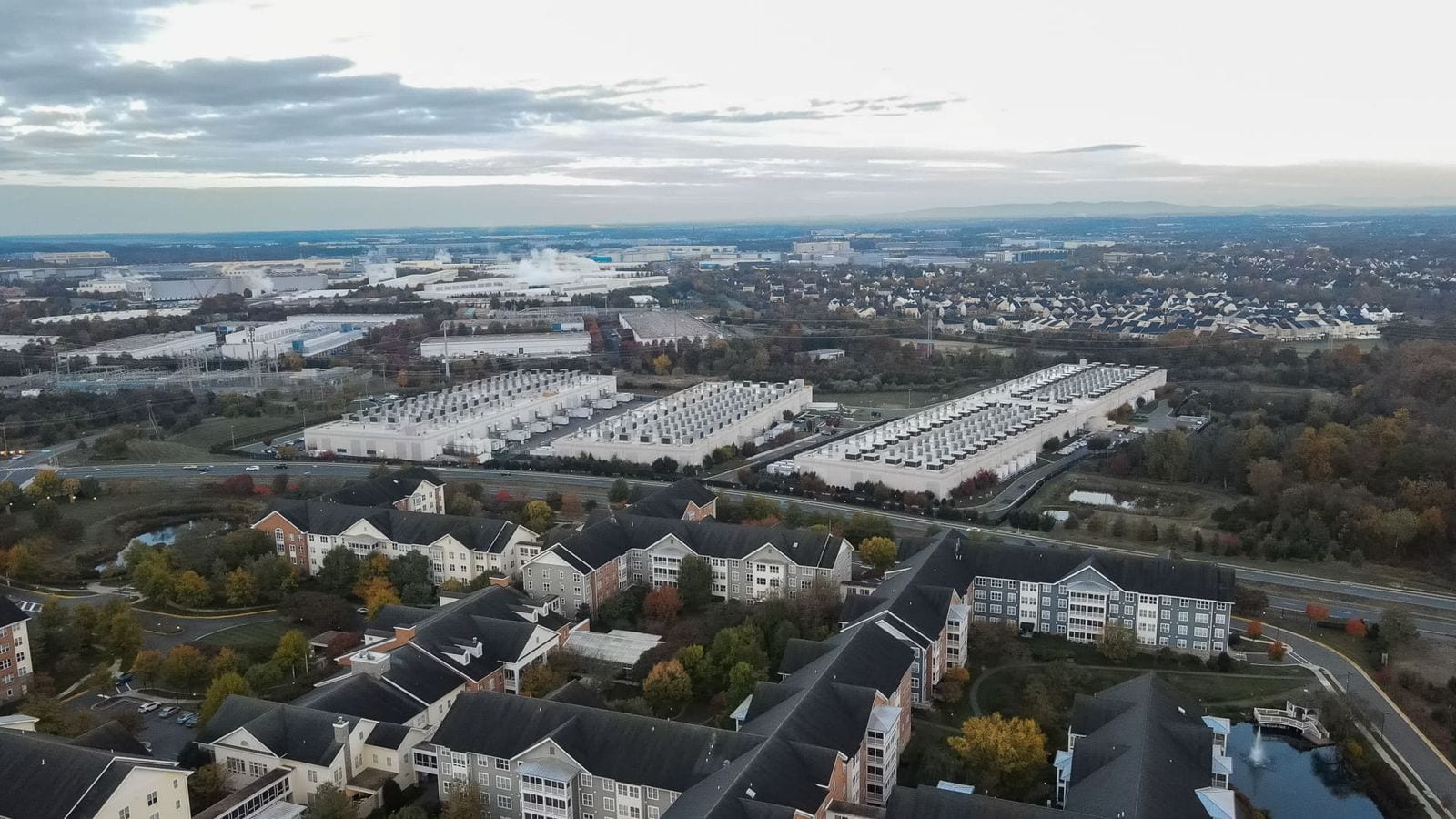
Five tech companies — Alphabet, Amazon, Meta, Microsoft, and Oracle — are projected to spend $1.1 trillion on AI capital expenditures in 2027. That figure equals roughly 3.2% of U.S. GDP, according to The Kobeissi Letter as reported by KuCoin. The U.S. defense budget is expected to account for about 2.7% of GDP that same year.
Here's what we know so far: this would mark the first time annual AI capital spending by these five firms has ever exceeded U.S. defense spending.
How does AI spending compare to defense spending right now?
The gap is closing fast. In 2025, these five companies' AI capital expenditures stood at 1.5% of U.S. GDP. This year, that share is expected to jump to around 2.5% — nearly matching the 2.7% defense spending share. The crossover is projected to happen in 2027.
| Year | AI Capex (% of GDP) | Defense Spending (% of GDP) |
|---|---|---|
| 2025 | ~1.5% | ~2.7% |
| 2026 | ~2.5% | ~2.7% |
| 2027 | ~3.2% | ~2.7% |
The five firms are expected to exceed $800 billion in AI capital expenditures in 2026 alone, before reaching the $1.1 trillion record in 2027.
Which companies are driving this AI spending surge?
The five companies named in the forecast are Alphabet, Amazon, Meta, Microsoft, and Oracle. These are the same firms often called hyperscalers — large cloud and technology companies that build and operate massive computing infrastructure at scale.
You might also like

Their combined AI chip deals and data center buildouts are reshaping how economists model U.S. business investment. Morgan Stanley's equity analysts now expect hyperscaler capex to reach $720 billion in 2026 and $882 billion in 2027, up from prior estimates of $603 billion and $702 billion respectively, according to a February 2026 note from analyst Michael Gapen.
How did Morgan Stanley change its U.S. GDP forecast?
Morgan Stanley raised its 2026 U.S. real GDP growth forecast to 2.6%, up from 2.4% previously. The bank cited "stronger capex assumptions" tied directly to rising hyperscaler spending.
The revised trajectory carries through to nonresidential business fixed investment. Morgan Stanley lifted that forecast to 5.3% for 2026, up from 3.1%. The breakdown:
- Equipment spending: up 6.4%
- Intellectual property investment: up 5.8%
- Structures: up 2.1%
Together, these imply a 0.7-percentage-point contribution to real GDP, compared with 0.4 points under the prior forecast. Gapen also noted that payroll revisions imply productivity growth of 2.4% through the third quarter of 2025, up from a previously reported 1.9%.
What risks did Morgan Stanley flag about the AI investment boom?
Morgan Stanley did not treat the spending surge as purely positive. Gapen warned that an AI-driven investment boom "poses ever greater risk" if returns do not materialize. The bank noted that major innovation cycles "have come with credit cycles and boom-bust characteristics."
Rather than trade protectionism, this AI spending trajectory is now the bank's primary downside concern. The forecast has tilted toward what Morgan Stanley called its "animal spirits" upside scenario, supported by "resiliency in consumer spending" and firmer business investment.
This risk framing matters for builders and founders tracking AI compute costs and infrastructure bets — the macro tailwind is real, but so is the potential for a correction if AI returns disappoint.
Where is the money for data centers coming from?
Goldman Sachs published a separate analysis in June 2026 noting that private markets are expected to have a growing role in data center financing. As AI capex scales toward $1.1 trillion, the financing structures behind that spending are shifting — not just public company balance sheets, but private capital markets too.
This connects to broader questions about how companies are funding new energy infrastructure to power these data centers, and whether AI revenue targets can justify the scale of investment being committed.
What does the $1.1 trillion figure actually include?
The $1.1 trillion projection covers capital expenditures — spending on physical infrastructure like data centers, chips, and networking equipment — by the five named companies: Alphabet, Amazon, Meta, Microsoft, and Oracle. It does not include operating expenses, software costs, or spending by other AI companies outside this group.
The Kobeissi Letter described these figures as "staggering." The 2026 figure of over $800 billion alone would already represent a historic level of concentrated private-sector investment in a single technology category.
The most confirmed near-term milestone from the sources: Morgan Stanley's revised hyperscaler capex estimate puts 2026 spending at $720 billion, with the sharper deceleration in growth now pushed into 2027.


0 Comments
Log in to comment
Not a member yet? Join the community
Pick a meme
KlipyHave a great take?
Drop your email — we'll send a magic link so you can post it. No password.
Not a member of the community? Join today.
Join the community →