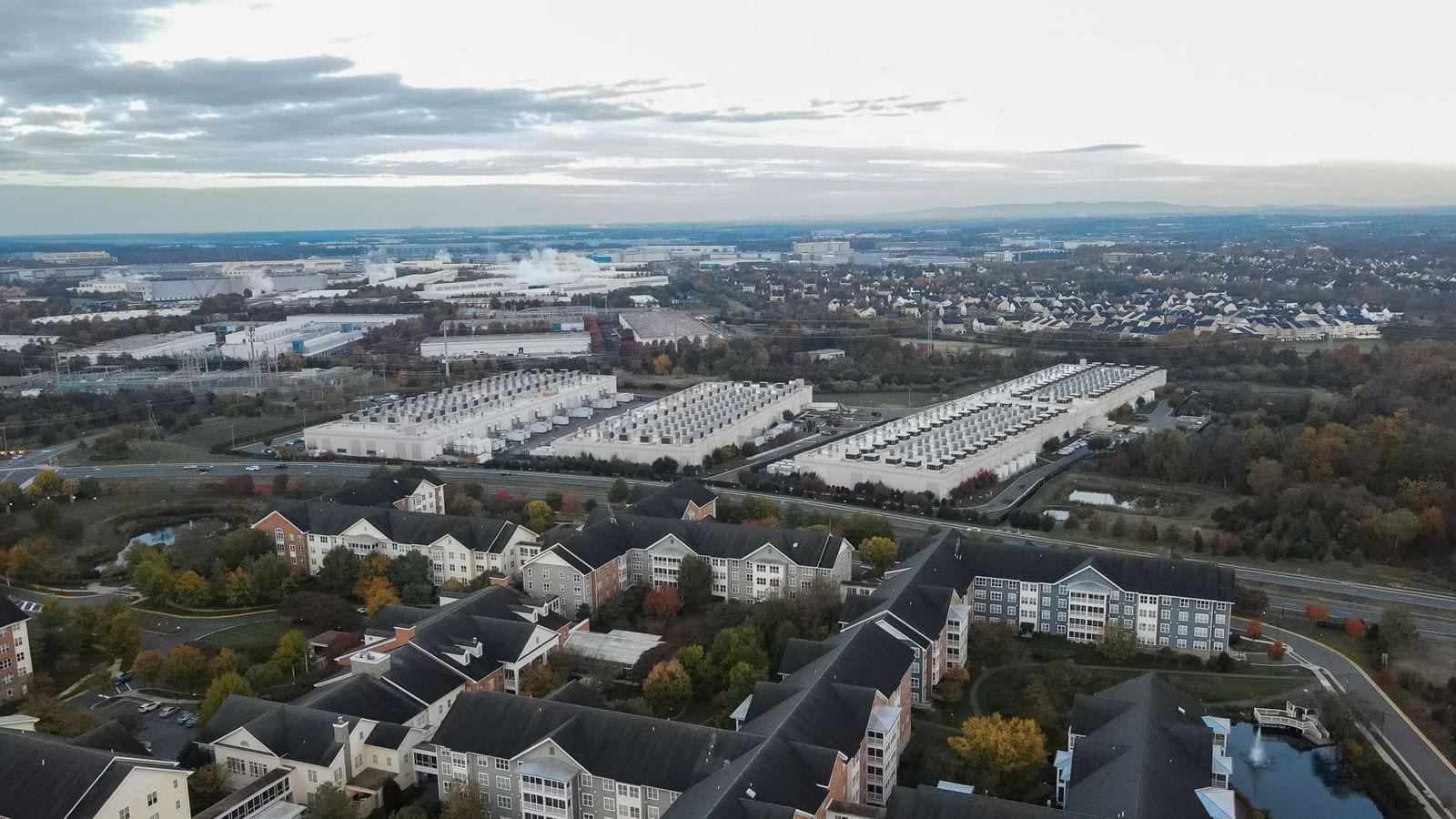
What is the $3 trillion AI revenue gap?
Sequoia partner David Cahn calculates that the AI industry must earn $3 trillion in revenue to justify its 2026 infrastructure spending. He puts AI infrastructure spending for 2026 at $1.5 trillion. His methodology, reported by TechCrunch, takes Nvidia's GPU revenue, doubles it to reflect total data center costs, then doubles it again to account for the gross margin that end users need to earn.
Cahn first ran this analysis in 2023, when Nvidia's annual GPU revenue was $50 billion. That version of the math produced a $200 billion revenue requirement. By June 2024, Sequoia published an updated version putting the number at $600 billion. The 2026 figure of $3 trillion reflects three years of accelerating infrastructure spend.
How did Cahn arrive at the $3 trillion number?
The formula is straightforward. Start with Nvidia's GPU revenue run rate. Multiply by two to capture the full cost of running a data center — GPUs are roughly half of total ownership costs, with energy, buildings, and backup generators making up the rest. Multiply by two again to reflect the 50% gross margin that a startup or business buying compute from AWS, Azure, or Google Cloud needs to earn.
Cahn notes this is likely an underestimate. Rising memory costs and the growing use of inference-specific chips are pushing the required revenue per gigawatt of capital expenditure higher. "Recently," he writes, "the required revenue per GW of CapEx has sharply increased due to these bottleneck dynamics and rising costs of construction."
This AI capex trajectory has been a growing concern across the industry, and Cahn's updated math puts a hard number on it.
Where does AI revenue actually stand today?
The gap between required and actual revenue is large. Here is how the known figures compare:
You might also like



| Company | Revenue figure | Period |
|---|---|---|
| Anthropic | ~$60 billion ARR | 2026 (reported) |
| OpenAI | $13 billion earned | Full year 2025 |
| OpenAI | $20 billion ARR | November 2025 (stated) |
| Required (industry total) | $3 trillion | 2026 target |
Anthropic is thought to have reached $60 billion in ARR. OpenAI reportedly earned $13 billion in 2025, though in November 2025 CEO Sam Altman said the company was at $20 billion ARR. Even combined, these figures represent a small fraction of the $3 trillion threshold.
What risk does Apollo's chief economist see?
Torsten Slok is the chief economist at Apollo, the asset management firm. In a recent note, he points out that the four major hyperscalers — Google, Meta, Microsoft, and Amazon — are all projecting large increases in free cash flow by 2028. That is when they expect to see returns on their chip investments.
Slok warns the consequences of missing those targets could extend well beyond tech. "With so much riding on so few names," he writes, "a slower payoff wouldn't just be a sector problem, it would risk tipping the economy into recession and the S&P 500 into a correction."
The AI buildout scale underpinning those projections makes the stakes unusually high for the broader market.
Why are falling token prices a problem for infrastructure builders?
Two trends are compressing potential AI revenue at the same time the infrastructure bill is growing.
First, more organizations are switching to cheaper open-weight models, often built by Chinese labs, rather than paying for frontier models from OpenAI or Anthropic. Second, token prices are falling across the board.
OpenAI's latest model is 54% more token-efficient on coding tasks, according to CEO Sam Altman. That is good news for developers running AI agents. But it is potentially bad news for companies whose business model depends on high token volumes — if users don't increase their overall token consumption to match the efficiency gains, revenue per user falls.
As we read Slok's analysis, the efficiency-vs-volume question is the central uncertainty: will cheaper tokens drive enough new usage to offset the lower price per token, or will the math simply not close?
Who is building the infrastructure and who bears the risk?
The hyperscalers — Google, Meta, Microsoft, and Amazon — are the primary buyers of AI infrastructure. Their capital expenditure is at historic levels. As Cahn noted in his 2024 Sequoia piece, Microsoft alone likely represented roughly 22% of Nvidia's Q4 revenue in that period.
Meta's move to sell excess AI compute externally reflects how some of these companies are trying to offset infrastructure costs. Meanwhile, chip investment decisions across the industry continue to shape who holds the most exposure if demand softens.
The risk is not evenly distributed. Cahn's 2024 analysis noted that founders and builders benefit from falling compute costs even if investors absorb losses. But Slok's concern is systemic: the hyperscalers are so large that their cash-flow miss would register across the whole economy.
What happens if the hyperscalers miss their 2028 targets?
Slok's note identifies 2028 as the year hyperscalers expect their AI investments to pay off in free cash flow. If that payoff is slower than projected, the market reaction could be severe given how much of the S&P 500's weight sits in those few names.
Token prices are already falling. Cheaper open-weight models are already gaining share. And OpenAI's latest model is already 54% more efficient on coding — reducing the token revenue that infrastructure builders were counting on. The $3 trillion target remains the number to watch.




0 Comments
Log in to comment
Not a member yet? Join the community
Pick a meme
KlipyHave a great take?
Drop your email — we'll send a magic link so you can post it. No password.
Not a member of the community? Join today.
Join the community →