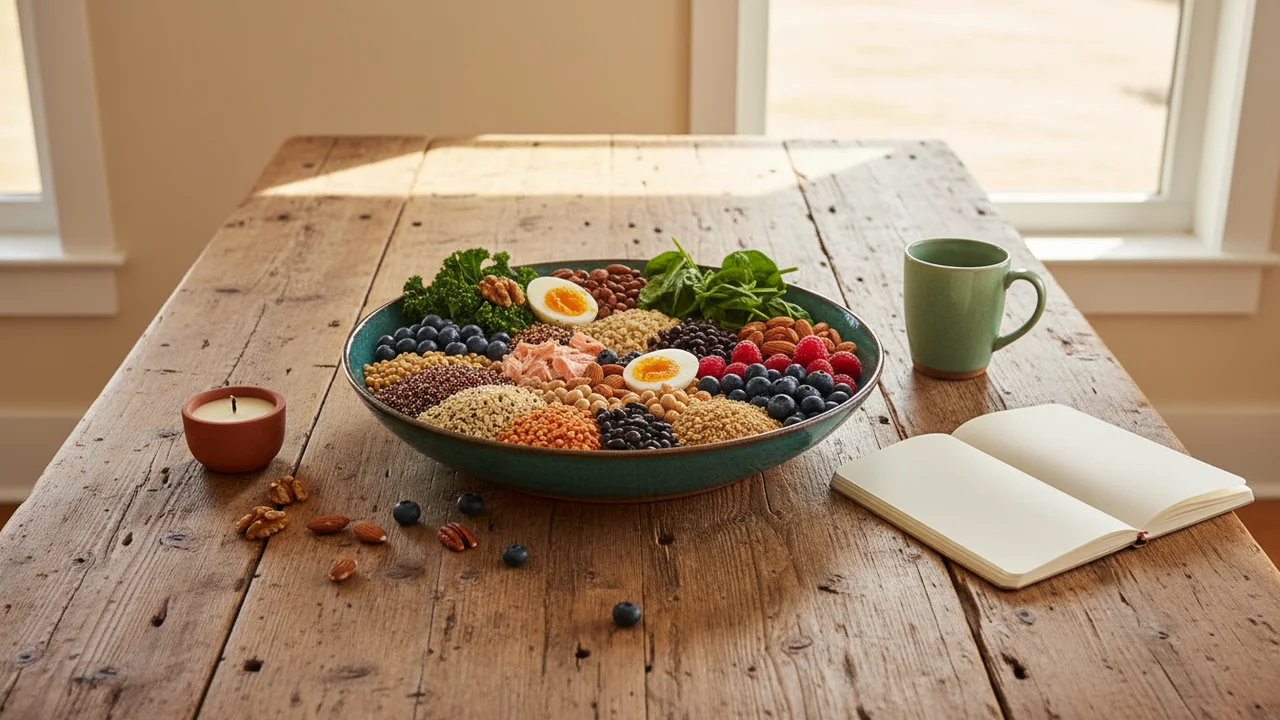
The most energizing foods release fuel slowly and rebuild what training burns, and a study in the Journal of the International Society of Sports Nutrition found complex carbohydrates from whole grains and fruit deliver sustained energy instead of a crash. Think whole grains, legumes, fish, eggs, lean meat, leafy greens, berries, nuts, and water. Steady blood sugar beats any single "superfood," and the nutrients inside those foods — iron, B12, magnesium, omega-3s — are what actually move the needle.
What are the best foods to eat for sustained energy?
The best foods for sustained energy pair a complex carbohydrate with protein and a little fat, so fuel releases slowly. Research in the Journal of the International Society of Sports Nutrition found complex carbohydrates like whole grains and fruit provide steadier energy than refined sugar. That combination keeps blood sugar level instead of spiking and crashing.
The staples I keep coming back to are oats, brown rice, lentils, beans, eggs, salmon, chicken, spinach, berries, and walnuts. The Academy of Nutrition and Dietetics notes that protein-rich foods like lean meats, fish, and eggs support energy partly through their iron content. Iron carries oxygen to working muscles, and low iron is a common, quiet cause of fatigue.
How do different macronutrients impact energy levels?
Each macronutrient fuels you on a different clock: carbohydrates fast, protein and fat slow. Complex carbohydrates give quick usable glucose, while protein and fat slow digestion so that glucose arrives gradually. Pairing them is the whole point.
| Food type | Main macronutrient | Energy speed | Example foods |
|---|---|---|---|
| Refined sugar | Simple carb | Fast spike, fast crash | Candy, soda |
| Whole grains | Complex carb | Steady, lasts hours | Oats, brown rice, quinoa |
| Legumes | Carb + fiber + protein | Slow, sustained | Lentils, black beans |
| Lean protein | Protein | Slow, stabilizing | Eggs, chicken, fish |
| Nuts and seeds | Fat + protein | Slowest, longest | Walnuts, almonds |
The United States Department of Agriculture recommends high-fiber foods like legumes and whole grains to support digestion and steady energy. Fiber slows how fast sugar hits your blood, which is why a bowl of lentils outlasts a bagel.
What role do vitamins and minerals play in energy production?
Vitamins and minerals hold no calories, but energy production stalls without them. The National Institutes of Health reports that vitamin B12 is essential for energy production, and foods like dairy and leafy greens supply it. Iron, magnesium, and B vitamins are the ones most tied to how you actually feel.
Magnesium matters more than most people realize. The National Sleep Foundation reports that a magnesium-rich diet — dark leafy greens and nuts — can improve sleep quality, and better sleep is upstream of daytime energy. Omega-3 fats help too: research in the Journal of Nutrition found omega-3s from salmon and walnuts reduce inflammation, which can lift energy. Berries earn their place as well; a study in the Journal of the Academy of Nutrition and Dietetics linked antioxidant-rich fruits to less fatigue.
What I eat around a 5am brick session
During a 5am brick session — a bike ride straight into a run — I learned that what you eat the night before matters more than any pre-workout trick. On mornings after a dinner of salmon, brown rice, and spinach, my legs still have fuel at mile three of the run. On mornings after a late, sugary dinner, I bonk early, and the quiet prayer time I keep afterward feels foggy too.
My pre-dawn protocol is simple. Half a banana and black coffee about 20 minutes before I clip in — fast carbs plus caffeine, nothing that sits heavy. Real food waits until after: three eggs, oats, and a handful of berries once I've cooled down. Discipline here isn't willpower; it's removing decisions. I prep the oats the night before, so the 5am version of me just eats and moves.
How does hydration impact energy levels?
Even mild dehydration drains energy before you feel thirsty. The American Heart Association advises drinking plenty of water and limiting sugary drinks to keep energy steady through the day. Water carries nutrients into your cells and clears the byproducts of effort.
I treat water like a training variable. On heavy weeks I can lose two to three percent of body weight in sweat during a hard session, and that alone reads as fatigue if I don't replace it. A simple routine that holds up:
- Drink a full glass within 10 minutes of waking.
- Keep a bottle in view at your desk — visible cues beat reminders.
- Add electrolytes only after sweating 60+ minutes, not by default.
- Swap one sugary drink a day for water first.
How can I build these foods into my week?
Start by anchoring three energy foods to meals you already eat, rather than overhauling everything at once. Add one complex carb, one protein, and one plant to each plate, and most of the work is done. Consistency beats perfection.
- Trade white toast for oats or whole-grain toast at breakfast.
- Add a palm of protein — eggs, fish, chicken, or beans — to every meal.
- Keep walnuts or almonds within reach instead of chips.
- Put a fruit or a leafy green on the plate at two meals a day.
- Front-load carbs earlier in the day, when you will actually burn them.
Popular books like How Not to Die and In Defense of Food land on the same core idea: whole, minimally processed foods, mostly plants, sustain energy better than processed alternatives. You don't need a perfect diet to feel more energetic. You need steady blood sugar, enough iron and magnesium, real hydration, and the discipline to eat that way on the ordinary days, not just the motivated ones.