
What did Trump's June 2 AI executive order actually do?
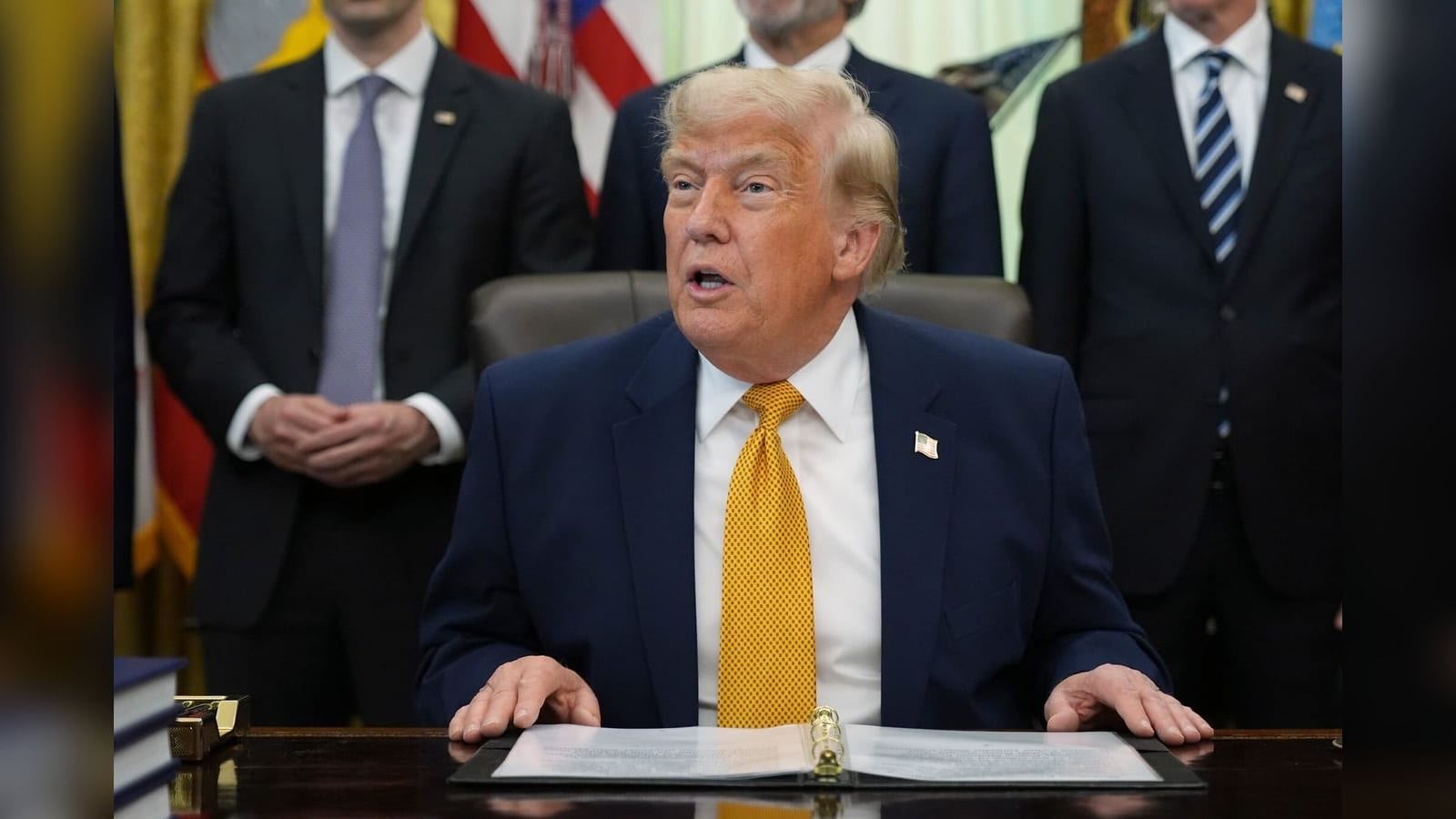
President Trump signed an executive order titled "Promoting Advanced Artificial Intelligence Innovation and Security" on June 2, 2026. The order directs U.S. government agencies to build a voluntary framework for early access to powerful AI models before they reach the public. It also accelerates AI-enabled cybersecurity across federal systems and prioritizes criminal enforcement against AI-enabled cyberattacks.
The order does not impose licensing requirements or mandatory preclearance. However, as Skadden's analysis of the EO notes, the voluntary framework "could provide a foundation for more substantial federal oversight of AI model development."
How does the pre-release review process work?
The EO gives the Departments of Homeland Security and Treasury, the Office of the National Cyber Director, and the National Institute of Standards and Technology (NIST) 60 days to define what counts as a "covered frontier model." That designation will be determined through a classified benchmarking process run by the NSA director, in consultation with the national cyber director and the CISA director.
Once a model is designated a covered frontier model, its developer may give the government access for up to 30 days before a broader release. After that window, the EO calls for a narrower release to "trusted partners." Confidentiality, cybersecurity, insider-risk, and intellectual property protections apply during the access period.
This 30-day window is shorter than the 90-day review period included in an earlier draft of the order. Cybersecurity Dive reports that Trump scrapped that earlier version on May 21 following pushback from tech executives and some Trump advisers who said 90 days was too long.
What agencies are involved and what are their deadlines?
The EO sets a series of 30- and 60-day deadlines across multiple agencies:
You might also like



| Deadline | Agency | Action |
|---|---|---|
| 30 days | Committee on National Security Systems | Prioritize cyber defense of National Security Systems |
| 30 days | Department of War | Prioritize cyber defense of department information systems |
| 30 days | Treasury, NSA, CISA, National Cyber Director | Form an "AI cybersecurity clearinghouse" with industry |
| 60 days | Homeland Security / CISA | Release Binding Operational Directives for civilian federal systems |
| 60 days | Office of Personnel Management | Expand cybersecurity hiring via the U.S. Tech Force |
| 60 days | DHS, Treasury, ONCD, NIST | Define the "covered frontier model" threshold |
The AI cybersecurity clearinghouse will coordinate scanning for software vulnerabilities, validate discoveries, and prioritize patch distribution.
Is OpenAI already affected by this order?
Yes. On June 25, 2026, TechCrunch reported that the Trump administration asked OpenAI to limit the release of its newest model, GPT-5.6 trusted partners release, rather than distribute it to the general public. The agencies that reportedly requested the limited release were the Office of the National Cyber Director and the Office of Science and Technology Policy.
At a staff meeting this week, OpenAI CEO Sam Altman reportedly told employees that the government would be "approving access customer by customer" during a preview period. Altman added that if the limited release goes well, OpenAI hopes to follow with a broader release "a couple of weeks later." OpenAI staffers also reportedly "worked closely" with the government on the upcoming release.
Here's what we know so far: this is the first confirmed instance of the EO's pre-release review framework being applied to a specific model. Our coverage of the GPT-5.6 rollout has more detail on what that limited release looks like in practice.
Why is the government focused on frontier AI and cybersecurity?
The concern centers on frontier models with advanced cyber capabilities. Models like Anthropic's Claude Mythos — which Anthropic has kept private through a program called Project Glasswing — are described as capable of both identifying and exploiting software vulnerabilities at speeds no human analyst could match.
LLMs have proven capable of writing malware, and some can execute entire ransomware attacks autonomously, according to TechCrunch's reporting. Since many software systems contain hidden bugs that act as entry points into enterprise networks, frontier cyber models in the wrong hands pose a direct threat to critical infrastructure.
The EO specifically calls out rural hospitals, community banks, and local utilities as critical infrastructure operators that should gain access to AI-enabled cybersecurity tools through CISA's expanded programs.
How does this compare to previous AI policy?
The Trump administration previously positioned itself as taking a hands-off approach to AI. This EO represents a shift. That said, it has precedent: in 2023, the Biden White House secured voluntary commitments from leading AI developers to test their systems before public release. The current EO continues that approach but reorients it around cybersecurity and national security.
The June 2 order follows earlier Trump AI actions, including a January 2025 EO titled "Removing Barriers to American Leadership in Artificial Intelligence" and a December 2025 EO on a national AI policy framework.
Anthropic had already moved in this direction independently. Its Claude Mythos model is only available to a small group of partners. TechCrunch noted the Trump administration "appears to be pressuring OpenAI to do what Anthropic is already voluntarily doing." For context on how Anthropic salaries and staffing reflect its security-first approach, that picture has been building for some time.
What should AI developers do now?
Skadden's legal analysis recommends that frontier AI model developers take three concrete steps:
- Monitor CISA guidance as it develops the covered frontier model designation criteria.
- Prepare for the classified benchmarking process that the NSA will run.
- Account for a potential 30-day government access period when planning product release timelines.
Critical infrastructure companies using AI-enabled cybersecurity tools should also track U.S. government actions related to this EO. The OpenAI hardware team and other frontier labs building advanced models are now operating in a policy environment where pre-release government review is an active expectation, even if technically voluntary.
The next concrete milestone is the 60-day deadline for agencies to define what counts as a covered frontier model — which falls around August 1, 2026.




0 Comments
Log in to comment
Not a member yet? Join the community
Pick a meme
KlipyHave a great take?
Drop your email — we'll send a magic link so you can post it. No password.
Not a member of the community? Join today.
Join the community →