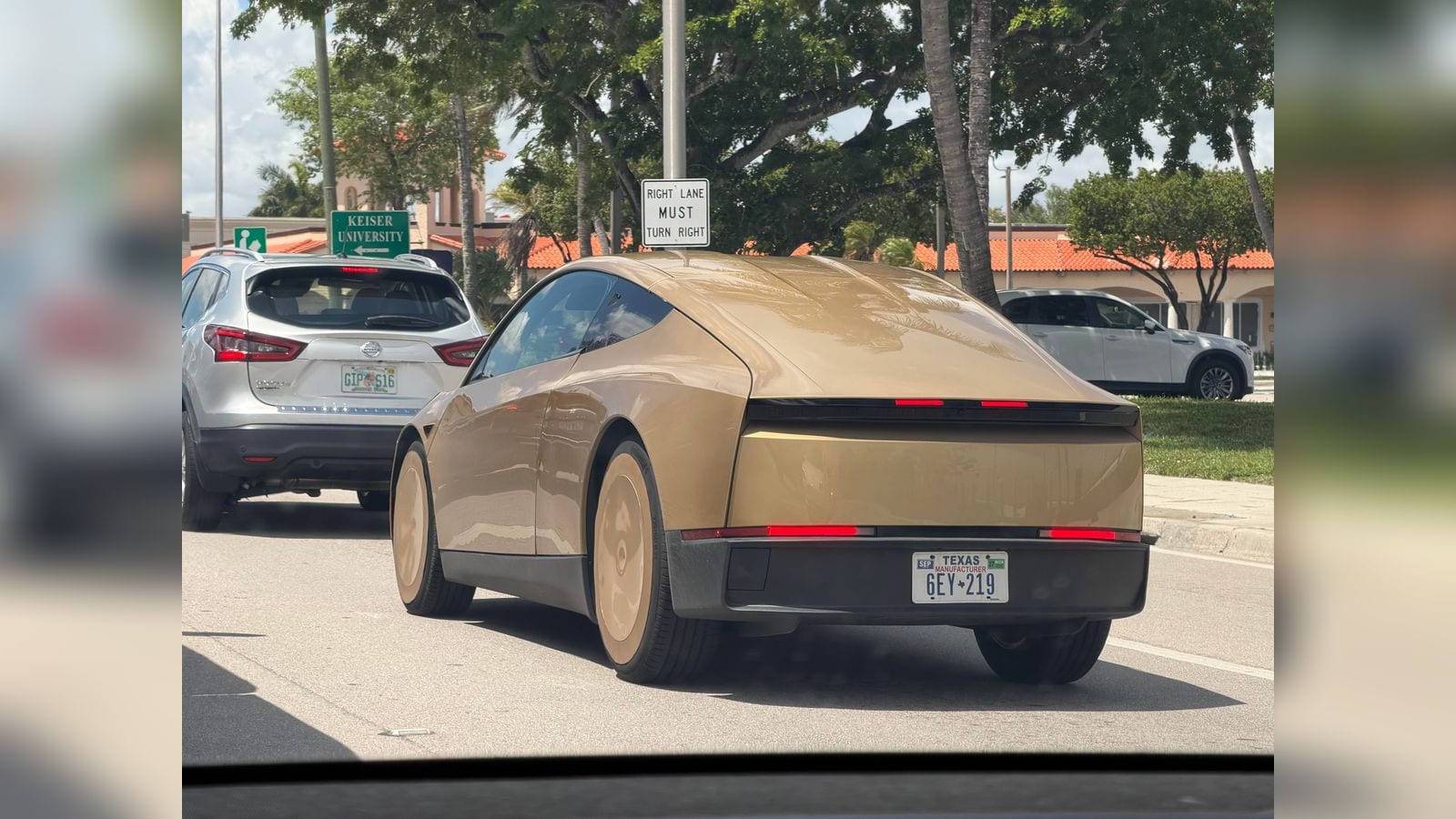
What just happened with the Tesla Cybercab?
Tesla has started production of the Cybercab at Giga Texas and secured an EPA Certificate of Conformity for the 2026 model year. The EPA classifies the Cybercab as a battery electric Zero Emission Vehicle (ZEV), confirming it meets federal Clean Air Act emission standards, according to Teslarati.
CEO Elon Musk announced the production start on Tesla's Q1 2026 earnings call. "We have just started production of Cybercab," Musk said.
Does the Cybercab face NHTSA's 2,500-vehicle annual cap?
No. Tesla VP of Vehicle Engineering Lars Moravy confirmed on X that the 2,500-unit cap does not apply to the Cybercab. His answer to the question was a single word: "No."
The 2,500-vehicle limit comes from NHTSA's exemption process. Companies like Waymo and Cruise have needed these exemptions to deploy vehicles that don't meet all Federal Motor Vehicle Safety Standards (FMVSS). NHTSA caps each exemption at 2,500 units per year.
Tesla took a different path. The company designed the Cybercab to comply with all existing FMVSS standards without requesting a waiver. That is the same self-certification process used by standard consumer vehicles like a Toyota Camry or Ford F-150, as Electrek reported.
What does the federal compliance sticker on the Cybercab mean?
Drone footage from Giga Texas showed Cybercab units carrying an official federal compliance sticker. The label reads: "This vehicle conforms to all applicable U.S. federal safety, bumper, and theft prevention standards."
Under 49 CFR Part 567, this specific statement is a legal requirement for any vehicle that fully meets FMVSS. It is distinct from documentation used when a vehicle is granted an exemption and is explicitly acknowledged as non-compliant with certain standards.
You might also like
As of the time of reporting, NHTSA had not publicly confirmed that the Cybercab meets all FMVSS requirements. The sticker is a significant data point, but not yet official regulatory confirmation.
How does Tesla's FMVSS compliance affect the SELF DRIVE Act?
Congress is currently debating the SELF DRIVE Act, which would raise the autonomous vehicle exemption cap from 2,500 to 90,000 units per year. If Tesla's self-certification holds up, that legislative debate is irrelevant to the Cybercab. Tesla could scale production without being constrained by any exemption limit.
What is the Cybercab production ramp timeline?
| Milestone | Date |
|---|---|
| First steering-wheel-less unit rolled off the line | February 2026 |
| Continuous production began | April 2026 |
| Musk's Q1 2026 earnings call confirmation | April 23, 2026 |
| Unsupervised FSD expected to reach customers | "Probably Q4" 2026 (Musk) |
Musk described the ramp as an S-curve. "Whenever you have a new product with a completely new supply chain, new everything, it's always a stretched out S-curve," he said. "You should expect that initial production of Cybercab and Semi will be very slow, but then ramping up and going kind of exponential towards the end of the year."
Musk also framed the Cybercab as Tesla's long-term volume vehicle, noting that "90% of miles driven are with one or two people" and that "you'd want a vast majority of your production to be Cybercab" over time.
What is the Cybercab, exactly?
The Cybercab is Tesla's all-electric ride-hailing vehicle designed with no steering wheel and no pedals. It is built to operate without a human driver and is intended for autonomous robotaxi service.
Tesla has been building both a steering-wheel-less version and a steering-wheel-equipped variant. The vehicle's lack of traditional controls is what originally raised questions about FMVSS compliance.
Has Tesla solved autonomous driving for the Cybercab?
Not yet. Musk acknowledged on the earnings call that unsupervised Full Self-Driving (FSD) is still unresolved. He said unsupervised FSD would reach customer vehicles "probably Q4" of this year.
Tesla's current supervised robotaxi fleet crashes at roughly four times the rate of human drivers — one crash per 57,000 miles versus a human benchmark of one crash per 229,000 miles. Musk acknowledged the software still has issues, describing situations where cars get "scared to move" or stuck in infinite loops.
In the meantime, the Cybercab will only be used in Tesla's small-scale geofenced robotaxi pilot projects.
Who has left the Cybercab program?
Three senior leaders have departed since February 2026:
- Victor Nechita, vehicle program manager, left days after the first unit rolled off the line
- Thomas Dmytryk, director of OTA and ride-hailing infrastructure, departed after 11 years at Tesla
- Mark Lupkey, assembly leader, left in March 2026
Tesla now has no original program managers remaining for any of its production vehicles, per Electrek.
Here's what we know so far: production is confirmed, the regulatory cap has been bypassed, and the EPA certification is in hand — but the autonomous driving software that makes the Cybercab commercially viable remains unfinished.
This situation is worth watching alongside other large-scale AI deployment programs. The challenge of shipping hardware before the software is ready echoes what builders are seeing across the industry — from Tesla Optimus production to government AI deployments. Even AI-assisted development tools face the same gap between capability and production-ready reliability.
The most concrete next step from the sources: Musk said unsupervised FSD is expected to reach customer vehicles "probably Q4" of 2026.

0 Comments
Log in to comment
Not a member yet? Join the community
Pick a meme
KlipyHave a great take?
Drop your email — we'll send a magic link so you can post it. No password.
Not a member of the community? Join today.
Join the community →