
Phillippa Lally's 2010 University College London study found habits took a median of 66 days to turn automatic — the clearest line between these two words. Motivation is the feeling that makes you want to act. Discipline is the system that makes you act whether the feeling shows up or not. Motivation launches day one. Discipline carries day 40, when the excitement is long gone.
What is the difference between discipline and motivation?
Motivation is an emotion; discipline is a practice. Motivation depends on how you feel, so it rises and falls with mood, sleep, and circumstance. Discipline depends on commitments and habits you have already built, so it holds when the mood drops.
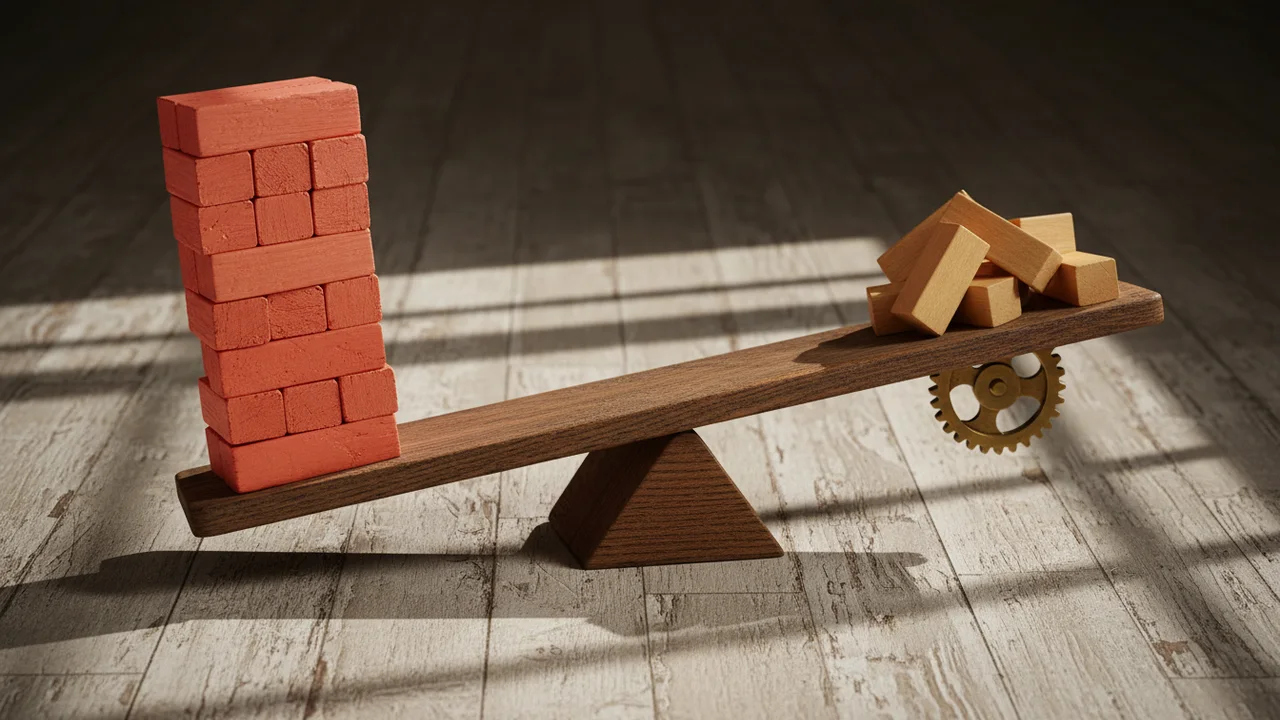
Think of it in one line: motivation is the spark, discipline is the wiring. A spark is bright and useful — it gets a fire going. But you cannot run a house on sparks. James Clear makes this point in Atomic Habits: you do not rise to the level of your goals, you fall to the level of your systems. Discipline is the system.
Why does motivation always run out?
Motivation runs out because it is powered by emotion and brain chemistry, both of which change by the hour. A dopamine spike feels like drive, then fades; stress, fatigue, and boredom drain whatever is left. Relying on it is like planning your training around the weather.
Here is the counterintuitive part. A 2012 study by Wilhelm Hofmann and colleagues, published in the Journal of Personality, tracked people's desires in real time and found that those with the best self-control were not constantly resisting temptation — they experienced fewer temptations because they had structured their lives to avoid them. The American Psychological Association's work on willpower describes self-control as a limited resource you can spend down. Discipline is not white-knuckle willpower. It is arranging your day so the right action needs less of it:
You might also like



- Lay out your gym clothes the night before.
- Keep junk food out of the house entirely.
- Schedule the hard task first, before decision fatigue hits.
- Remove the phone from the room when you work.
Steven Pressfield calls the internal force fighting all this "Resistance" in The War of Art. Motivation negotiates with Resistance. Discipline does not sit down at the table.
How do you build discipline when you don't feel like it?
You build discipline by shrinking the action until it is too small to refuse, then repeating it on a fixed schedule. Feeling ready is not a requirement — the whole point is that discipline works without it. Phillippa Lally's 2010 University College London study showed automaticity is built by repetition in a stable context, not by intensity.
Here is the protocol I give people, and the one I run myself:
- Pick one keystone habit — not five. One.
- Make the minimum version laughably small: two minutes, one set, one page.
- Anchor it to a fixed cue — same time, same place, every day.
- Show up on the low days at the minimum. A bad workout still counts; a skipped one breaks the chain.
- Track it visibly. A wall calendar with an X per day beats any app.
- Give it 60 to 90 days before you judge it, in line with Lally's median of 66.
Ryan Holiday's Discipline Is Destiny and Brian Tracy's No Excuses! both land on the same mechanism: self-mastery is a muscle trained by daily reps, not a mood you wait for.
What 5am brick sessions taught me about discipline
A brick session — a long bike immediately followed by a run — taught me the difference in my legs, not my head. The first time my alarm went at 4:45am for one, I felt zero motivation; it was dark, cold, and my body wanted the bed. I went anyway, because I had promised God and myself the night before that the alarm was not a negotiation.
Off the bike, your legs feel like concrete for the first ten minutes of the run — every fiber wants to walk. Motivation left somewhere around mile 30 of the ride. What got me through was a rule I set when I was warm and rested: I run the first mile no matter how it feels.
During Ironman training I ran hundreds of those first miles on discipline alone. The wanting-it feeling came back most days — but only after I had already started. Faith made the promise binding; discipline made it repeatable. David Goggins says the same thing in Can't Hurt Me from a harder road: you callous your mind by doing what you said you would when everything says quit.
Discipline vs motivation: a side-by-side comparison
| Dimension | Motivation | Discipline |
|---|---|---|
| Source | Emotion, mood, chemistry | Habit, commitment, systems |
| Reliability | Fluctuates hourly | Steady across moods |
| When it shows up | The start | The grind, days 30+ |
| Fuel needed | External hype, novelty | Structure, repetition |
| Fails when | You're tired, bored, stressed | You stop training it |
| Trained by | Cannot be scheduled | Daily reps, fixed cues |
Use motivation for what it is good at: choosing the goal and starting. Use discipline for everything after. Angela Duckworth's grit research at the University of Pennsylvania found that perseverance predicted success at West Point and the National Spelling Bee better than talent or IQ.
Can you have discipline without any motivation?
Yes — and on your hardest days that is exactly what carries you. Discipline is designed to operate when motivation is at zero; that independence is the point. You will not feel inspired for most of the reps that actually change your life, and a disciplined system does not require you to.
That said, the two work best as a team:
- Motivation picks the mountain; discipline climbs it one scheduled step at a time.
- Motivation is a nice tailwind; discipline is the engine.
- On good days, ride the motivation and bank extra work. On bad days, fall back on the discipline and hit the minimum.
The goal is not to feel motivated every day. The goal is to become the kind of person who no longer needs to be.


0 Comments
Log in to comment
Not a member yet? Join the community
Pick a meme
KlipyHave a great take?
Drop your email — we'll send a magic link so you can post it. No password.
Not a member of the community? Join today.
Join the community →