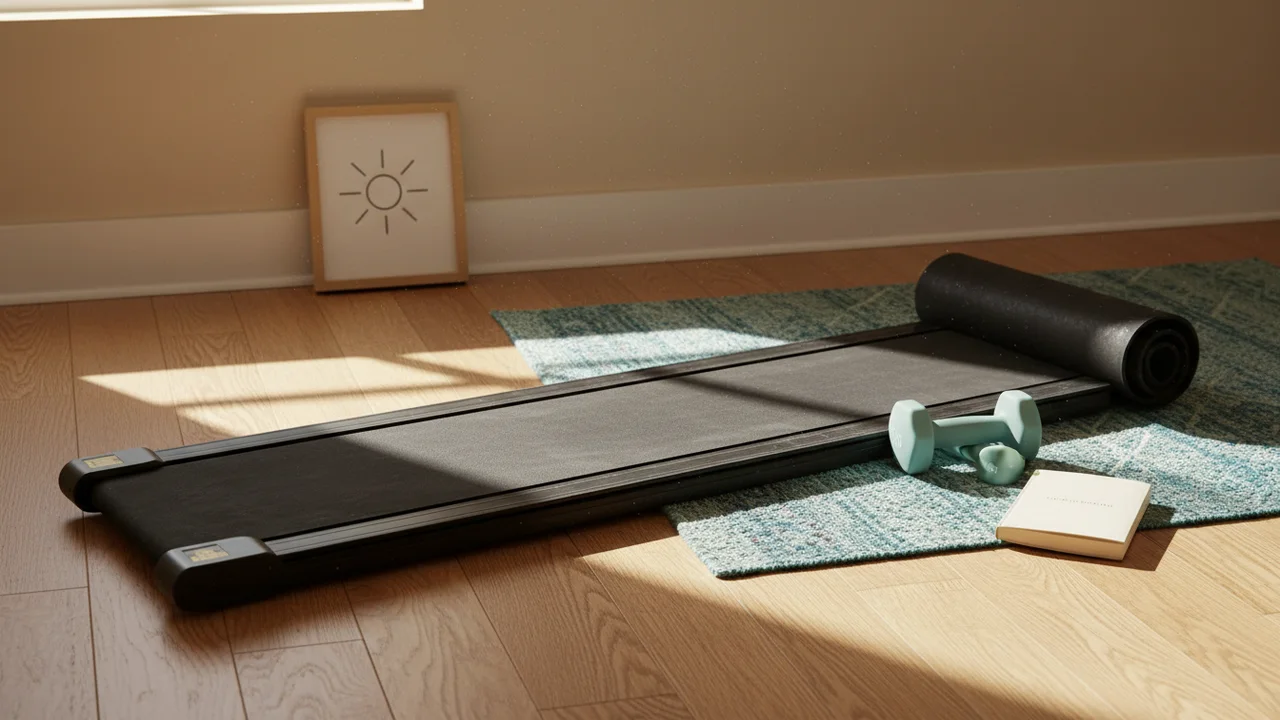
The fastest sustainable start is simple: 150 minutes of moderate cardio each week plus two to three short strength sessions. The American Heart Association sets that 150-minute floor (or 75 vigorous minutes), and strength work adds a second engine by raising resting metabolic rate up to 10%. I built my own Ironman base from beginner weeks like these, and this is the exact structure I'd hand a friend starting Monday.
What is the best type of exercise for weight loss?
The best type is a combination, not a single winner. Cardio burns calories during the session; strength training builds muscle that burns calories at rest. A study in the Journal of the American Medical Association found that combining diet and exercise produced greater weight loss than either alone.
Here is how the two main tools compare for a beginner:
| Exercise type | Main benefit | Beginner starting dose |
|---|---|---|
| Moderate cardio (walk, cycle) | Burns calories, easy to sustain | 30 min, 3-4 days/week |
| HIIT | Burns up to 15% more calories per minute | 15-20 min, 1-2 days/week |
| Strength training | Raises resting metabolic rate up to 10% | 2-3 days/week, full body |
Don't over-think the choice. Cardio you'll actually repeat beats an intense plan you quit in a week.
How often should I work out to lose weight?
Train most days, but keep sessions short at first. The National Academy of Sports Medicine recommends a minimum of 2-3 days of cardio and 2-3 days of strength training per week for weight loss.
A realistic beginner week looks like this:
- Monday — Full-body strength, 30 minutes.
- Tuesday — Brisk walk or easy cycle, 30 minutes.
- Wednesday — Rest or a light 20-minute walk.
- Thursday — Full-body strength, 30 minutes.
- Friday — HIIT, 15-20 minutes.
- Saturday — Longer walk, hike, or bike, 40-60 minutes.
- Sunday — Rest.
That totals roughly 150 minutes of cardio plus two strength days. Start with four sessions if seven feels like too much, then add days after two consistent weeks.
What are the benefits of HIIT for weight loss?
High-Intensity Interval Training (HIIT) alternates hard bursts with recovery. It can burn up to 15% more calories than steady-state cardio in the same amount of time, which makes it efficient when your schedule is tight.
A beginner HIIT session is short by design:
- Warm up 3 minutes at an easy pace.
- Go hard 30 seconds, then recover 90 seconds.
- Repeat that cycle 6-8 times.
- Cool down 3 minutes.
That's about 18 minutes of real work. Use a stationary bike, a hill, or fast walking so your joints stay protected while you learn the effort. Do HIIT no more than twice a week early on; the recovery matters as much as the work.
How can I create a weight loss workout routine?
Build the routine around three anchors: cardio minutes, strength days, and a small calorie deficit. The CDC recommends aiming for 1-2 pounds of loss per week, which usually means eating a few hundred calories under your maintenance level.
Follow these steps in order:
- Set your cardio target at 150 moderate minutes weekly and split it across the week.
- Schedule two full-body strength sessions on non-consecutive days.
- Add one short HIIT session once your base feels steady.
- Pair the training with a modest, protein-forward calorie deficit.
- Reassess every two weeks and adjust volume, not intensity, first.
Aerobic exercise can reduce body fat by up to 12% in 12 weeks, and strength training can add up to 10% muscle mass in the same window — so give the plan a full quarter before you judge it.
What are the most effective exercises for a beginner?
Full-body compound moves give the most return per minute because they train many muscles at once. You don't need a gym full of machines to start.
For each strength day, do 2-3 sets of 10-12 reps of these:
- Goblet squat — legs and core.
- Push-up (or incline push-up) — chest, shoulders, triceps.
- Dumbbell row — back and biceps.
- Glute bridge — hips and posterior chain.
- Plank — hold 20-40 seconds for core stability.
Rest 60-90 seconds between sets. If a move feels too hard, scale it (knees down, lighter weight); if it feels easy, add reps or load. Progress is the point, not soreness. Books like Bigger Leaner Stronger go deeper once you outgrow the basics.
How can I stay motivated and avoid common mistakes?
Motivation follows evidence of progress, so track it. Log your sessions, weigh yourself once a week at the same time, and take a monthly progress photo. The scale moves unevenly; the trend line over a month is what tells the truth.
The most common beginner mistakes are avoidable:
- Chasing extreme deficits and burning out in two weeks.
- Skipping strength work and losing muscle along with fat.
- Doing HIIT daily with no recovery, which invites injury.
- Judging a week by one bad weigh-in instead of the trend.
Sustainable beats extreme every time. I've watched more people fail from doing too much too soon than from doing too little. Pick the plan you can repeat for twelve weeks, show up on the ordinary days, and let the numbers compound.