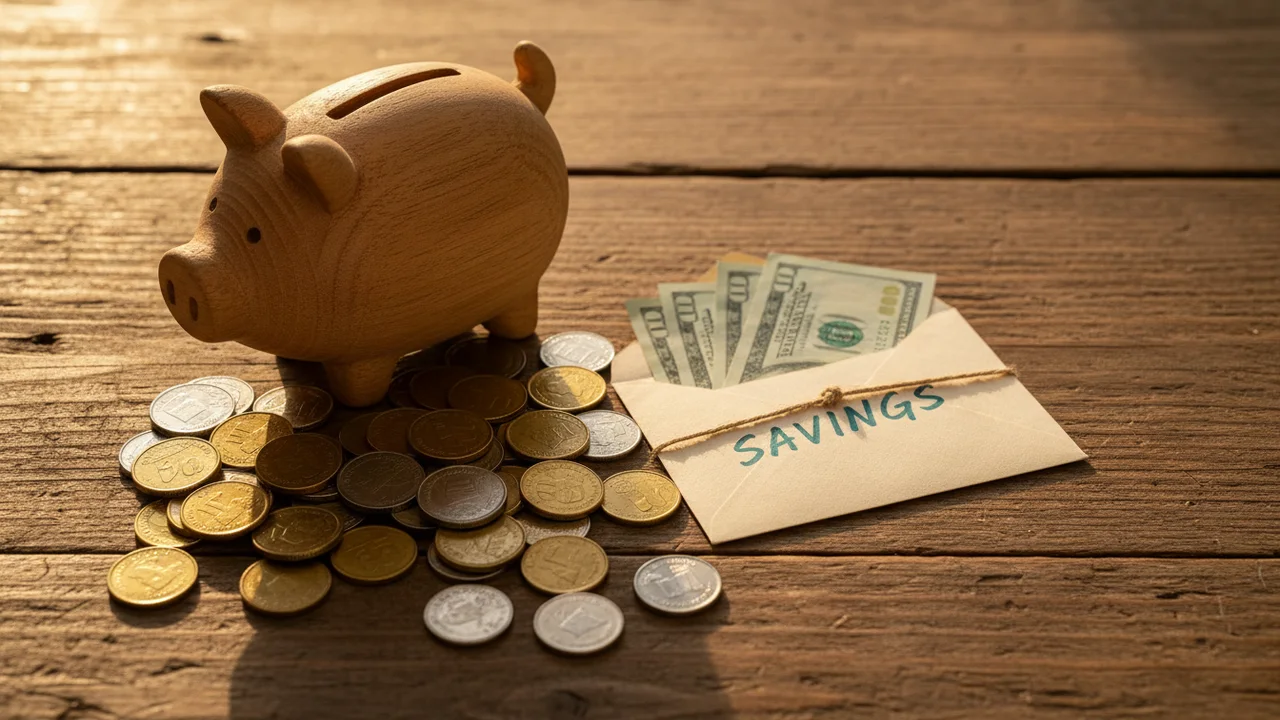
The fastest way to save more money each month is to automate a transfer of 20% of your income to savings the day you get paid. Financial research shows automatic deposits can raise savings rates by up to 15%. Treat savings like a fixed bill, not leftover cash. Then fit your spending inside what remains using a simple split like the 50/30/20 rule.
What Is the Best Way to Allocate My Income for Savings?
Split your take-home pay into three buckets. The 50/30/20 rule explained by Investopedia puts 50% toward needs, 30% toward wants, and 20% toward savings and debt payoff. The 20% slice is your monthly savings target. If your income is $4,000 after taxes, $800 goes to savings before you spend a dollar on wants.
| Bucket | Share | On $4,000/month | Covers |
|---|---|---|---|
| Needs | 50% | $2,000 | Rent, food, utilities, insurance |
| Wants | 30% | $1,200 | Dining, streaming, hobbies |
| Savings & debt | 20% | $800 | Emergency fund, retirement, extra debt |
The average American saves about 7.5% of disposable income, so reaching 20% puts you well ahead of the pack. Start lower if you need to—even 10%—and raise the number by one point each month until you hit the target.
How Can I Automate My Savings So It's Painless?
Automation takes willpower out of the equation. Set a recurring transfer from checking to savings for the same day your paycheck lands. Studies on automatic enrollment from the National Bureau of Economic Research show that defaulting people into saving sharply increases how much they set aside. When money moves before you see it, you adjust your spending around what's left.
You might also like
Here is the setup I use and recommend:
- Open a separate high-yield savings account at a different bank.
- Schedule an automatic transfer for payday—start with 10-20% of net pay.
- Send every raise or bonus straight to savings before lifestyle creep hits.
- Increase the transfer by one percentage point each month until it stings a little.
This is often called a reverse budget: you fund savings first, then spend the rest freely. Personal finance coach Dave Ramsey's team reports this order can lift savings rates by up to 25%, because you pay yourself before anyone else.
Should I Use Cash or Credit Cards to Spend Less?
Cash makes spending feel real, and that friction cuts waste. Research summarized in a Dun & Bradstreet report on cash versus credit found people spend up to 20% less when they pay with cash instead of cards. Handing over bills hurts more than tapping plastic, so you buy less.
| Method | Spending effect | Best for |
|---|---|---|
| Cash / envelopes | Up to 20% less spent | Groceries, dining, fun money |
| Debit card | Neutral, no debt risk | Bills, online payments |
| Credit card | Easy to overspend | Only if paid in full monthly |
Use cash for the categories where you tend to overspend. Keep a card for fixed bills you can automate and pay in full each month, so you avoid interest while keeping a clean record.
How Do I Stop Overspending and Stay on Track?
Overspending usually hides in small, repeated purchases. The envelope system helps: put a fixed amount of cash into labeled envelopes for groceries, dining, and entertainment. When an envelope is empty, spending in that category stops until next month. Reports show this method can cut discretionary spending by up to 30%.
Try these guardrails:
- Wait 24 hours before any non-essential purchase over $50.
- Cancel one subscription you haven't used in the past 30 days.
- Review one bank statement each week for charges that crept in.
- Build a small cash buffer—money is a major stressor for 64% of adults, per the American Psychological Association, and a buffer eases that pressure.
What Are Simple Steps to Save for Retirement?
Retirement is where automation pays off most, thanks to compounding. Fidelity found that 72% of millennials already prioritize retirement, so starting early puts you in good company. Contribute enough to capture any employer 401(k) match—that is an instant 100% return on those dollars.
Follow this order:
- Contribute up to your full employer match.
- Build a one-month emergency fund in cash.
- Fund a Roth or traditional IRA to the annual limit.
- Return to the 401(k) and raise contributions a little each year.
Books like The Psychology of Money and Your Money or Your Life reinforce the same behavioral truth: steady, automatic habits beat clever market timing every time.
A Month-by-Month Plan That Actually Works
Pick one change and repeat it. In month one, automate a single transfer. In month two, switch two spending categories to cash. In month three, raise your savings rate by one point. Small habits stacked on top of each other compound faster than one heroic effort you can't sustain. My rule is simple: make saving automatic, make spending visible, and raise the bar slowly. Do that and your savings grow without a budget you dread.



0 Comments
Log in to comment
Not a member yet? Join the community
Pick a meme
KlipyHave a great take?
Drop your email — we'll send a magic link so you can post it. No password.
Not a member of the community? Join today.
Join the community →