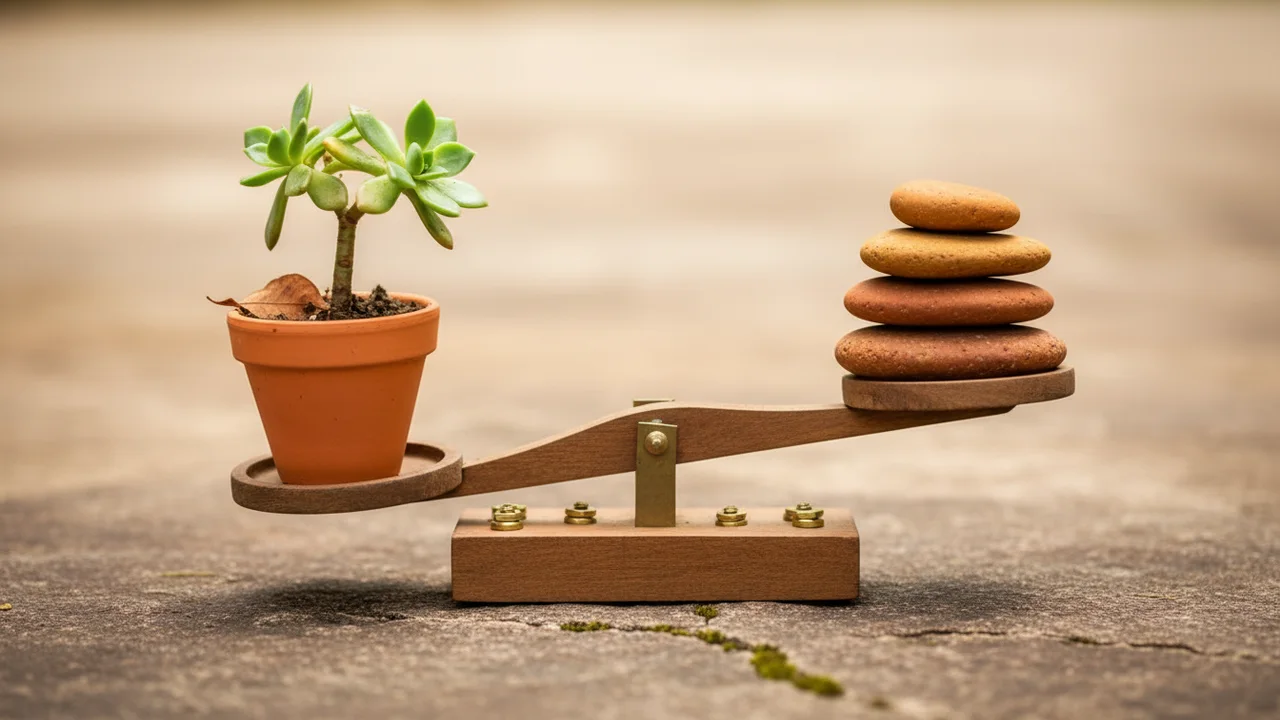
Resilience can be learned — the American Psychological Association reports it is an ordinary skill, not a rare gift, built through habits anyone can practice. You get more resilient by recovering from manageable stress on purpose: protect your sleep, move your body, keep close relationships, and treat setbacks as data. Start with one controllable action during a hard moment. Repetition rewires how you respond.
What is resilience, really?
Resilience is the ability to recover from stress, setbacks, and hardship and keep functioning. The American Psychological Association defines resilience as adapting well to adversity, trauma, or significant stress. It is closer to bending without breaking than to feeling nothing. Resilient people still hurt; they just recover faster and learn from what happened. Angela Duckworth's book Grit names a related trait: sustained effort toward long-term goals despite failure. Resilience is the recovery half of that equation.
You might also like
How can you become more resilient? (7 steps)
You build resilience the same way you build strength — with consistent, repeatable actions. Work through these in order:
- Protect your sleep. Aim for 7-9 hours; sleep loss lowers emotional control.
- Move daily. Exercise reduces stress hormones and raises your tolerance for discomfort.
- Name what you feel. Labeling an emotion ("I feel anxious") lowers its intensity.
- Control the controllable. List what you can act on, and release the rest.
- Take one small action. Momentum beats motivation during hard moments.
- Keep close relationships. Isolation slows recovery; connection speeds it.
- Reframe setbacks. Ask "What can this teach me?" instead of "Why me?"
Why does adversity make some people stronger?
Some challenges strengthen us the way stress strengthens muscle. Nassim Taleb calls this "antifragile" — systems that gain from disorder. Small, survivable hardships teach your brain that you can cope, which lowers future fear. That is why controlled discomfort — cold exposure, hard workouts, public speaking — builds confidence over time. The key word is survivable. Overwhelming trauma without support does not build strength; it causes harm. Ryan Holiday's The Obstacle Is the Way argues the obstacle itself becomes the path forward once you change how you see it.
Which daily habits build resilience fastest?
The fastest gains come from basics done consistently. Strong relationships matter most: the Harvard Study of Adult Development, running over 80 years, found close relationships are the strongest predictor of long-term health and happiness. Sleep is next — the National Sleep Foundation recommends 7-9 hours for adults. Then movement, sunlight, and a short daily reflection. My own rule is one hard thing before noon, so I prove to myself early that I can do hard things.
A simple daily stack:
- Sleep 7-9 hours on a consistent schedule.
- Exercise 20-30 minutes most days.
- Text or call one person you trust.
- Write two sentences each night about what went well.
- Do one deliberately uncomfortable thing before noon.
Common resilience myths vs. facts
| Myth | Fact |
|---|---|
| Resilient people don't feel pain | They feel it and recover faster |
| Resilience is something you're born with | It's a skill you can train |
| You must handle hardship alone | Support speeds recovery |
| Positive thinking alone is enough | Action plus support drives change |
| A setback means you failed | A setback is information and practice |
When should you seek professional help?
Resilience does not mean going it alone. If stress, grief, or trauma disrupts your sleep, work, or relationships for more than a few weeks, that is a signal to get support. Option B by Sheryl Sandberg and Adam Grant shows that recovery from severe loss often needs both community and, sometimes, therapy. A counselor is a resilience tool, not a last resort. Reaching out early is a strength — the steadiest people build a team around them instead of grinding through in silence.
0 Comments
Log in to comment
Not a member yet? Join the community
Pick a meme
KlipyHave a great take?
Drop your email — we'll send a magic link so you can post it. No password.
Not a member of the community? Join today.
Join the community →